News Desk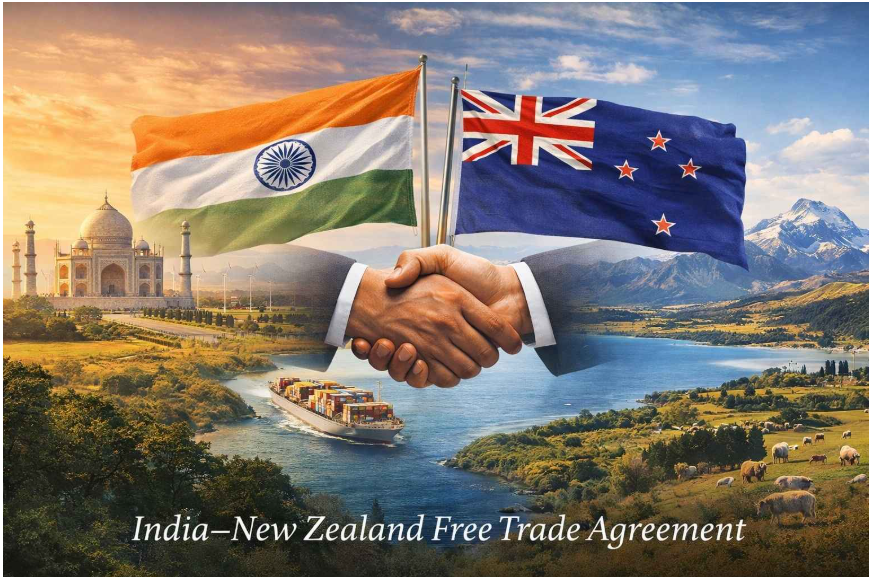
NEW DELHI — In a handshake that capped nine months of negotiations, New Zealand’s prime minister, Christopher Luxon, and India’s finance minister, Nirmala Sitharaman, sealed a landmark free‑trade agreement on Dec. 22, 2025 — a deal aimed at doubling the current $2.5 billion in bilateral commerce within five years. The pact, which includes a pledge by New Zealand to invest $20 billion in India over the next 15 years while shielding India’s dairy and farm sectors from disruptive competition, underscores Prime Minister Narendra Modi’s accelerating push to expand India’s trade footprint amid a global turn toward protectionism.
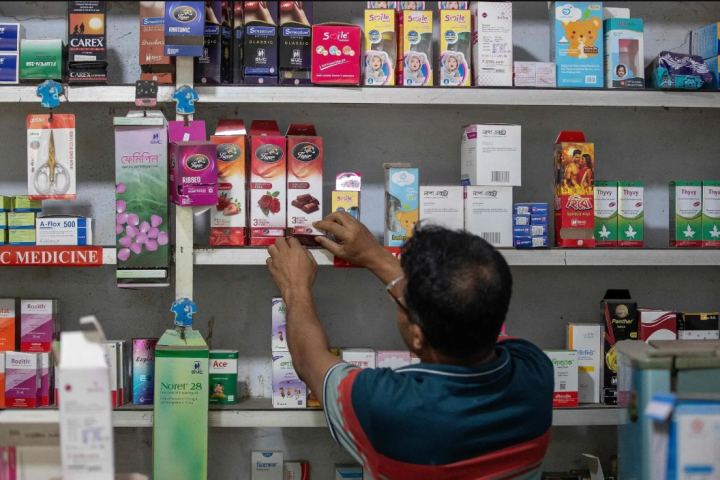
The agreement grants duty‑free access for Indian textiles, pharmaceuticals and engineering goods, and eases mobility for professionals and students — areas where India has long held an advantage. For New Zealand, it offers a deeper foothold in one of the world’s fastest‑growing major markets, with tariff concessions designed to boost agricultural exports without overwhelming India’s politically sensitive farm economy.
The timing is strategic. India is navigating the prospect of renewed U.S. tariffs under a second Trump administration and is seeking to diversify away from traditional partners. But the New Zealand pact is also the latest marker in Mr. Modi’s decade‑long effort to overhaul India’s trade policy. Since taking office in 2014, he has shifted India from a cautious, defensive posture to one that prioritizes high‑value partnerships with developed economies — a notable departure from the pre‑Modi era, when agreements were slower to materialize and largely confined to regional neighbours.
As of December 2025, India has 15 full free‑trade agreements covering 26 countries, along with six preferential trade agreements extending benefits to another 26 nations — a total of 52 countries with preferential access to the Indian market. These include bilateral deals with Japan, South Korea, Singapore, the United Arab Emirates, Australia, Mauritius, the United Kingdom, Oman and now New Zealand, as well as multilateral accords with blocs such as the Association of Southeast Asian Nations, the South Asian Free Trade Area and the European Free Trade Association.
The pace has quickened sharply in recent years. India has signed seven major FTAs in the past five years alone, signalling a government increasingly confident in negotiating terms that secure investment and market access while protecting domestic interests. Among the most consequential are the 2021 agreement with Mauritius, which lifted trade by 60 percent in its first two years; the 2022 pacts with the UAE and Australia, which fuelled record exports in gems, jewellery and engineering goods; the 2024 agreement with EFTA nations, promising $100 billion in investment over 15 years; the long‑awaited 2025 trade deal with the United Kingdom; and the December 2025 pact with Oman.
This burst of activity marks a clear break from the 2000s and early 2010s, when India signed notable agreements with ASEAN, Japan and South Korea but hesitated on broader pacts over fears of cheap imports flooding domestic markets. Mr. Modi’s government has instead emphasized “high‑quality” agreements that include chapters on digital trade, sustainability and investment protection — features largely absent from earlier deals. The EFTA and U.K. agreements, for instance, include commitments on environmental standards and labour rights, aligning India more closely with global norms while advancing its push for technology transfers.
As global supply chains fragment and tariffs rise, India’s expanding network of FTAs positions it as a hub for manufacturing and services. The New Zealand agreement — with its focus on job creation and long‑term investment — could add thousands of positions in India’s technology and pharmaceutical sectors while giving New Zealand exporters access to a market of 1.4 billion people.