News Desk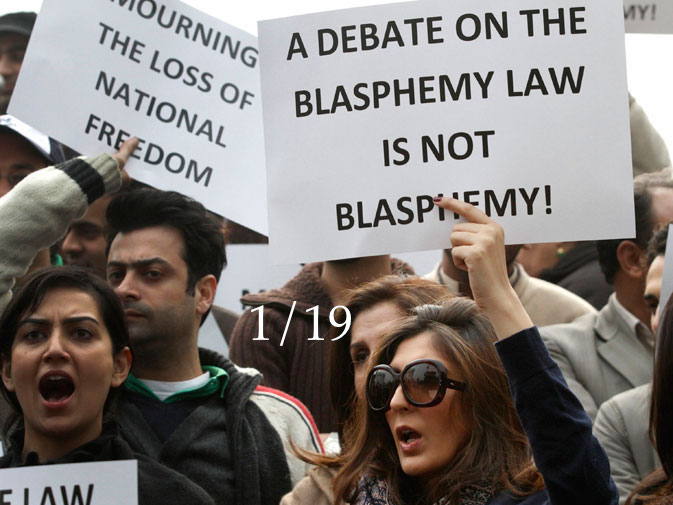
ISLAMABAD — In Pakistan, where religious fervor often shapes public life, the blasphemy laws enshrined in the penal code have become a weapon of vengeance, disproportionately targeting religious minorities and ensnaring countless lives in a web of fear and injustice. These laws, hardened in the 1980s under military dictator Gen. Zia-ul-Haq, criminalize acts deemed insulting to Islam, its Prophet, or the Quran, with punishments ranging from life imprisonment to death. While no one has been executed for blasphemy, the mere accusation can ignite mob violence, destroy families, and leave the accused languishing in legal limbo. The laws’ vague wording and low evidentiary threshold invite abuse.
A 2024 Amnesty International report documented over 1,200 blasphemy cases since 1987, with a significant share targeting Pakistan’s religious minorities—Christians, Ahmadis, Hindus, and others—who make up less than 5% of the country’s 240 million people.
For these communities, an accusation of blasphemy is often a death sentence, socially if not legally, as mobs and vigilantes act with impunity before courts can intervene.
Consider the case of Aasia Bibi, a Christian woman whose 2010 blasphemy conviction sparked global outrage. Accused of insulting the Prophet Muhammad during a village dispute, she spent nearly a decade on death row before her acquittal in 2018. Her case exposed the laws’ chilling effect: neighbors used a petty argument to settle scores, and the accusation alone triggered riots and death threats. Bibi was forced to flee to Canada, her life upended by a system that offers little recourse.
The laws’ defenders, including religious hard-liners and some politicians, argue they are essential to safeguarding Pakistan’s Islamic identity. Yet critics, including human rights advocates and a small but growing number of Pakistanis, see them as a cudgel for personal vendettas and communal hatred.
A 2023 report by the U.S. Commission on International Religious Freedom noted that many of the accused face years in prison without trial, often in solitary confinement for their safety. The laws’ broad application—covering everything from alleged insults to “defiling” the Quran—means anyone can be targeted, Muslim or not.
Recent developments have brought a flicker of hope for reform. In a bold move, the Islamabad High Court, led by Justice Sardar Ejaz Ishaq Khan, ordered the government in late 2024 to form a commission within 30 days to investigate the laws’ rampant misuse. The ruling came amid a high-profile case involving Komal Ismail, a woman identified in court documents under the alias “Iman,” who is suspected of orchestrating false blasphemy accusations. Ismail has been untraceable since November, her phone numbers inactive, though authorities believe she remains in Pakistan and have placed her on the Exit Control List.
The court’s directive demands the commission complete its probe within four months, a tight timeline for tackling a deeply entrenched issue. The stakes are immense.
Pakistan’s blasphemy laws have long been a lightning rod, claiming lives and stifling dissent. In 2011, Punjab Gov. Salman Taseer was gunned down by his own bodyguard for daring to call for reform. His assassin, Mumtaz Qadri, was hailed as a hero by some, revealing the dangerous reverence for these laws among segments of society.
The same year, Shahbaz Bhatti, a Christian federal minister advocating for minorities, was also assassinated. These killings underscore the peril of challenging a system that thrives on fear and fanaticism.
For Pakistan’s religious minorities, the laws are a daily nightmare. Ahmadis, declared non-Muslims by the state in 1974, face relentless persecution. In 2023 alone, dozens of Ahmadi mosques were vandalized or shut down, often following blasphemy allegations. Christians and Hindus fare little better, with entire communities sometimes attacked over a single accusation.
In August 2023, a mob in Jaranwala, Punjab, torched dozens of Christian homes and churches after claims that a local man had desecrated the Quran. No one was convicted for the violence.
The commission, if formed, faces a Herculean task. It must navigate a volatile landscape where religious sentiment often trumps reason, and where reformers risk becoming targets. Yet the need for change is undeniable. The laws, as they stand, are less a defense of faith than a license to persecute, weaponizing piety to silence and oppress. Whether the commission can dismantle this machinery of injustice—or whether it will become another footnote in Pakistan’s troubled history—remains uncertain.
For now, the accused live in the shadow of a system that offers little mercy. The case of Komal Ismail, a figure shrouded in mystery, highlights the chaos these laws enable: accusers vanish, the innocent suffer, and justice remains elusive.