News Desk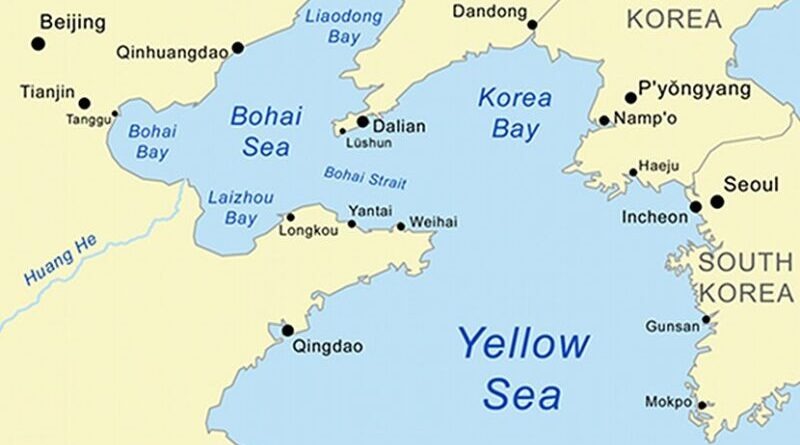
China’s brazen construction of unauthorized structures in the Yellow Sea’s Provisional Measures Zone (PMZ) is a direct affront to international agreements and a threat to regional stability. This provocative move, coupled with Beijing’s dismissive response to South Korea’s objections, reflects a pattern of expansionist behavior that demands a firm response. South Korea must consider establishing its own structures in the PMZ to safeguard its sovereignty and uphold the rules-based order essential to global peace.
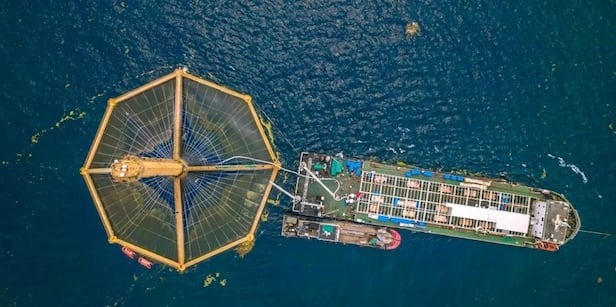
The PMZ lies in the Yellow Sea, a vital maritime region between the Korean Peninsula to the east and China to the west, bordered by the Japanese archipelago and Sakhalin to the north. Established through a bilateral pact to prevent disputes and ensure cooperation in these contested waters, the PMZ requires mutual consultation for any activity altering its status quo. Yet, China has flouted this agreement, deploying movable structures since 2018 and erecting a fixed platform anchored to the seabed in 2022, resembling an oil rig. Reports of plans for up to 10 additional structures underscore Beijing’s intent to assert dominance, not cooperation. Its claim that these are merely for fishing is unpersuasive, especially as it ignores Seoul’s calls to halt construction.
China’s actions in the Yellow Sea echo its belligerence in the South and East China Seas, where it has built militarized artificial islands and clashed with nations like Vietnam and the Philippines. The Spratly Islands, now bristling with Chinese airfields and radar systems, illustrate Beijing’s strategy: incremental expansion followed by de facto control. The international community has condemned such moves, but China’s persistence signals that it sees little cost to its aggression. Allowing similar encroachments in the Yellow Sea risks normalizing this approach, endangering not just South Korea but the stability of a region critical to global trade and security.
South Korea must respond with resolve. Constructing its own structures in the PMZ would assert its rights and deter further Chinese advances, though such steps must be carefully calibrated to avoid escalation. Seoul should also mobilize diplomatic pressure, raising China’s violations in forums like the United Nations and ASEAN. Encouragingly, South Korea’s political spectrum — from the conservative People Power Party to the liberal Democratic Party — has united in condemning Beijing’s actions, providing a foundation for a cohesive national strategy.
The implications extend beyond Northeast Asia. China’s disregard for bilateral agreements undermines the international norms that govern maritime boundaries and prevent conflict. Forthcoming talks between South Korean and Chinese officials in Seoul must demand the removal of unauthorized structures and a recommitment to mutual consultation. Failure to hold Beijing accountable risks emboldening further aggression, from the Yellow Sea to other disputed regions globally.
The Yellow Sea is a global flashpoint. Supporting South Korea’s defense of its rights reinforces the principles of sovereignty and cooperation that underpin international stability. Territorial integrity is non-negotiable, and respect for agreements is the cornerstone of peace. South Korea must stand firm, and the world must back it to ensure that China’s might does not override right in these critical waters. Agencies.