 News Desk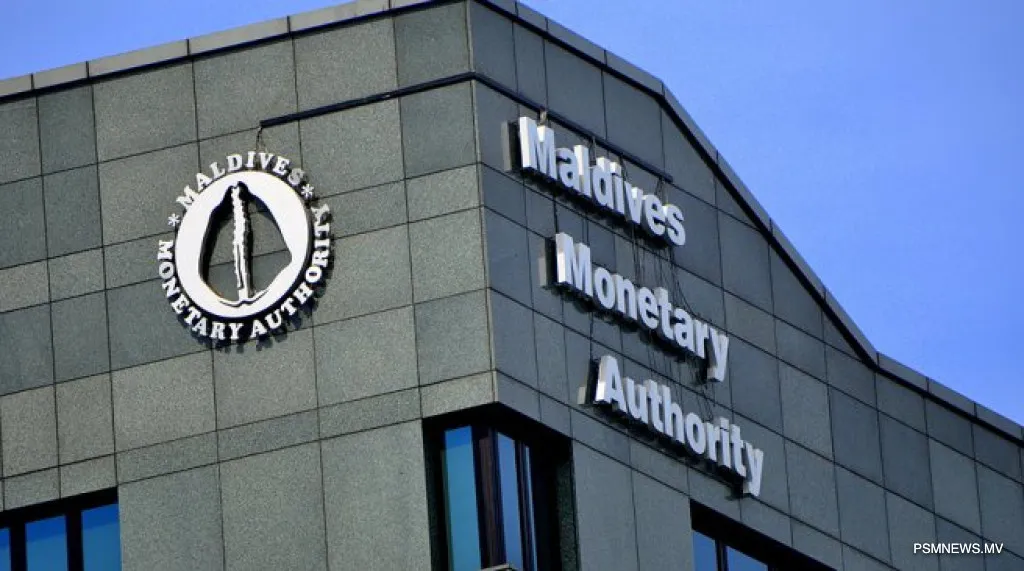
MALE’, Maldives — A crisis brews in paradise, a tale of political maneuvering, economic desperation, and a central bank caught in the storm. What started as whispers of financial missteps has exploded into a full-blown scandal, with high-profile resignations, an embattled government, and a fiscal chasm growing by the day. Even the nation’s Information Commissioner’s Office (ICOM) finds itself drowning—not in debt, but in black mold.
It seemed routine at first. In early 2025, reports surfaced that the Maldives Monetary Authority (MMA), the nation’s central bank, was set to make an unorthodox investment—a vast plot of land in Hulhumale’, an island of grand development ambitions. The figures in play were dizzying—8 billion rufiyaa one day, 14 billion the next, swelling to an eye-watering 20 billion ($1.3 billion). The real aim? A desperate cash infusion for the government, funneled through a state-owned entity, the Housing Development Corporation (HDC).
The numbers painted a grim picture. External financing had dried up. The government faced a $25 million coupon payment due this month, another treasury bond owed to the State Bank of India, and over $100 million in foreign debt obligations looming.
The budget had optimistically banked on 9.7 billion rufiyaa in foreign assistance—none of which had materialized. So, MMA was cast in an unlikely role: not as a guardian of monetary stability but as the administration’s financial lifeline.
“They’re not buying land for a financial hub,” scoffed a source familiar with the matter. “They’re buying it because they have no choice.” The MMA remained silent, its quiet as unsettling as an approaching storm.
The board wasn’t having it. On March 10, the dam broke. Shuhad Ibrahim, a board member from the Ministry of Economic Affairs, resigned in protest, warning of “serious risks” to the MMA’s credibility and economic stability. His exit wasn’t a solitary act—two other board members demanded a review, only to be stonewalled.
“I don’t want to be part of this,” wrote Shuhad Ibrahim, walking away as the MMA pressed forward with the deal.
Hours later, Ahmed Zayan Mohammed, an economist from the Finance Ministry, followed suit. His resignation letter, sharp with disapproval, pointed at the now-confirmed 15 billion rufiyaa land purchase as reckless. With a reputation for intellectual rigor, his departure signaled more than discontent—it was an alarm bell.
“He voted against it, spoke against it, and now he’s out,” said a colleague. “This isn’t how a central bank should operate.”
In Parliament, Abdul Latheef, a lawmaker from the ruling People’s National Congress (PNC), targeted Deputy Governor Ahmed Imad. A veteran of 25 years, with a master’s from the UK, Imad had climbed the ranks from policy expert to deputy governor—only to become a political scapegoat. The Parliament’s Finance Committee wasted no time approving a motion to dismiss him, a move laced with retribution. His predecessor, Ali Hashim, had been axed in July for failing to stop the economic slide. Now, Imad’s fate hung in the balance, as MMA edged closer to sealing its land deal.
This isn’t just about rogue bankers or bureaucratic infighting. It’s the latest episode in the Maldives’ slow-motion economic collapse. Once a darling of rapid development, with GDP growth averaging 7 percent pre-pandemic, the nation now teeters on insolvency. Tourism has rebounded—1.3 million visitors by August 2024, a 10 percent jump from the year before—but the damage lingers.
Public debt has ballooned to 118.7 percent of GDP, with payments of $500 million due annually in 2024 and 2025, spiking to $1.07 billion in 2026. Foreign reserves? A mere $492 million, enough for just a month’s imports.
President Mohamed Muizzu, elected in 2023 on an “India Out” nationalist platform, has leaned into some form of austerity—cutting few government jobs, canceling national celebrations, and hiking taxes. His pivot toward China has yielded little relief. The MMA’s land gambit reeks of desperation.
Critics see it for what it is: money printing in disguise. Buy state assets, inject cash into the treasury, and hope the system holds.
“MMA’s decision to print MVR 15 billion to buy land is reckless, irresponsible, and contradicts the advice of the IMF, World Bank, and economic experts,” warned former Foreign Minister Abdulla Shahid. “This move floods the economy with newly printed money, devalues the MVR, fuels inflation, and destabilizes the economy. Ordinary Maldivians will pay the price—rising costs, a weaker rufiyaa, and in the long run, higher taxes and fewer public services. This is a blatant misuse of central bank authority.”
Former Finance Minister Ibrahim Ameer echoed the concern. “It’s a step that will destabilize the economy.”
As the crisis deepens, a bizarre subplot unfolds at ICOM. The office’s annual report reads like dark comedy. Since moving into the “Glass House” (Billoorijehige) in 2015, its staff has waged war against an implacable enemy: black mold. Leaky pipes, flooded rooms, and a west wall crumbling under fungal invasion have made work unbearable. “It’s not a healthy environment,” the report states dryly, as if the images of mildew-stained walls weren’t enough.
Fixes? A farce. Repaired one month, rotting the next. For years, ICOM has pleaded for a new home. In October 2024, the Finance Ministry approved a 7.6 million rufiyaa bid for relocation. The funds sit frozen in bureaucratic limbo. Until then, employees endure staggered shifts—some dialing into meetings from home, others choking on spores in the only usable room.
“This is creating obstacles to desirable office work,” the report notes. No kidding.
Back in the corridors of power, the MMA’s land deal barrels forward, a desperate gamble in an economy running on fumes. The resignations, the political purges, the government’s deafening silence—it all signals a regime on shaky ground. Will the sale buy time, or will it trigger inflation, eroding the last vestiges of confidence in the rufiyaa? The IMF and World Bank, long warning of debt distress, watch with mounting unease.
The Maldives has always been a fragile paradise—coral islands at the mercy of rising seas and human folly. Now, as the central bank bets on real estate and ICOM battles its fungal overlords, the nation teeters on a precipice. The waves still crash, the resorts still gleam, but beneath the surface, something is rotting. And it’s not just the mold.