News Desk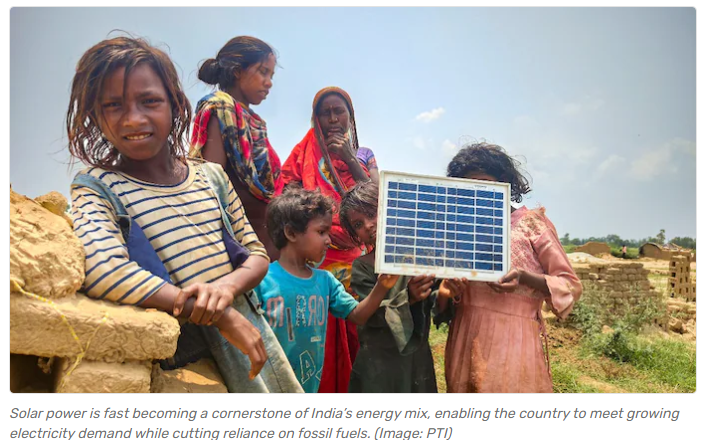
India met its highest‑ever power demand of 256.1 GW on April 25 without any electricity shortage, delivering a rare moment of grid stability during an intense heatwave that pushed consumption to unprecedented levels.
Solar power played a decisive role in meeting the surge. At the peak hour, solar generation contributed 57 GW, accounting for nearly 21% of total demand. While thermal power continued to dominate with a 66% share, officials noted a clear shift toward daytime solar generation, marking a significant change in how the grid handles extreme‑weather stress.
Despite the record domestic load, India continued exporting electricity to neighbouring countries, underscoring the system’s resilience at a time when temperatures soared across multiple states.
The heatwave placed heavy pressure on the grid, but the strong solar output helped stabilise supply during the most critical hours. Energy analysts say the episode signals a turning point: solar is no longer functioning as a supplementary source but is emerging as a core pillar of India’s power strategy, especially during climate‑driven demand spikes.
The record‑setting day is being viewed as evidence that India’s renewable‑energy transition is maturing, with solar now central to peak‑load management and long‑term energy security.