 News Desk
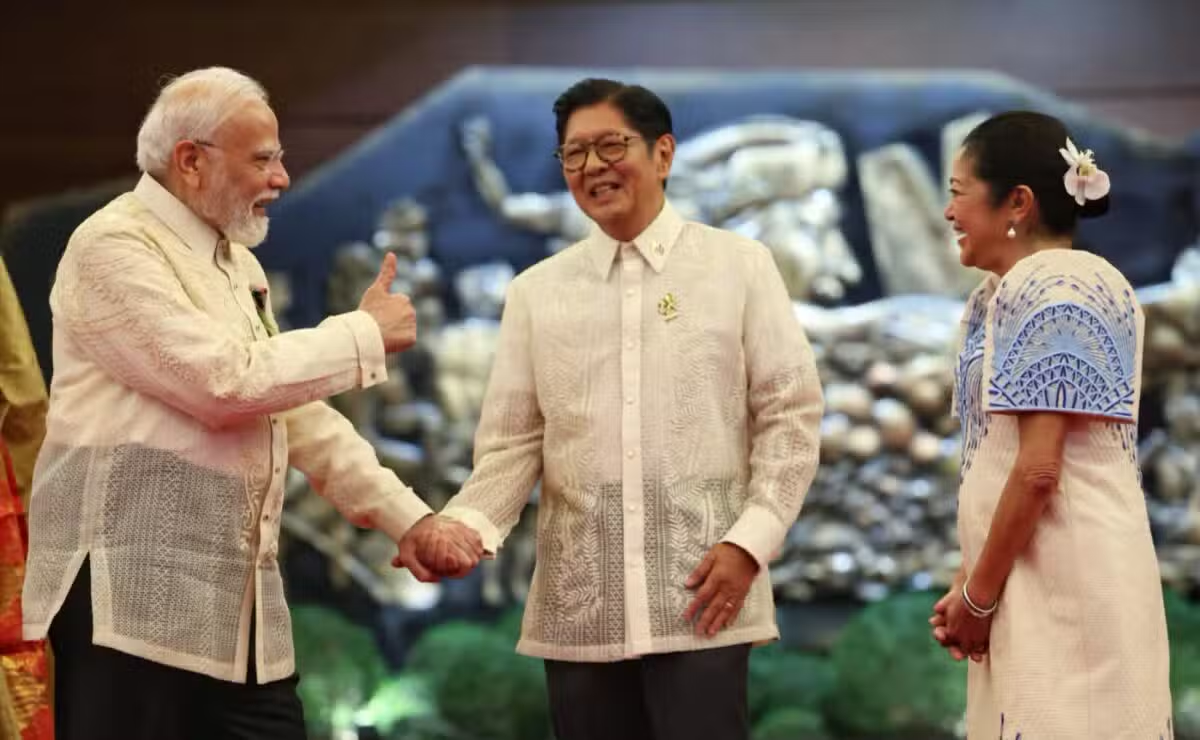
MANILA — When Prime Minister Narendra Modi arrived in the Philippines this week, the country’s major newspapers and digital outlets greeted the visit not merely as routine diplomacy, but as a defining milestone in Manila’s effort to diversify its strategic and economic partnerships across the Indo-Pacific.
Across print front pages and online news portals—from the Philippine Daily Inquirer and The Philippine Star to the Manila Bulletin, BusinessWorld, and Rappler—coverage framed India as an indispensable partner: a maritime democracy with shared security interests in the South China Sea and an economic powerhouse capable of bolstering Philippine trade, digital infrastructure, and defence modernisation.
Headlines Focus on Security, Trade and Shared Resolve
News coverage emphasised concrete deliverables alongside personal warmth between Mr. Modi and President Ferdinand Marcos Jr. Front-page and lead digital headlines underscored the elevation of bilateral ties and the symbolism of two large Asian democracies aligning more closely:
-
“Marcos, Modi Deepen Maritime and Defence Ties in Historic Manila Summit” — Philippine Daily Inquirer
-
“Philippines, India Chart New Era of Strategic and Economic Partnership” — The Philippine Star
-
“Modi Visit Boosts Trade, Tech and Security Cooperation with Manila” — Manila Bulletin
-
“India Emerges as Key Indo-Pacific Pillar as Marcos Welcomes Modi” — BusinessWorld
-
“From BrahMos to Digital Public Infrastructure: What Modi’s Visit Means for the Philippines” — Rappler
Reporters highlighted India’s growing role in Philippine defence modernisation—building on Manila’s landmark acquisition of the Indian-made BrahMos supersonic cruise missile system—as well as expanding cooperation in pharmaceuticals, information technology, agriculture, and direct air connectivity. Several outlets noted that the visit builds upon Mr. Marcos’s own high-profile trip to New Delhi in August 2025, which set the stage for elevating relations to a strategic partnership.
Editorial Pages Praise India’s Pragmatism and Democratic Weight
In opinion columns and editorial pages, Philippine commentators largely portrayed Mr. Modi as a decisive, pragmatic statesman who has positioned India as both a voice for the Global South and a credible counterweight in a contested region.
An editorial in the Manila Bulletin welcomed the visit as proof that the Philippines is broadening its diplomatic horizons beyond traditional treaty alliances, describing India as “a natural partner whose commitment to a free, open, and rules-based maritime order aligns squarely with the national interest of the Philippines.”
Writing in The Philippine Star, foreign-affairs columnists pointed to India’s rapid economic growth and technological self-reliance as models for Manila, praising Mr. Modi’s outreach to Southeast Asia under New Delhi’s “Act East” policy. One commentary noted that India’s willingness to supply advanced defence hardware without heavy geopolitical conditions has earned New Delhi rare credibility in Manila’s security establishment.
Similarly, an analysis in BusinessWorld highlighted India’s emergence as the world’s fastest-growing major economy, arguing that closer integration with Indian pharmaceutical firms, fintech innovators, and renewable-energy developers could help insulate the Philippine economy from regional supply-chain shocks.
How Manila Views India Today
Beneath the diplomatic pageantry, the Philippine press reflected a broader shift in how India is perceived across the archipelago. Long viewed primarily through the lens of cultural affinity and business-process outsourcing ties, India is now depicted in Manila’s media as a first-tier strategic actor—a fellow democracy that respects international maritime law, champions developing nations, and brings tangible military and economic weight to Southeast Asia.
For Philippine editors and readers alike, Mr. Modi’s reception in Manila underscored a clear consensus: as geopolitical competition intensifies across Asian waters, a stronger, more engaged India is seen not as a distant power, but as a trusted and welcome anchor of regional stability.