News Desk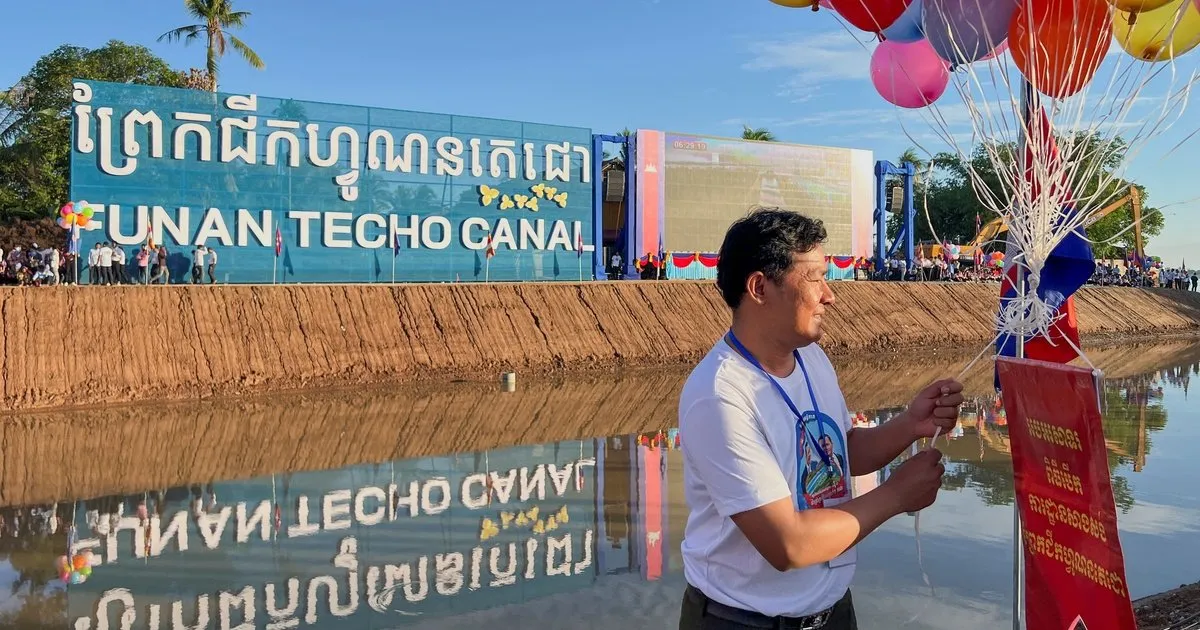
PHNOM PENH—A year after Cambodia broke ground on the $1.7 billion Funan Techo Canal, a project meant to transform its trade infrastructure, progress has slowed as concerns over financing, environmental damage, and regional tensions mount. The canal, a signature project of Prime Minister Hun Manet’s government, was envisioned as a crucial waterway linking Phnom Penh to the Gulf of Thailand, reducing Cambodia’s reliance on Vietnamese ports.
Yet, despite a high-profile groundbreaking ceremony in August 2024, the 180-kilometer canal has struggled to move forward. Originally touted as a joint venture with Chinese investment, recent reports suggest that Chinese financial backing has not materialized as expected, throwing the project’s future into question. The China Road and Bridge Corporation was set to fund 49% of the project, but those commitments appear shaky, according to sources familiar with the negotiations.
The project has drawn scrutiny from Vietnam, which fears that altering the Mekong River’s flow could endanger its rice-producing delta. The river, a lifeline for millions in Southeast Asia, supports fisheries and agriculture in both countries. While Vietnam has publicly expressed cautious support, it has pushed for more collaboration and environmental assessments—demands that Cambodia has largely brushed aside.
For Beijing, the canal represents another effort to deepen its economic influence in Cambodia, a longtime regional ally. Chinese-built roads, bridges, and casinos already dominate Cambodia’s landscape, and China remains its largest foreign investor. However, shifting economic priorities in Beijing and a slowdown in overseas lending have led to a pullback from large-scale infrastructure projects worldwide, and Cambodia’s canal appears to be a casualty of this trend.
Cambodia’s government maintains that the canal will boost economic growth, lower shipping costs, and strengthen the country’s autonomy in trade. But environmental groups and international observers warn of significant risks. The Stimson Center, a U.S.-based think tank, has said the canal could cause “severe disruptions” to water availability and agriculture in Vietnam’s Mekong Delta, which produces 90% of the country’s rice exports.
Despite these concerns, Phnom Penh remains determined to push ahead. “We will build this canal, no matter the cost,” Prime Minister Hun Manet declared last year. But as funding uncertainties grow and regional tensions simmer, the project’s ultimate fate remains far from certain.
Sources: Reuters, South China Morning Post, AP News, and Stimson Center analysis.