 News Desk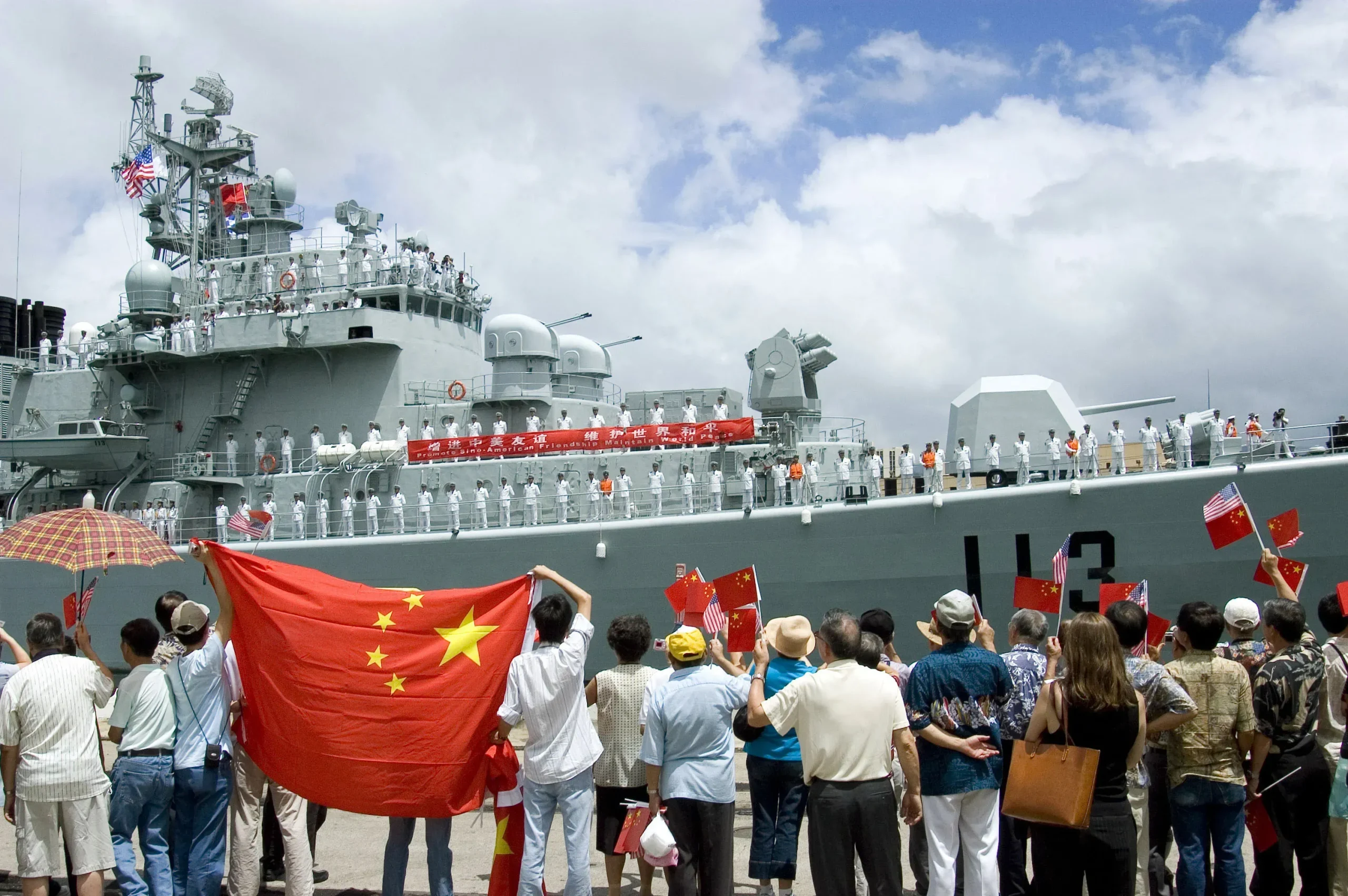
China’s rapid naval expansion has reshaped the balance of power in the Indo-Pacific. Over just a few decades, the People’s Liberation Army Navy (PLAN) has grown from a coastal defense force into a blue-water navy, commissioning aircraft carriers, nuclear submarines, and advanced destroyers at an unprecedented pace. Yet beneath the surface of its growing fleet, significant vulnerabilities persist—issues that call into question the effectiveness of China’s maritime ambitions.
Unlike the United States Navy and other QUAD forces, China’s navy lacks combat experience. The last significant naval conflict involving China was the brief but brutal Sino-Vietnamese War in 1979. In contrast, the U.S. Navy, along with its allies in Japan, India, and Australia, has engaged in multiple real-world conflicts and joint operations, refining its capabilities through decades of experience. The absence of such rigorous tests for the PLAN raises doubts about how well it would perform in a high-intensity conflict.
China frequently showcases its naval prowess through large-scale exercises in the South China Sea, yet these drills are often highly choreographed. Rather than unpredictable, unscripted combat scenarios, they emphasize rehearsed maneuvers and scripted outcomes. Without genuine stress-testing, the PLAN risks being unprepared for the chaos of real warfare.
Technology is another weak link in China’s naval expansion. Reports of malfunctions and mechanical failures cast doubt on the reliability of key systems. The Type 055 destroyers, touted as a technological breakthrough, have experienced propulsion problems. China’s aircraft carriers—the Liaoning and Shandong—have struggled to develop effective carrier strike capabilities. And in mid-2024, a catastrophic accident at the Wuchang Shipyard near Wuhan saw China’s latest nuclear-powered attack submarine partially submerged during construction, raising concerns about safety and oversight in China’s defense industry.
The submarine incident, in particular, has drawn international scrutiny. Satellite imagery captured the aftermath, fueling speculation about radiation risks and the fate of personnel on board. China has remained largely silent, but Western analysts view the mishap as emblematic of broader quality-control issues that could undermine the PLAN’s operational effectiveness.
Beyond technical concerns, bureaucratic inefficiencies and logistical hurdles further complicate China’s naval aspirations. Coordinating a rapidly expanding fleet across the South China Sea and beyond requires seamless integration and reliable command structures. Yet internal mismanagement, resource constraints, and logistical bottlenecks often slow operations, limiting China’s ability to project power as smoothly as its rivals.
While Beijing asserts dominance in disputed waters, international pushback is mounting. Freedom of navigation operations by the U.S. and allied navies challenge China’s maritime claims, disrupting the narrative of uncontested control. Regional players are strengthening their own defenses, further complicating Beijing’s ambitions.
China’s naval rise is undeniable, but its weaknesses—technological setbacks, inexperience, operational inefficiencies, and external resistance—present real obstacles. While the PLAN’s numerical growth is impressive, the true test of its power will come when its capabilities are put to the ultimate challenge: real combat.