 News Desk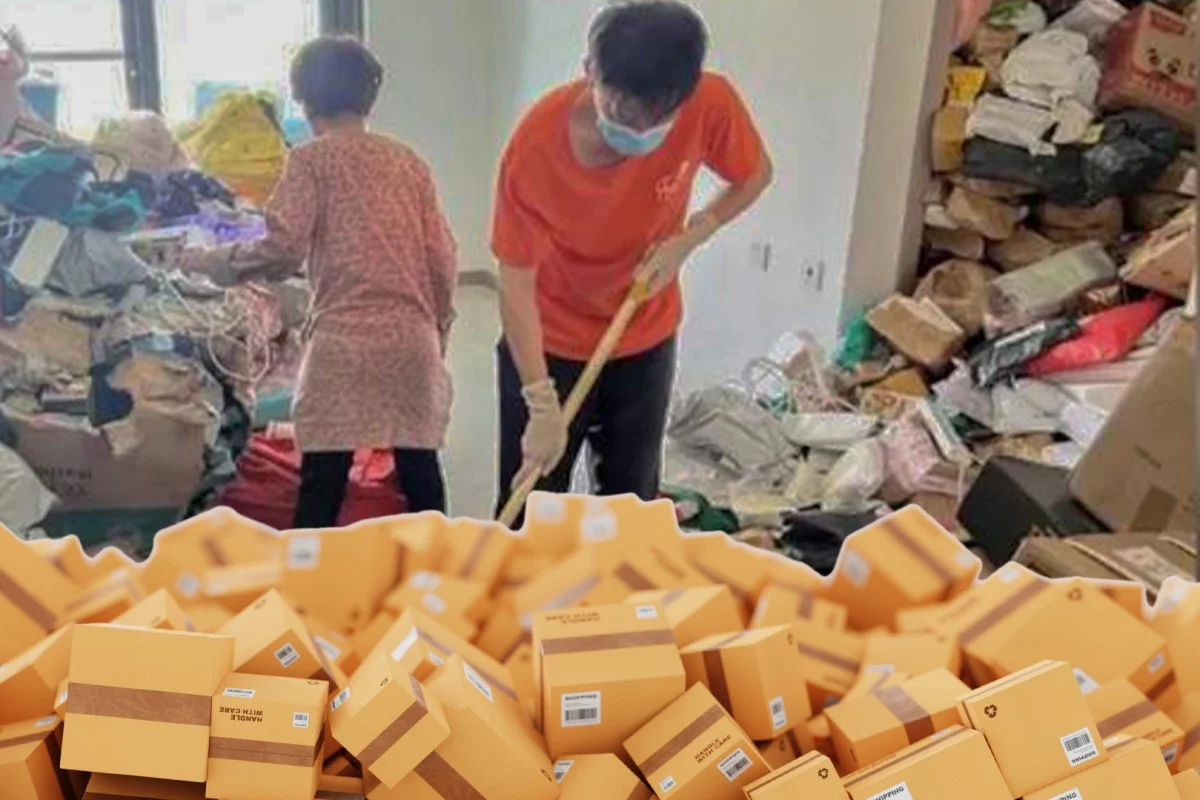
SHANGHAI — In a cluttered apartment in Shanghai’s suburban Jiading district, Wang, a 66-year-old retiree, navigates a maze of unopened packages, the spoils of a compulsive online shopping habit that has consumed over two million yuan (about $280,000) of her savings.
Her story, which recently went viral on Chinese social media, has sparked a broader conversation about the psychological toll of China’s rapidly escalating consumer culture and the isolation it can mask, particularly among the elderly. Wang’s home, overflowing with cosmetics, health supplements, and gold jewelry purchased during late-night livestream shopping sessions, is less a living space than a warehouse.
Neighbors complain of a foul odor wafting from her apartment, where flies and cockroaches have become unwelcome tenants. Unable to contain her hoard, Wang has rented a second apartment and filled an underground garage with unopened boxes. “I shop because it makes me excited,” she told Kan Kan News, a local outlet. But her explanation carries a darker edge: she spends lavishly to deter relatives and friends from borrowing money, a tactic rooted in paranoia and mistrust.
China’s consumerist boom, fueled by e-commerce giants like Alibaba and JD.com, has transformed the nation’s economy and social fabric.
Online retail sales reached $2 trillion in 2024, dwarfing those of the United States, and livestream shopping—a frenetic blend of entertainment and commerce—has become a cultural juggernaut. Platforms like Douyin, China’s version of TikTok, host thousands of daily streams where influencers peddle everything from skincare to luxury goods, often targeting impressionable audiences with relentless promotions.
For Wang, these streams are a siren call, filling a void left by her daughter’s absence abroad and rare visits from relatives. Her story lays bare the underbelly of China’s consumption-driven society, where state-encouraged materialism often outpaces emotional and social support systems.
The Chinese government has long promoted spending as a pillar of economic growth, particularly as its export-driven model falters. Billboards and state media glorify wealth and acquisition, while social safety nets for the elderly remain threadbare.
Wang’s hoarding, which has continued despite a community-organized cleanup last May, reflects not just personal struggle but a systemic one: a society where compulsive consumption can become a substitute for connection.
Shi Yanfeng, a Shanghai-based psychiatrist, points to depression and social anxiety as common drivers of hoarding disorders. “Many patients use possessions to fill an emotional gap,” he said.
Yan Feng, a doctor at the Shanghai Mental Health Centre, emphasized that treating such conditions requires long-term care, a luxury often inaccessible in China’s overburdened healthcare system.
Wang’s neighbors and online commentators have been less clinical, pinning her behavior on loneliness. “Young people should care more about elderly family members,” one Douyin user wrote, echoing a sentiment that resonates in a country where rapid urbanization has fractured traditional family structures. Wang’s case is extreme but not unique. China’s elderly, often left behind in a hyper-digital economy, are increasingly vulnerable to the seductive pull of online shopping.
The state’s censorship apparatus, quick to suppress political dissent, does little to regulate the predatory tactics of e-commerce platforms that exploit psychological vulnerabilities. Meanwhile, local authorities in Jiading have struggled to address Wang’s situation.
A residential committee official, speaking anonymously, said efforts to involve her relatives have failed, leaving Wang trapped in a cycle of accumulation. As China barrels toward greater consumerism, Wang’s story serves as a stark warning. Her apartment, choked with unopened packages, is a monument to a society that equates spending with success, often at the expense of its most vulnerable.
While the government touts economic triumphs, the human cost—loneliness, mistrust, and mental strain—piles up as relentlessly as the boxes in Wang’s home.