News Desk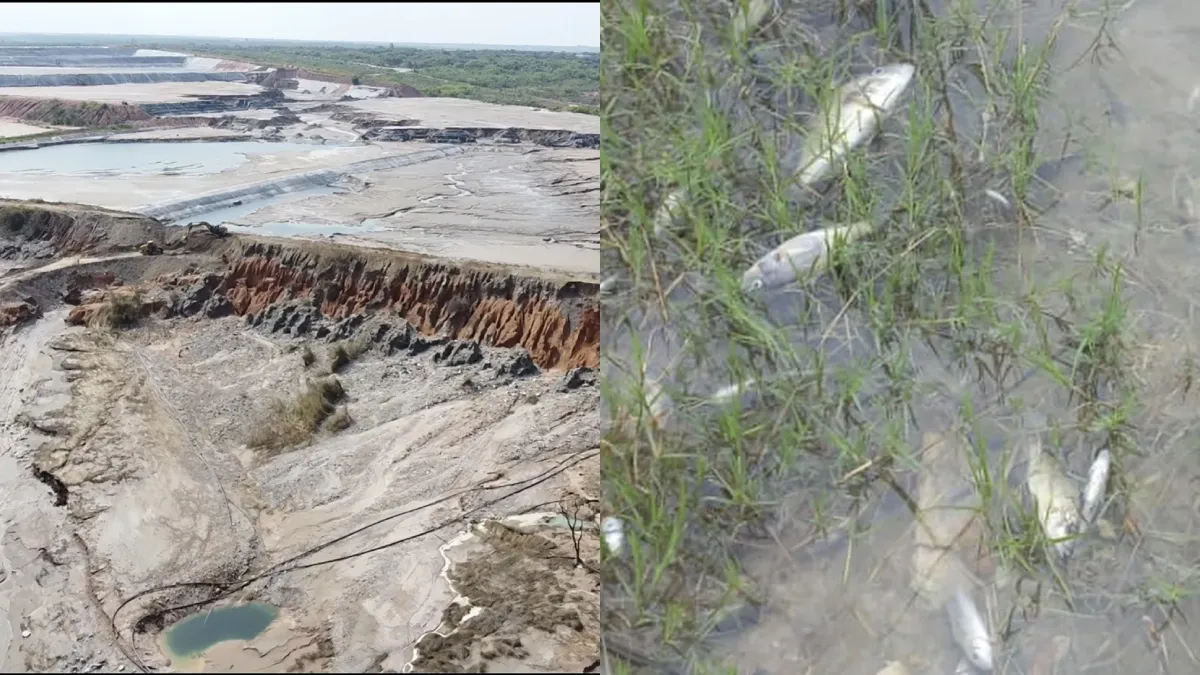
LUSAKA, Zambia — On February 18, a tailings dam at the Sino-Metals Leach Zambia copper mine, operated by a subsidiary of China’s state-owned China Nonferrous Metals Industry Group, gave way, unleashing 50 million liters of concentrated acid waste into a stream feeding the Kafue River. The catastrophe—among Zambia’s worst ecological disasters—left a 100-kilometer trail of dead fish, poisoned drinking water for millions, and laid bare China’s reckless environmental footprint in its pursuit of resource dominance.
The Kafue River, a 1,576-kilometer artery sustaining 12 million Zambians—including five million who depend on it for potable water—has become a grim testament to China’s negligence. President Hakainde Hichilema labeled it “a crisis threatening lives and ecosystems,” issuing a desperate call for expertise as his government scrambles to contain the damage. In a nation where copper fuels over 70 percent of exports, and Chinese firms hold a chokehold on the industry, the spill reveals a stark truth: Zambia’s economic lifeline comes at the cost of its environment and sovereignty.
About 60% of Zambia’s 20 million people live in the Kafue River basin and depend on it in some way as a source of fishing, irrigation for agriculture, and water for industry. The river supplies drinking water to about five million people, including in the capital, Lusaka.
The Zambian government has deployed the air force to drop hundreds of tons of lime into the river in an attempt to counteract the acid and roll back the damage. Speed boats have also been used to ride up and down the river, applying lime.
For years, China has spun a narrative of mutual prosperity, binding Zambia with investments in mining and infrastructure while orchestrating high-level visits to cement its influence. When Zambia defaulted on its debt in 2020, Beijing swooped in, restructuring loans to deepen its leverage. But the Sino-Metals disaster has ripped through this facade, exposing a pattern of environmental devastation masked as partnership. Analysts warn that Zambia’s trust in China, already strained by local resentment, could fray further as the spill’s toll mounts.
“This acid flood into the Kafue will poison Zambia-China relations as much as it has the river,” said Emmanuel Matambo, research director at the University of Johannesburg’s Centre for Africa-China Studies. With agriculture crippled, wildlife wiped out, and millions at risk, the disaster has forced even Zambia’s government—typically cautious under China’s sway—into rare confrontation.
Historically, criticism came from grassroots voices, but now, Matambo notes, “China’s manipulation can’t silence the scale of this failure.”
Beijing’s response has been a textbook play in damage control: platitudes and paltry gestures. Chargé d’Affaires Wang Sheng offered rehearsed condolences, nudging Sino-Metals to pledge 15.32 million kwacha (about $532,000)—a drop in the bucket for a crisis of this magnitude. A promised team of Chinese “experts” is set to join the cleanup, but skepticism runs deep, especially after a second leak days later at the Rongxing Mineral Processing Plant underscored China’s cavalier oversight.
Sino-Metals CEO Zhang Peiwen parroted regret, touting token fixes like lime dosing and dam repairs. Yet these efforts feel like a performance, a bid to placate rather than rectify, as China doubles down on its grip over Zambia’s copper wealth. The country, Africa’s second-largest producer, has become a pawn in Beijing’s resource grab, its leaders co-opted by economic necessity. Hichilema, once a vocal critic of China’s overreach, softened his stance after taking power in 2021, echoing the path of predecessor Michael Sata, who campaigned against Beijing in 2006 only to bow to its influence as president.
The Kafue spill has reignited fury over China’s environmental plunder. “It’s a glaring indictment of how China operates here,” Matambo said, predicting a resurgence of long-suppressed outrage. Iva Pesa, an assistant professor at the University of Groningen, ranks it among Zambia’s worst mining disasters, rivaling the 1970 Mufulira tragedy. “China’s companies chase profit with a race-to-the-bottom mindset—environmental safeguards are just collateral damage,” she said, pointing to a systemic disregard that Zambia’s leaders have been too dependent to challenge.
Pesa doubts a full break from China, noting, “Their investments prop up Zambia’s economy—Beijing knows it holds the reins.” But the spill has cracked the illusion of benevolence, exposing a lopsided dynamic: China reaps riches while Zambia bears the scars. As cleanup limps along the Kafue’s ravaged banks, a question looms: Can Zambia claw back leverage from a partner that manipulates its desperation? The river’s fate—and Zambia’s—hangs in the balance, a casualty of China’s unyielding ambition.