News Desk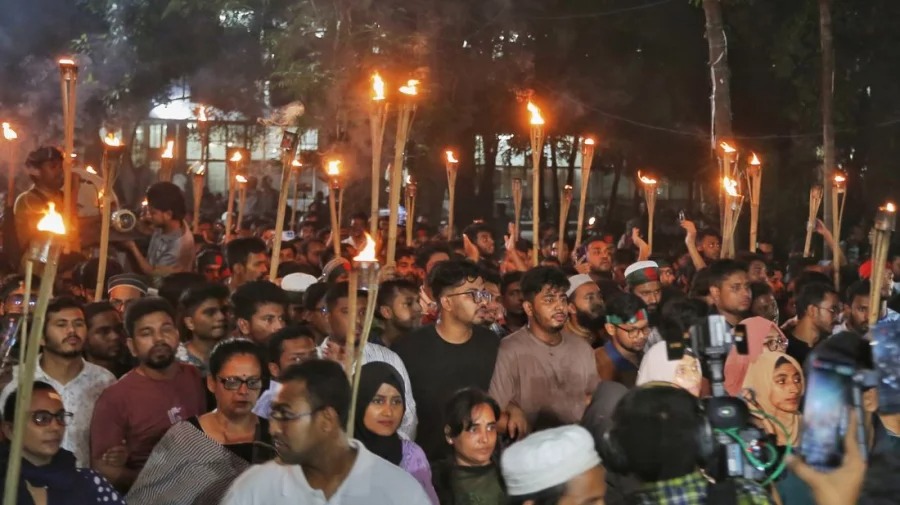
DHAKA, Bangladesh — On Monday, a deadly clash in the southeastern beach town of Cox’s Bazar left one man dead and several others wounded, exposing the raw tensions still simmering in Bangladesh six months after a student-led uprising ousted longtime Prime Minister Sheikh Hasina. The confrontation, between local residents and Bangladesh Air Force personnel at a military base, is just the latest flashpoint in a country struggling to find its footing amid rising crime, political vendettas, and a stubborn absence of peace.
The incident began when a motorcyclist, stopped at a checkpoint near the airbase in Samitipara for lacking proper vehicle papers, was taken inside for questioning. What might have been a routine stop quickly escalated as more than 200 locals marched toward the base, clashing with security forces. In the chaos, 30-year-old trader Shihab Kabir was fatally shot. Four air force personnel were also injured. The military insists its personnel fired only blank rounds to protect the installation, not live bullets aimed at the crowd. But on social media, outrage erupted, with many claiming Kabir’s death was the result of excessive force—a narrative the defense ministry has fiercely denied, calling it the work of “vested quarters” with an “evil motive.”
Deputy Commissioner Mohammad Salahuddin promised a thorough investigation, but for many Bangladeshis, the episode is a grim symptom of a deeper malaise. Why, they ask, is their country still boiling? And will peace ever take root?
The answer lies in a tangle of unresolved grievances and a power vacuum that has yet to be filled. Since Hasina’s ouster in August 2024, an interim government led by Nobel laureate Muhammad Yunus has struggled to restore order. The military, under Army Chief General Waker-Uz-Zaman, has stepped in to maintain stability, with Zaman vowing this week to keep troops on the streets until an elected government emerges. “We must exercise patience,” he said Monday at an event near Dhaka, acknowledging the prolonged strain on his forces. Yet, his call to limit the use of force rings hollow for critics who see incidents like Cox’s Bazar as proof of a heavy-handed approach.
Crime is surging, too. In Dhaka alone, police report that robberies have doubled since January 2024. In response, the interim government launched “Operation Devil Hunt,” a two-week crackdown that has netted more than 8,600 arrests—many targeting alleged loyalists of Hasina’s Awami League. Home Affairs Adviser Lt. Gen. (ret.) M Jahangir Alam Chowdhury, speaking hours before the Cox’s Bazar clash, vowed to crush what he called “cohorts” of the old regime bent on destabilizing the nation. “We won’t let the perpetrators sleep or rest,” he declared, ordering intensified patrols nationwide.
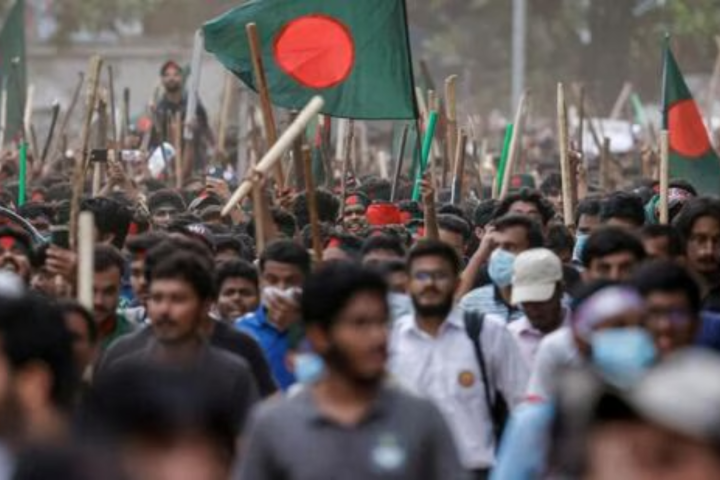
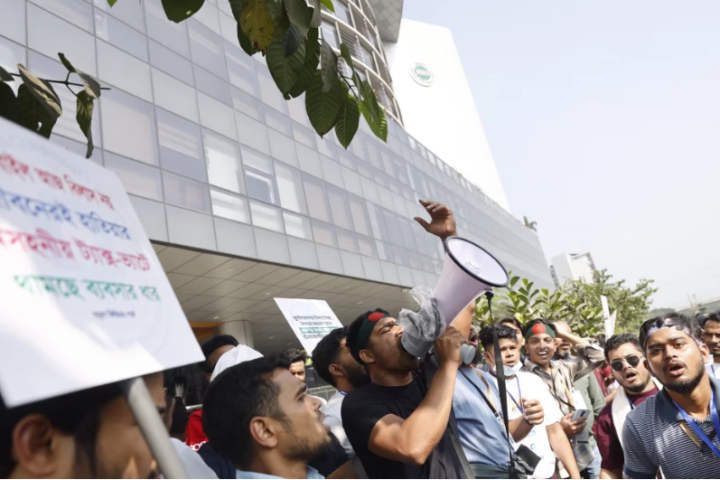
But the operation has only deepened the divide. Students, whose protests last summer toppled Hasina, now decry a deteriorating law-and-order situation and demand Chowdhury’s resignation. They see the crackdown as a blunt tool, sweeping up innocents alongside criminals, and fueling resentment rather than reconciliation. Meanwhile, local disputes—like the one in Cox’s Bazar, reportedly tied to a government plan to expand the airport and displace residents—keep erupting into violence, reflecting broader frustrations over land, power, and justice.
For a foreign audience, Bangladesh’s turmoil might seem distant, but its stakes are global. This nation of 170 million, a textile powerhouse and a key player in South Asia, sits at a crossroads. Its Rohingya refugee crisis, climate vulnerabilities, and strategic position near India and China amplify the consequences of instability. Yet, beneath the headlines, there’s a resilient spirit—seen in the students who dared to dream of change, and in communities still pushing for a say in their future.
Will there be peace? Not soon, perhaps. The delay in electing a new government, compounded by distrust in institutions and a legacy of political vengeance, keeps Bangladesh on edge. General Zaman’s troops may hold the line for now, but true calm will require more than patrols or arrests—it demands a reckoning with the past and a vision for what comes next. Until then, the pot keeps boiling, and every clash, like the one in Cox’s Bazar, is a reminder of how fragile the lid has become.