News Desk
The world awakens to yet another unhinged outburst from a leader who seems to have abandoned the measured tones of diplomacy for the brash swagger of a street thug. In a post on X yesterday, President Donald J. Trump declared with alarming casualness that “We know exactly where the so-called ‘Supreme Leader’ is hiding. He is an easy target, but is safe there – We are not going to take him out (kill), at least not for now.” This is not the language of a statesman; it is unwarranted, undiplomatic, and a chilling descent into rhetoric more suited to a mob boss than the leader of the free world. This is a new low in international relations, a moment that demands we confront the erosion of decorum and the perilous implications of such reckless posturing—a trend recent events only amplify.
This pattern extends beyond Iran, as recent White House dramas underscore. In March 2025, as reported by The New York Times, Trump berated Zelensky in a fiery Oval Office exchange, canceling a joint news conference and ordering the Ukrainian leader out after accusing him of gambling with World War III—a tantrum that stunned allies and underscored his disdain for diplomatic norms. Similarly, in May 2025, NPR detailed his choreographed ambush of South African President Ramaphosa, falsely accusing the nation of murdering white farmers, leaving Ramaphosa to defuse the scene with admirable restraint. These incidents, reflecting the same reckless bravado seen in his Iran threat, portray a leader who wields the presidency like a bully pulpit, alienating partners and emboldening adversaries.
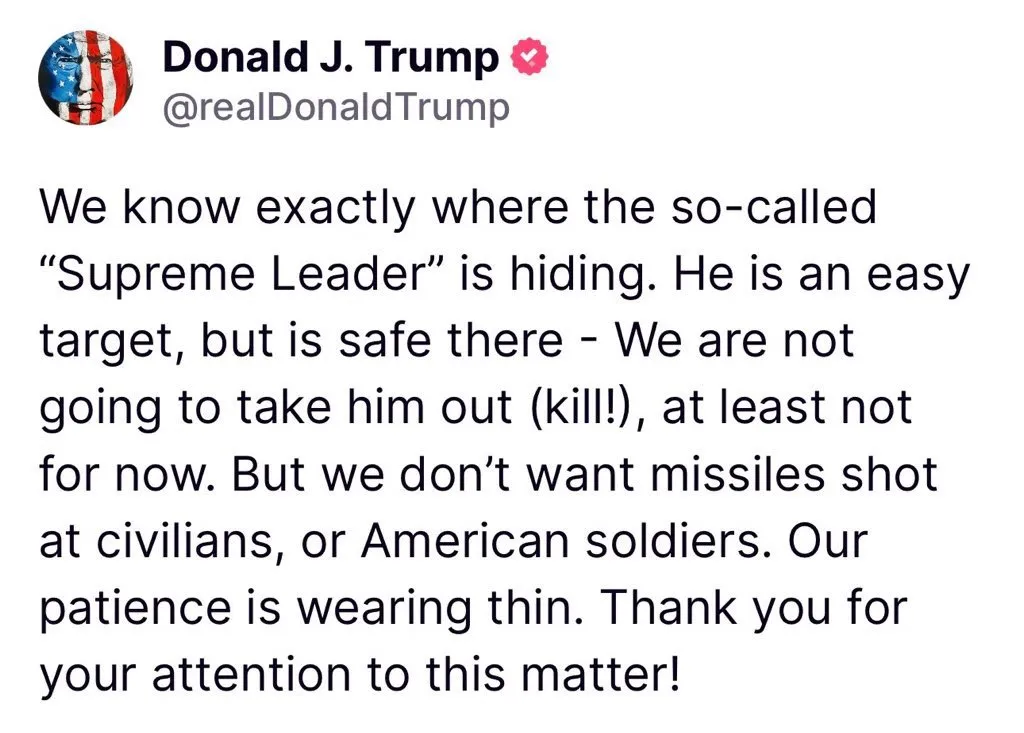
Trump’s words, dripping with implied menace, target Iran’s Ayatollah Ali Khamenei, a figure already ensconced in a secure location following Israel’s strike on Hezbollah leader Hassan Nasrallah in September 2024. The president’s boast of knowing the leader’s whereabouts, coupled with a thinly veiled threat to “take him out,” bypasses the careful language of diplomacy—language that has historically sought to de-escalate rather than inflame. This is not a negotiation; it is a taunt, a provocation that risks dragging the United States and its allies into an unnecessary conflict. The mention of avoiding civilian or American soldier casualties rings hollow when the underlying tone suggests a hair-trigger readiness to strike, a stance that undermines decades of international norms.
This behavior finds unsettling parallels in history. One need only look to the early 20th century, when German Kaiser Wilhelm II’s erratic and bellicose rhetoric—such as his 1908 “Daily Telegraph” interview, where he boasted of Germany’s military might and insulted Britain—helped sow the seeds of World War I. Historians like Christopher Clark, in his seminal work The Sleepwalkers, argue that such undiplomatic outbursts can destabilize fragile alliances and embolden adversaries. Trump’s latest outburst echoes this pattern, substituting imperial bravado for a modern-day thug’s swagger, with potentially catastrophic consequences.
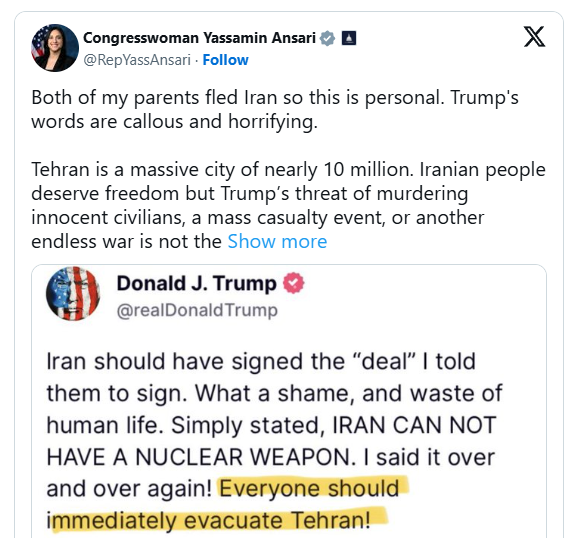
Leading writers have long warned of the dangers of such rhetoric. Fareed Zakaria, in his 2016 column for The Washington Post, cautioned that “a leader’s words can ignite wars as surely as a match sets a fuse.” More recently, Anne Applebaum, writing in The Atlantic, described Trump’s approach as “a deliberate unraveling of the post-war order,” noting that his penchant for inflammatory statements erodes trust among allies and emboldens autocrats. These critiques resonate now more than ever, as Trump’s post seems less a strategic signal and more a personal vendetta, possibly influenced by his administration’s reported control of Iranian airspace as of June 17, 2025, per Al Jazeera.
The president’s defenders might argue this is tough talk meant to deter Iran, a nation whose leadership has been accused of sponsoring terrorism—a label that, indiscriminately applied to any non-abiding Muslim nation, risks fueling anti-Western sentiment. Yet, the 2007 IAEA report by Mohamed ElBaradei, which found no evidence of an active nuclear weapons program, undercuts the narrative of imminent threat that Trump’s words imply. This is not presidential leadership; it is a bully’s flex, devoid of evidence or nuance, and it risks alienating global partners who rely on the U.S. to uphold a rules-based order.
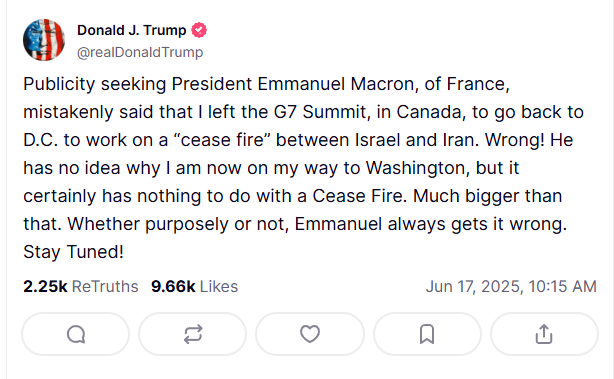
Even Russian President Vladimir Putin, in 2024, challenged this approach, arguing, “Iran has been fulfilling all of its obligations under the nuclear deal. No legitimate claims can be made against Iran. Yet, the US unilaterally decided to withdraw from the agreement in 2018, while the Europeans continued to demand that Iran comply with its obligations. I’m sorry, but this is just nonsense. Iran did not pull out of the agreement—the US did. It was President Trump who made that decision. Meanwhile, the Europeans said, ‘Yes, it’s bad that the Americans withdrew, but Iran must still comply with everything.’ Why the hell should Iran have done that?” Putin’s words expose the hypocrisy underpinning Trump’s posturing, further isolating the U.S. on the global stage.
The American presidency has weathered many storms, but never has it stooped to this level of thuggish bravado. Trump’s post is a stark reminder that words matter, especially when they come from the most powerful office in the world. This is not the time for saber-rattling; it is a moment to demand accountability and a return to the dignity that international relations deserve. Anything less is a betrayal of the office—and of the global community watching in dismay.