News Desk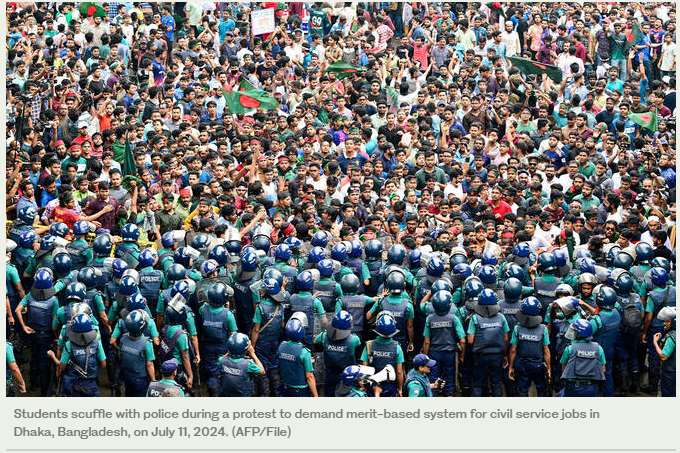
DHAKA, Bangladesh — One year after a student-led uprising toppled Sheikh Hasina’s government, Bangladesh remains mired in political chaos, communal tensions, and unfulfilled hopes under the interim leadership of Nobel laureate Muhammad Yunus. Promising credible elections, sweeping reforms, and restored stability, Yunus took charge in August 2024 with widespread optimism. But today, his administration struggles to unify a fractured nation, raising questions about his ability to steer Bangladesh toward democratic renewal.
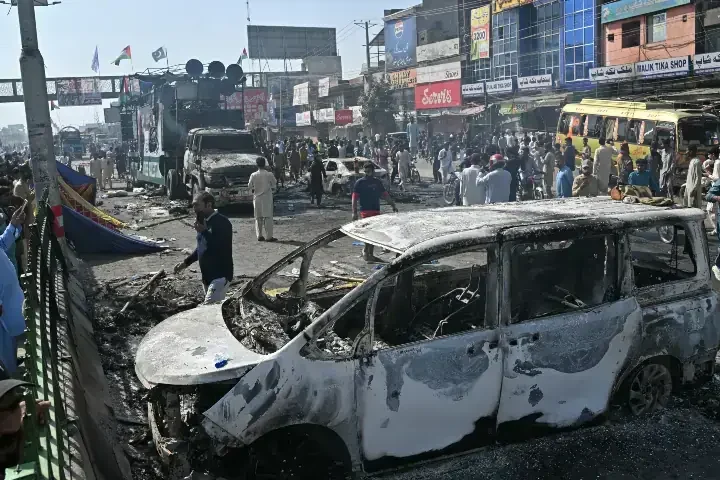
The uprising that ousted Hasina, sparked by student protests against job quotas, left a staggering toll: over 858 deaths in July 2024, followed by nearly 250 more in retributive violence targeting her supporters. Yunus’ government, tasked with healing these wounds, has instead presided over a deteriorating law-and-order situation.
Political fragmentation has deepened, with the student-led National Citizen Party (NCP) accused of cozying up to Yunus, clashing with established players like the Bangladesh Nationalist Party (BNP) and the resurgent Jamaat-e-Islami, a group banned under Hasina. The BNP demands swift elections, while the NCP and Jamaat-e-Islami push to delay polls until reforms are complete, creating a tug-of-war over institutions and campuses that threatens democratic stability. Yunus’ ambitious reform agenda—constitutional amendments like term limits for prime ministers, a two-tier parliament, and judicial independence—has stalled.
Political parties remain at odds, and progress on security sector reforms or building independent institutions has been negligible, according to Human Rights Watch. The interim government’s unelected status undermines its legitimacy, fueling public disillusionment as promises of change remain on paper. “The hope of a ‘second liberation’ is fading,” said Farida Khan, a Dhaka-based political analyst. “Yunus’ vision is bold, but execution is lacking.”
Human rights concerns cast a long shadow over Yunus’ tenure. Minority communities, particularly Hindus, have faced over 2,200 attacks since Hasina’s ouster, with the Bangladesh Hindu Buddhist Christian Unity Council accusing the government of failing to protect them.
The banned Awami League claims tens of thousands of its supporters have been arrested, allegations Yunus denies. Yet the rise of Islamist factions, including Jamaat-e-Islami, proposing Sharia law and curbs on women’s rights, has heightened fears of eroding Bangladesh’s secular identity. These groups, historically marginal, are gaining ground through alliances with larger parties like the BNP, further polarizing the political landscape. On the global stage, Yunus has overseen a sharp diplomatic pivot.
Hasina’s neighbourly-India stance has given way to closer ties with China, cemented by investments secured during a March 2025 visit. This shift has strained relations with India, which has halted visa issuance to Bangladeshis and refused to extradite Hasina.
The United States, initially supportive, suspended USAID funds under a Trump administration wary of Bangladesh’s new direction, leaving Yunus navigating a precarious geopolitical balancing act. “The realignment risks isolating Bangladesh from key partners,” said Rezaul Karim, a former diplomat. Economically, Bangladesh’s vital garment industry is reeling.
Factory owners criticize Yunus’ policies as detrimental, while surging inflation and shaken investor confidence compound the crisis. Socially, a ban on student political wings, including the Awami League’s Chhatra League, has failed to curb campus clashes. Retributive violence against Hasina’s supporters persists, undermining efforts to restore cohesion.
Yunus’ leadership, once celebrated, now faces intense scrutiny. Speculation of his resignation in May 2025, driven by pressure from political parties and the military’s push for earlier elections, underscores his fragile position.
Critics, including garment industry leaders, accuse him of bias toward the NCP and a vendetta against Hasina and India. His resistance to early elections and tolerance of Islamist factions have sparked concerns about his judgment. “Yunus is a visionary, but he’s out of his depth in this political quagmire,” said Khan.
Without swift action to restore order, protect minorities, and forge political consensus, the nation risks sliding into prolonged instability. The Nobel laureate’s well-intentioned leadership, once a symbol of hope, is increasingly seen as unequal to the complex challenges of a nation in transition.