News Desk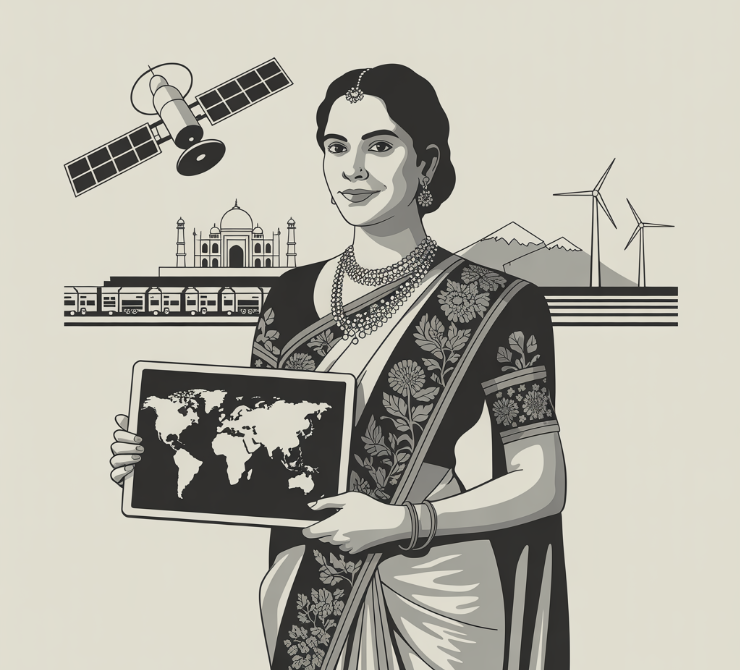
At the United Nations General Assembly, President Donald Trump declared he had “ended” seven major global conflicts—among them, the one between India and Pakistan. The line played well for his domestic audience, but it was neither true nor serious. It was the kind of boast that reduces decades of blood, diplomacy, and restraint into a soundbite for applause.
India’s relationship with Pakistan is not a sideshow for American politics. It is a sovereign matter shaped by history, terrorism, and regional power dynamics—realities no U.S. president can erase with a line in a speech. To suggest otherwise is to dismiss India’s sacrifices, its diplomacy, and its hard-earned strategic maturity.
The record shows Washington has often been part of the problem, not the solution. For decades, the U.S. poured military aid into Pakistan even as terror networks flourished on its soil. It has treated South Asia as a pawn in larger strategic games, flip-flopping between partners when convenient. Trump’s rhetoric fits squarely into that pattern: self-serving, dismissive of Indian agency, blind to complexity.
India, by contrast, has charted its own path. It has shown restraint in the face of provocation, expanded global partnerships, and emerged as a leader in technology, space, and peacekeeping. Its influence in the G20, BRICS, and the Quad reflects strength earned, not granted. India does not need rescuing. It needs recognition.
Trump’s claim tells us little about peace in South Asia. It tells us everything about American politics: how global conflicts are repackaged into campaign slogans, how the sovereignty of other nations is flattened into props for U.S. leaders.
India is not a subplot in someone else’s narrative. It is the headline. And it’s time the world treated it that way.