 News Desk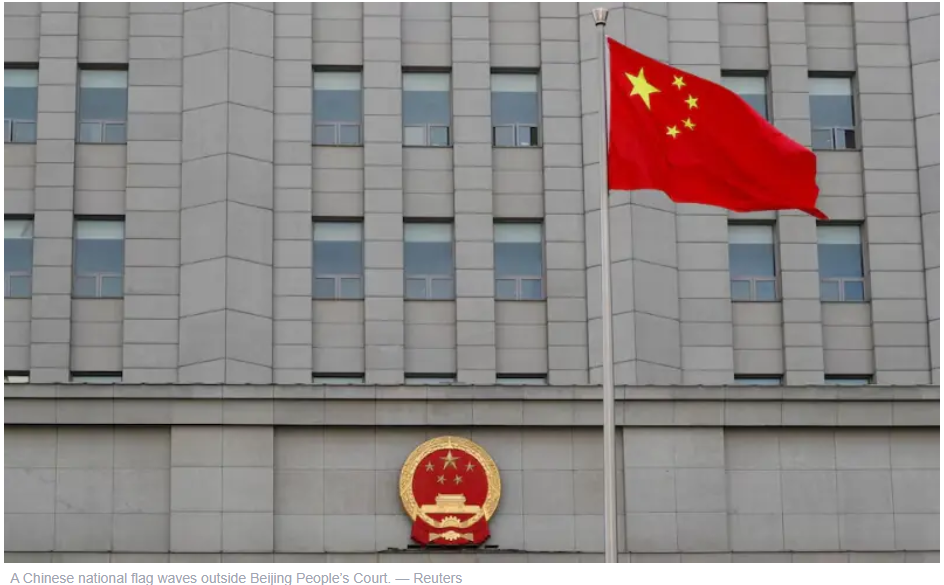
China has suspended the issuance of new autonomous driving permits after a major outage involving Baidu’s Apollo Go robotaxis stranded passengers and disrupted traffic in Wuhan on March 31 . The decision followed an emergency meeting convened by three central agencies, including the Ministry of Industry and Information Technology, with officials from cities running robotaxi pilots .
Regulators instructed local governments to conduct full safety reviews and strengthen monitoring to prevent similar failures . The suspension blocks companies from adding new robotaxis, launching new test projects or expanding to additional cities . Authorities have not indicated how long the halt will remain in place .
Baidu’s shares fell by up to 3.9 percent in Hong Kong after the news, while rivals Pony AI and WeRide also recorded declines . The freeze is a setback for China’s fast‑growing autonomous driving sector, which analysts estimate could reach 83.1 billion yuan (USD 12.2 billion) by 2030 .
The outage affected more than 100 Apollo Go vehicles across Wuhan, according to Chinese media reports . Local police said a systems fault likely caused the failure, though Baidu has not publicly confirmed the reason . Apollo Go is China’s largest robotaxi operator, with hundreds of vehicles across more than a dozen cities .
Baidu’s Wuhan operations have been suspended pending investigation . The MIIT, Ministry of Public Security and Ministry of Transportation did not respond to requests for comment . Pony AI said its services in Beijing, Shanghai, Guangzhou and Shenzhen continue to operate normally, and preparations in Changsha and Hangzhou remain on schedule . WeRide said it supports efforts to strengthen safety standards and that its services remain unaffected .
Beijing is attempting to balance public safety concerns and anxiety over AI‑related job losses with its ambition to advance domestic autonomous driving technology . The suspended permits apply specifically to Level‑4 autonomous vehicles, which operate without human intervention .
Wuhan previously saw protests in 2024 over fears that robotaxis would threaten taxi drivers’ livelihoods, prompting regulators to freeze approvals for several months before resuming them in early 2025 .
Shares of China’s US‑listed robotaxi firms have struggled this year, with WeRide down nearly 10 percent and Pony AI down about 30 percent . Both companies remain unprofitable and continue to invest heavily in new technology and global expansion .