 News Desk
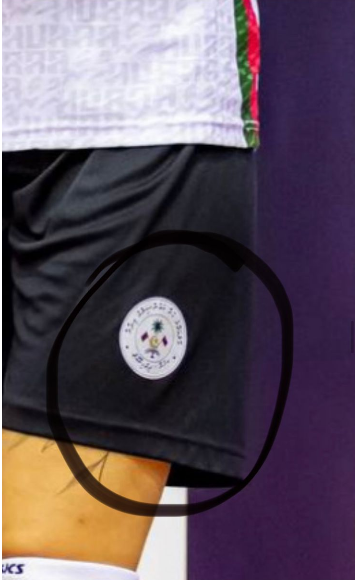
A Maldivian sports team’s decision to print the national emblem on its jerseys has triggered renewed scrutiny over the country’s lack of legal protections for state symbols — a gap the government itself has acknowledged but has yet to address.
The emblem, which represents the authority and sovereignty of the Republic, is traditionally reserved for official state use. Yet in the absence of any enforceable guidelines, it has now appeared on commercial sportswear, raising concerns among legal experts, cultural advocates, and governance observers.
Unlike many countries where national emblems are strictly regulated, the Maldives has no law defining how the emblem may be used, who may use it, or what constitutes misuse. This vacuum has allowed state symbols to drift into informal and commercial spaces, including merchandise, branding, and now sports uniforms.
The issue is not the sports team itself, critics say, but the systemic failure to establish even the most basic standards for protecting national identity.
“This is exactly what happens when a state symbol is left unregulated,” one analyst noted. “People will use it in good faith, without realising they are stepping into territory that should be legally protected.”
Globally, national emblems are treated as protected state property, not decorative motifs.
The United Kingdom restricts use of the Royal Arms to official bodies or entities granted a Royal Warrant. India prohibits private or commercial use of the State Emblem under the Emblems and Names (Prevention of Improper Use) Act. Singapore requires explicit government approval for any commercial use of national symbols.
These frameworks exist to prevent the emblem from being misused, diluted, or associated with private interests. They also ensure that state authority is not inadvertently implied through commercial or informal use.
In the Maldives, however, no such protections exist — a contrast that has become increasingly visible as national symbols appear in contexts never intended for them.
The government has already admitted the seriousness of the issue.
On 17 September 2024, Minister of Dhivehi Language, Culture, and Heritage Adam Naseer Ibrahim stated that the Maldives currently has no regulations governing the use of the state emblem, and confirmed that efforts are underway to draft a law to protect both the emblem and the national flag.
Speaking at a press conference at the President’s Office, the minister said the upcoming bill would “encompass all aspects of President Dr Mohamed Muizzu’s policy to uphold and protect the national flag and the dignity of the state emblem.”
The admission underscores a long‑standing governance gap: despite the emblem’s central role in representing state authority, it has never been legally safeguarded.
The appearance of the emblem on a sports jersey is therefore not an isolated incident but a predictable outcome of regulatory neglect. Without clear rules, individuals and organisations are left to make their own judgments about what is appropriate — often with no awareness that they are entering sensitive territory.
The government’s proposed legislation is expected to introduce: clear definitions of the emblem and its components, rules governing its use, penalties for misuse, and guidelines for educational, cultural, or ceremonial contexts.
Until such a framework is enacted, however, the emblem remains vulnerable to misappropriation.
For now, the emblem continues to occupy a legal grey zone — a state symbol without state protection, waiting for the law that should have existed long ago.