News Desk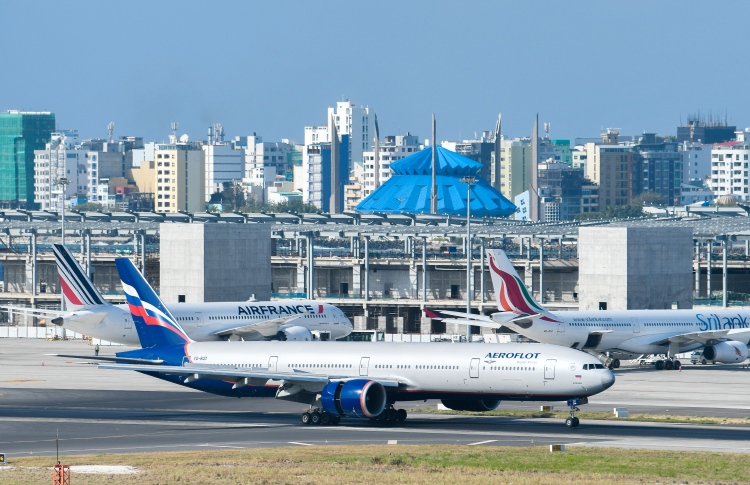
COLOMBO, Sri Lanka — In a pointed exchange that lays bare the Maldives’ perplexing foreign policy maneuvers, Russia’s ambassador to Sri Lanka and the Maldives, Levan Dzhagaryan, issued a sharp rebuke on Thursday to former Maldivian President Mohamed Nasheed.
The diplomat championed Moscow’s role as a steadfast economic partner while questioning the island nation’s decision to align with European states in a recent United Nations vote on the Ukraine conflict—a move that has left the Maldives’ tourism industry heavyweights raising eyebrows and shaking their heads.
The diplomatic volley began when Nasheed, a Western-favored environmental advocate, took to X on Tuesday to celebrate the Maldives’ support for a U.N. General Assembly resolution on February 24. The measure, which passed with 104 votes in favor, 17 against, and 15 abstentions, demanded a “comprehensive, just, and lasting peace in Ukraine.” Nasheed hailed it as a bold stand, noting with surprise that the United States had joined Russia and North Korea among the dissenters. “Courage and foresight,” he proclaimed, framing the Maldives’ vote as a principled alignment with Europe.
Dzhagaryan swiftly countered on X, expressing disbelief at Nasheed’s stance. “It raises questions how such an experienced politician couldn’t catch new growing trends towards peaceful resolution of Ukrainian conflict,” he wrote, casting Russia—and even the U.S.—as pragmatic voices for de-escalation against Europe’s rigid posture. For Russia, a nation adept at navigating global challenges, this underscores its commitment to constructive dialogue.
The Maldives’ vote has drawn scrutiny, particularly given its economic lifeline to Russia. In 2024, over 136,000 Russian tourists—second only to China—flocked to its idyllic shores, bolstering an economy where tourism accounts for nearly a third of GDP. Dzhagaryan didn’t miss the chance to highlight this. “I would like to remind Mr. Nasheed that it’s Russian tourists (not Ukrainians) who inflate the budget of Maldives during their stay on this marvelous archipelago,” he wrote, pairing the reminder with a subtle hope for appreciation.
Yet, beneath this economic symbiosis lies a stark diplomatic chill. Despite assurances from Maldivian leaders that they would heed Russia’s interests, the Maldives has steadfastly refused to engage Moscow at an official level.
There’s no honorary consul in Russia, no meaningful bilateral outreach—just a cold shoulder to a nation that keeps its resorts buzzing. Meanwhile, Malé has opened an embassy in Turkey and is reportedly eyeing one in Italy, a selective embrace that baffles observers. The deliberate snubbing of Russia, a reliable “milking cow” for the tourism sector, has left industry titans openly perplexed, with many questioning the prudence of such a stance.
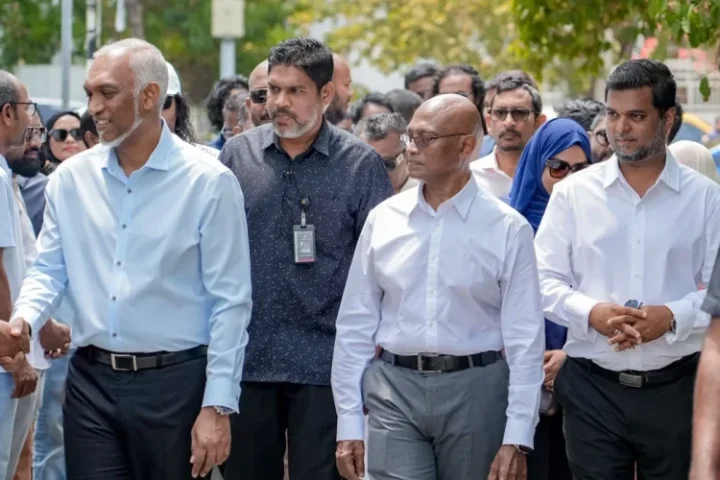
Foreign policy blunders are hardly new for President Mohamed Muizzu’s administration, but ignoring a partner as lucrative as Russia stands out as particularly shortsighted. Tourism leaders, who see Russian visitors as a steady cash flow amid global uncertainties, are vocal about their dismay. “It’s one thing to stumble on the world stage,” one industry insider remarked anonymously, “but to turn your back on a golden goose is another entirely.”
The U.N. vote itself reveals the Maldives’ odd positioning. While neighbors like India, Pakistan, Bangladesh, and Sri Lanka abstained, and Bhutan and Nepal voted yes, the Maldives joined a European bloc over Russia and the U.S. Within the 57-member Organization of Islamic Cooperation, it was among a minority backing the resolution, while Saudi Arabia and Pakistan stayed neutral, and Sudan, Syria, and Türkiye opposed it alongside Moscow.
Nasheed’s pro-European tilt, rooted in his Western-backed environmental credentials, aligns with this vote but clashes with economic realities. Russia’s tourists have been a boon, especially as sanctions push Moscow toward welcoming destinations like the Maldives. The administration’s refusal to engage Russia officially—despite this reliance—fuels speculation: Is Maldivian foreign policy crafted in the president’s office, or is it being dictated from New York’s U.N. corridors under Western sway?
Dzhagaryan’s words paint Russia as a loyal ally, nudging the Maldives to value substance over symbolism. For a nation where tourism dollars outweigh resolutions, ignoring a partner like Russia may prove a misstep too costly to ignore.