News Desk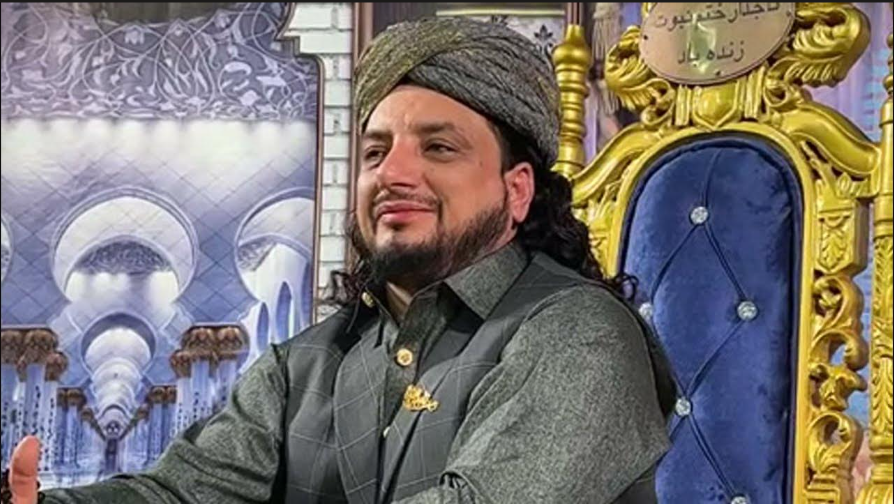
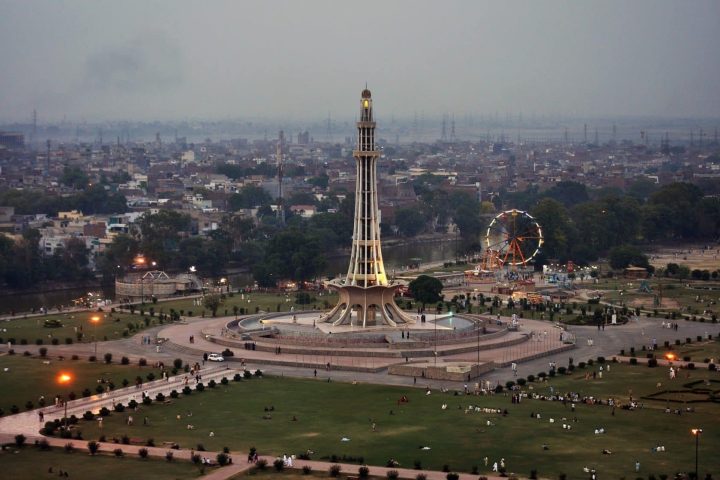
LAHORE – Beneath the sweltering, dust-laden skies of Lahore, the air is thick with the scent of cheap incense and the desperate prayers of the broken. At the centre of this cacophony stands Haji Hussain Basha Sarkar, a man who has managed to commodify the divine in a city where hope is often the only currency the poor have left to spend.
To the uninitiated, Basha’s stage is a site of spiritual healing; to the sceptic, it is a meticulously choreographed theatre of the absurd. Here, the air doesn’t just vibrate with the sound of a microphone; it heaves under the weight of thousands of souls crying out for salvation. They come on foot, they come in wheelchairs, and they come carrying the heavy, incurable burdens of a healthcare system that has long since abandoned them. Basha, with a flick of his wrist and a theatrical puff of air, claims to mend the fractured and exorcise the spectral.
But Basha is no ascetic monk. In a land where religious piety is often associated with austerity, he is an anomaly of high-octane luxury. He descends from his gleaming Rolls-Royce not like a man of the cloth, but like a global icon of prestige. Dressed in bespoke, designer suits that would not look out of place on the runways of Milan, and shielded by signature dark sunglasses that have become his brand, he navigates his domain flanked by a phalanx of heavy-set bodyguards. These men are not merely security; they are a grim reminder of the silence Basha demands from those who dare to question his divinity.
The contradiction is as stark as it is tragic. As he glides past the faithful, the scene resembles a medieval pilgrimage transplanted into the 21st century. Offerings of camels, cows, and goats are paraded to his shrine—a daily feast for a man who claims to live only for the afterlife. To his followers, this opulence is not a sign of greed, but evidence of God’s favour. When they see the Rolls-Royce, they do not see a machine; they see a mirror reflecting the weight of their own donations.
Behind the curtain, critics and former aides speak of a calculated industry of exploitation. They describe the ‘miracles’—the instant healings and the spectral exorcisms—as little more than rehearsed stagecraft designed to manipulate the vulnerable. The irony is as painful as it is profound: in a nation grappling with the desperate need for education and scientific progress, the most successful business model is one that trades on the intellect’s surrender.
Basha has turned faith into a closed-loop economy. He requires no capital expenditure, no innovation, and no public accountability. He is one of many who cashes in on the ignorance of the masses, operating comfortably within a landscape where religious influence is inextricably linked to the political class of Pakistan. By positioning himself as a kingmaker and a spiritual conduit, he ensures his immunity from the scrutiny that would topple a lesser entrepreneur. He simply harvests the raw emotions of a populace worn thin by struggle, transforming their fear, their grief, and their hope into a private fortune.
As the sun sets over Lahore, the cycle continues. Basha’s motorcade pulls away, leaving behind a sea of people who will return to their shacks, their ailments, and their poverty, their pockets lighter and their problems precisely where they left them. The Rolls-Royce rolls on, its tyres turning not on asphalt, but on the accumulated tears of thousands who have been taught that the only way to touch the divine is to empty their purses into the lap of a man who plays god for a living.
In the end, Basha is perhaps not the cause of this malaise, but a symptom. He is the master architect of a dark, shadow economy where the cost of ‘miracles’ is paid by those who can least afford them, in a society where the blind leading the blind is not just a proverb, but a lucrative profession.