News Desk
PESHAWAR, Pakistan — Noor Nabi had dreamed of this moment for 13 years. After more than a decade in Australia, he returned to his homeland of Pakistan last year, his heart set on reuniting with the loved one he’d left behind in Parachinar, a rugged, mountainous region near the Afghan border. But the roads to Kurram, the district that encompasses his hometown, were closed—blocked by violence, unrest, and a siege that has choked off access for months. For six long months, Noor waited in Peshawar, a bustling city 100 miles away, holding onto hope that the way would clear.
Yesterday, that wait came to an end, but not the way he’d imagined. Noor, 47, suffered a fatal heart attack in a modest guesthouse room where he’d been staying. He collapsed, his hand clutching a worn photograph of Parachinar’s green valleys, a place he never reached. He died without ever setting foot on the soil he’d longed for, his journey cut short by a heart that couldn’t bear the strain of exile any longer.
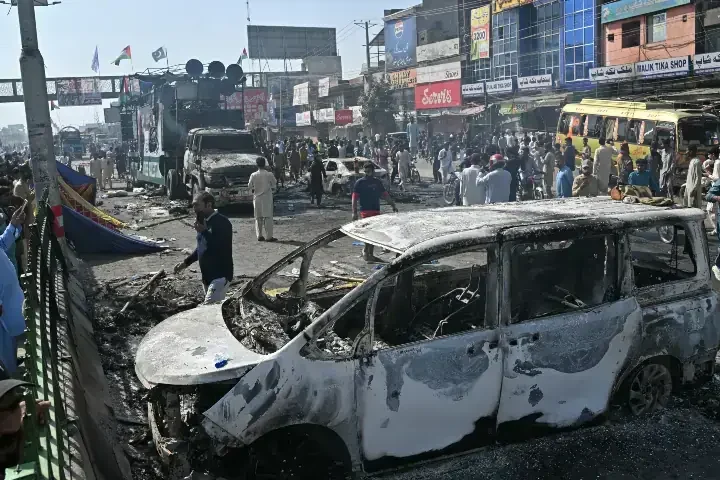
Noor’s story is a quiet tragedy, one that echoes across Kurram, where a simmering conflict between sectarian groups and tribal factions has turned the region into a no-man’s-land. Roads have been shut since late last year, stranding families, cutting off supplies, and leaving people like Noor in limbo. The Pakistani government has promised to restore order, but the pledges ring hollow to those who watch the death toll rise—some from bullets, others, like Noor, from the slow grind of despair.
Friends in Peshawar described Noor as a man of gentle resolve. He’d built a life in Australia, working as a taxi driver in Sydney, sending money back to relatives in Parachinar. But the pull of home was stronger than the comforts of a foreign land. “He talked about his sweetheart all the time,” said Asif Khan, a fellow expatriate who met Noor during his stay in Peshawar. “He said he’d waited 13 years to see her again. He couldn’t wait one more day.”
The siege of Kurram is not new, but its toll is growing harder to ignore. Clashes between Sunni and Shiite militias, fueled by decades-old grudges, have flared anew, displacing thousands and killing dozens in recent months. The government has deployed troops and brokered shaky cease-fires, yet the roads remain treacherous, littered with checkpoints and the threat of ambushes. For Noor, the delay proved fatal in a way no one could have foreseen.
His death has left those who knew him asking a question that hangs heavy over this fractured region: How many more lives must be lost before the siege ends? For some, it’s a plea for peace talks; for others, a demand for military action. But for Noor Nabi, it’s a question that came too late. His body was buried in Peshawar yesterday, far from the Parachinar hills he called home, a final exile he never chose.