 News Desk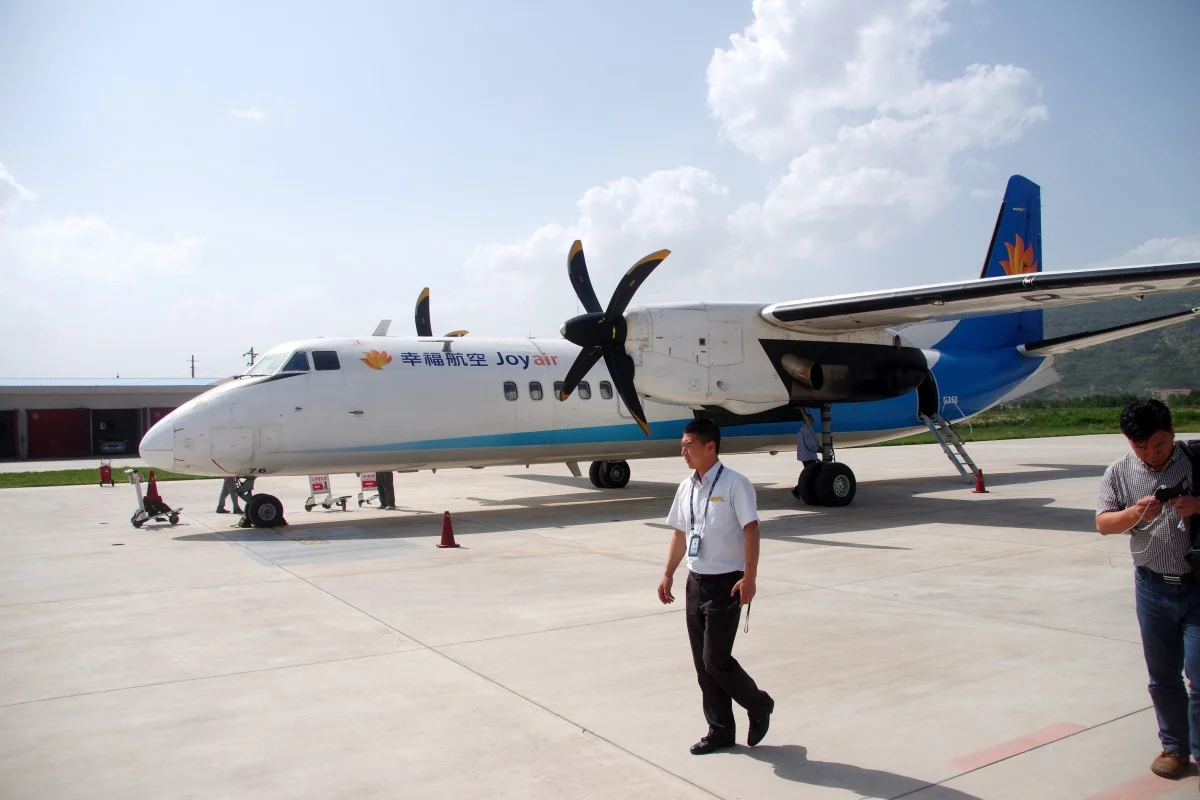
XI’AN, China — Joy Air, a regional airline based in this ancient capital of Shaanxi Province, has grounded its entire fleet amid a spiraling debt crisis and labor disputes, stranding passengers and forcing its pilots into the gig economy to survive. The carrier, backed by the Shaanxi provincial government, has canceled all flights, including those for China’s busy Labor Day holiday, with its website offering no clarity on when—or if—services might resume.
The collapse of Joy Air is the latest symptom of deeper malaise in China’s aviation sector, where state-backed enterprises often mask inefficiencies and financial distress under the guise of ambitious expansion. The airline, which operates a modest fleet of Chinese-made MA60 turboprop aircraft, was meant to connect second- and third-tier cities in western and central China with regional hubs like Xi’an. But analysts say a lack of profitable routes, compounded by mismanagement and intense competition from larger carriers, has driven Joy Air to the brink.
For the airline’s pilots, the fallout has been devastating. Once symbols of China’s modernizing ambitions, many now find themselves delivering food on scooters, scraping by in a gig economy that underscores the fragility of the country’s economic promises. “I haven’t flown in four years,” one pilot, speaking anonymously to Chinese media, said. “Now I deliver meals to make ends meet.” Posts on social nedia report that Joy Air employees have gone unpaid since June 2024, with some executives admitting the airline lacks the funds to operate.
This is not an isolated case. China’s aviation and state-backed industries have a history of such failures, often tied to overleveraged investments and opaque governance. In 2019, HNA Group, the parent of Hainan Airlines, faced a liquidity crisis after years of aggressive acquisitions, including stakes in Hilton Hotels and Deutsche Bank. The conglomerate’s debt ballooned to over $100 billion, forcing asset sales and government intervention. Similarly, Okay Airways, another regional carrier, grounded flights in 2019 over unpaid leasing fees, leaving passengers stranded and staff in limbo. These episodes highlight a recurring pattern: state support fuels reckless expansion, but when markets tighten, the absence of robust oversight leaves workers and consumers to bear the cost.
Joy Air’s troubles also reflect broader cracks in China’s economic facade. The government’s push for self-reliance has championed domestic aircraft like the MA60, a clunky turboprop criticized for its outdated technology and poor safety record. The plane, produced by state-owned Xi’an Aircraft Industry Corporation, has been involved in multiple incidents, including a 2011 crash in Myanmar that killed 12. Yet Beijing’s insistence on promoting homegrown technology over more reliable foreign alternatives has saddled carriers like Joy Air with inefficient fleets, further eroding their competitiveness.
The airline’s collapse comes at a sensitive time for China, as President Xi Jinping’s government grapples with a slowing economy and mounting public discontent. Labor disputes, once rare in a country where dissent is tightly controlled, have surged in recent years. In 2023, workers at Foxconn’s Zhengzhou plant protested over unpaid wages and harsh working conditions, while delivery drivers for Meituan, China’s largest food delivery platform, staged strikes in multiple cities over declining pay. Joy Air’s unpaid pilots, now navigating Xi’an’s streets as delivery workers, are a stark reminder of these tensions.
For passengers, the suspension has caused chaos. Joy Air’s website, a barebones portal, offers no refunds or rebooking options, leaving travelers scrambling during one of China’s busiest holiday periods. “I booked a flight to Yinchuan for the holiday, and now I’m stuck,” said Li Wei, a Xi’an resident. “There’s no one to call, no explanation—just silence.”
Analysts see Joy Air’s demise as a cautionary tale for China’s state-driven model. “The airline was never viable without heavy subsidies,” said Jason Li Hanming, a U.S.-based aviation analyst. “It’s a microcosm of how China’s top-down approach creates bubbles that eventually burst.” The Shaanxi government, which holds a controlling stake in Joy Air, has remained silent, fueling speculation that local officials are either unwilling or unable to bail out the carrier.
As China pushes for global influence, incidents like Joy Air’s collapse tarnish its image as a reliable economic power. International investors, already wary of China’s property sector woes and regulatory crackdowns, may see the airline’s failure as another red flag. Meanwhile, the pilots pedaling through Xi’an’s streets are a human testament to the gap between Beijing’s rhetoric and reality—a reminder that even in a tightly controlled system, the consequences of mismanagement cannot be suppressed indefinitely.