News Desk
BEIJING — As trade tensions with the United States escalate, China’s leadership under President Xi Jinping is displaying what some analysts describe as “end-of-regime conduct,” marked by a mix of defiance, diplomatic missteps, and covert concessions that suggest deepening internal dysfunction. Foreign policy expert Gordon G. Chang, a senior fellow at the Gatestone Institute, has warned that “something is very, very wrong in Beijing right now,” pointing to a pattern of behavior that is both perplexing and potentially destabilizing.
In recent weeks, China has antagonized not only the United States but also key regional players like the Philippines, Taiwan, South Korea, and Australia at a time when its economy is faltering under the weight of U.S. tariffs and declining exports. “At a time when China needs friends because it’s not selling goods to the U.S., it is going out of its way to alienate its neighbors,” Mr. Chang said on Fox Business’s “Mornings with Maria” on Monday. “This is end-of-regime conduct, because Xi Jinping can’t appear to be giving in to the U.S.”
The backdrop to this diplomatic brinkmanship is a bruising trade war with the United States, where President Donald J. Trump has imposed tariffs as high as 145 percent on Chinese goods. China has retaliated with its own 125 percent tariffs, but public statements from Beijing, including those from Foreign Minister Wang Yi, have emphasized adherence to international trade rules and accused the U.S. of “extreme egoism.” Mr. Wang has vowed that China will seek solidarity with other nations to uphold multilateralism, a stance that critics argue is undermined by China’s aggressive posturing in the Indo-Pacific.
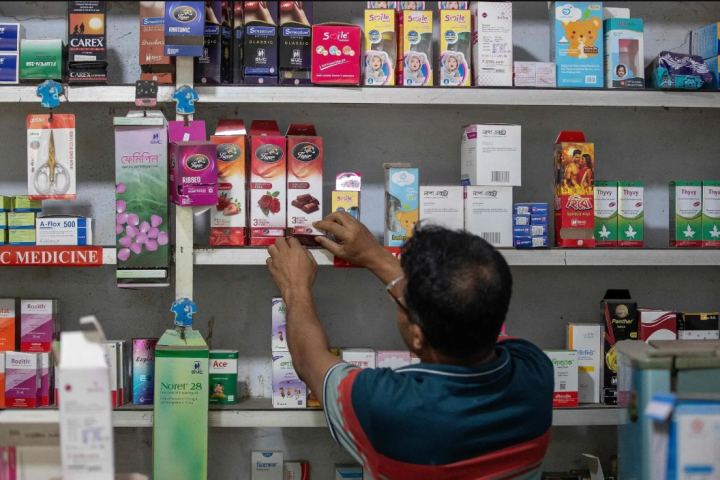
Behind closed doors, however, there are signs that Beijing is quietly caving to pressure. A Reuters report revealed that China’s Ministry of Commerce has established a taskforce to compile lists of goods—ranging from electronics to medical devices—that could be exempted from tariffs. Mr. Chang noted that China has already stopped collecting tariffs on critical imports like semiconductors, aviation products, industrial chemicals, and certain medicines, a move he predicts will expand. “This is an important concession,” he said, “but it’s not saying it’s making a concession, which is a fascinating insight into the Chinese political system right now, which has become both intransigent and inflexible.”
This discrepancy between public rhetoric and private actions underscores the precarious position of Mr. Xi, who has centralized power to an unprecedented degree since assuming leadership in 2012. Analysts argue that Mr. Xi’s consolidation of authority has rendered China’s political system brittle, unable to adapt to external pressures without risking domestic legitimacy. “Xi has configured the Chinese political system so that it is hostile,” Mr. Chang said. “Because he’s been making the claim that China has surpassed the U.S., he can’t look dependent on trade with the U.S., and he certainly can’t look like he’s talking to the U.S. under pressure.”
The Trump administration, meanwhile, has kept details of its negotiations with Beijing under wraps. On Friday, Mr. Trump told reporters on the White House lawn that he had spoken to Mr. Xi “many times” but declined to elaborate, saying, “I’ll let you know at the appropriate time. Let’s see if we can make a deal.” Beijing, for its part, has publicly denied any ongoing talks to reduce tariffs, a denial that analysts say reflects Mr. Xi’s need to project strength to a domestic audience increasingly anxious about economic stagnation.
China’s economy, once a juggernaut of global growth, is grappling with a confluence of challenges: a property sector crisis, declining consumer confidence, and now the trade war’s chokehold on exports. The quiet tariff exemptions suggest that Beijing is desperate to maintain access to critical goods, even as it refuses to acknowledge its vulnerabilities. “China’s regime under Xi cannot admit it’s not able to stand up to Washington,” Mr. Chang said, describing the leadership’s behavior as “perplexing” and indicative of a deeper malaise.
Critics of the Chinese Communist Party argue that Mr. Xi’s obsession with control has left him ill-equipped to navigate these crises. His aggressive foreign policy—marked by territorial disputes in the South and East China Sea, saber-rattling toward Taiwan, and economic coercion against countries like Australia—has isolated China diplomatically. At home, his crackdowns on dissent, private enterprise, and even perceived ideological threats have stifled innovation and eroded trust in the system.
For now, the world watches as Beijing walks a tightrope between defiance and desperation. Mr. Chang’s warning of “end-of-regime conduct” raises questions about whether Mr. Xi’s grip on power, and China’s global ambitions, can withstand the mounting pressures. As one Western diplomat, speaking on condition of anonymity, put it: “Xi’s China is projecting strength, but the cracks are impossible to ignore.”
This article draws on reporting from Fox Business and Reuters.