News Desk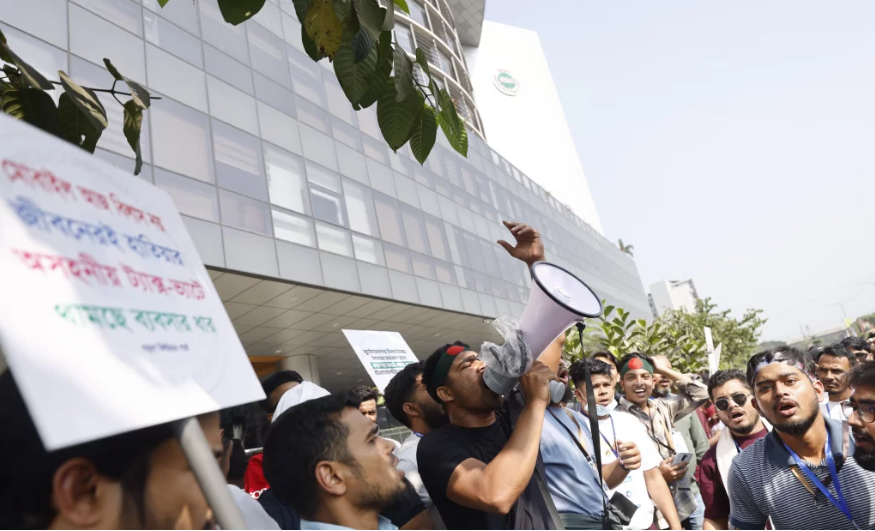
DHAKA — The revelation that tens of millions of mobile phones in Bangladesh have been operating with cloned or fabricated identification numbers has done more than expose a vast underground market. It has raised an uncomfortable question for a country already struggling with institutional fragility: What does law and order mean when illegality becomes the operating system of daily life?
The National Equipment Identity Register (NEIR), activated on January 1, was intended as a routine regulatory tool. Instead, it has functioned like a forensic light switched on in a darkened room. What it illuminated was staggering: single IMEI numbers linked to more than a million devices, placeholder IDs like “0000000000000” and “9999999999999” active across all networks, and a decade‑long trail of 39 million appearances of blatantly fake identifiers.
For readers unfamiliar with the terminology, an IMEI — or International Mobile Equipment Identity — is essentially a phone’s fingerprint. Every legitimate mobile handset in the world is supposed to carry a unique 15‑digit IMEI number assigned by the manufacturer. No two devices should share the same one, just as no two passports or national ID cards are meant to be identical.
In practical terms, the IMEI allows mobile networks to identify a device, verify that it is genuine, and block it if it is stolen, cloned, or illegally imported. When millions of phones share the same IMEI, it means one thing: the system designed to ensure authenticity has been bypassed on an industrial scale.
When counterfeiters clone IMEIs, they erase that certainty. A stolen phone can be made to look “clean.” A smuggled device can masquerade as a legal one. And a counterfeit handset can slip into the market without ever passing safety checks.
In short, the IMEI is the backbone of trust in the mobile ecosystem — and Bangladesh’s NEIR findings show just how thoroughly that trust has been compromised.
Officials describe the findings as “industrial-scale cloning.” But the scale is not merely industrial — it is systemic. It reflects a country where illicit markets have grown faster than the state’s capacity to regulate them, and where the boundaries between the formal and informal economies have blurred into irrelevance.
Bangladesh’s mobile phone sector is only the latest arena where a shadow economy has overtaken the legal one. The numbers tell a story of a market dominated not by innovation or competition, but by evasion.
- Of nearly 1.98 million iPhones active in the country, 1.95 million were not legally imported.
- Of 23.1 million Samsung devices, 14.9 million bypassed taxes and customs.
- Just 10 IMEIs account for nearly five million phones, a statistical impossibility in any regulated market.
These figures point to a thriving ecosystem of smuggling networks, counterfeit manufacturers, and corrupt intermediaries — one that has operated with impunity for years. The NEIR did not create this crisis; it merely quantified it.
Bangladesh’s authorities have been quick to reassure the public that no immediate shutdown of illegal devices will occur. The government fears backlash, and perhaps rightly so: millions of citizens unknowingly rely on counterfeit phones that never passed radiation or safety tests.
But the reluctance to act also underscores a deeper truth. When illegality becomes widespread enough, enforcing the law becomes politically risky. The state hesitates not because it lacks tools, but because it lacks control.
The violent protests at the Bangladesh Telecommunication Regulatory Commission (BTRC) headquarters on January 1 — where traders vandalized offices and accused the government of imposing punitive taxes — were not an aberration. They were a symptom of a regulatory environment where compliance is the exception, not the norm.
High import duties, ranging from 35 to over 60 percent, have created powerful incentives for smuggling. But taxes alone do not explain the breadth of the problem. The persistence of cloned IMEIs, unregistered devices, and counterfeit imports points to long-standing collusion between traders, customs officials, and enforcement agencies.
The implications extend far beyond consumer electronics. Bangladesh Bank data show that 73 percent of digital fraud occurs through unregistered devices. In 2023, 85 percent of e‑KYC fraud involved illegal or reprogrammed phones. More than 180,000 phone thefts were reported that year, with most devices never recovered — a statistic made unsurprising by the ease with which stolen phones can be reprogrammed and reintroduced into the market.
In a country where mobile financial services underpin everything from remittances to daily transactions, the proliferation of untraceable devices is not merely a regulatory failure. It is a national security risk.
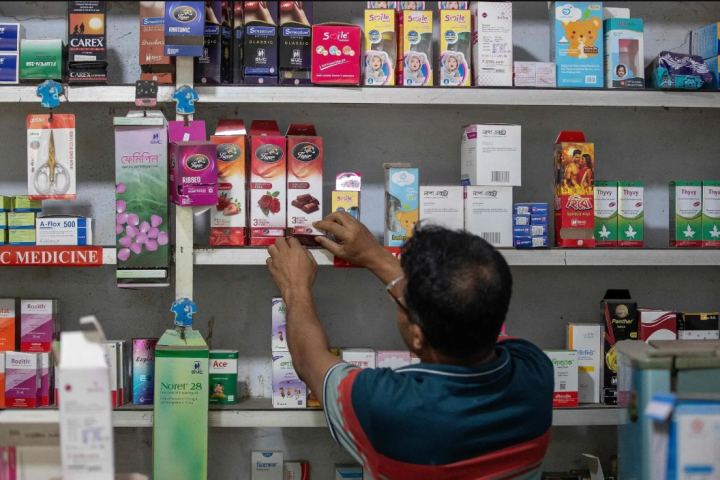
The IMEI scandal is part of a broader pattern. Bangladesh’s markets are saturated with fake or smuggled goods: counterfeit pharmaceuticals, unauthorized cosmetics, unregulated electronics, and parallel‑imported luxury items. The country’s ports, particularly Chattogram, have long been cited by analysts as major entry points for illicit goods, facilitated by weak oversight and entrenched patronage networks.
The fake phone crisis is therefore not an isolated episode. It is a mirror held up to a state apparatus that has allowed a counterfeit economy to flourish alongside and often within the formal one.
The NEIR has exposed the scale of the problem. But the deeper challenge lies elsewhere: Can a state enforce the law when illegality has become a mass-market commodity?
Bangladesh now faces a choice. It can treat the IMEI scandal as a technical glitch to be patched, or it can confront the uncomfortable reality that the country’s regulatory institutions have been hollowed out by years of neglect, corruption, and political expediency.