News Desk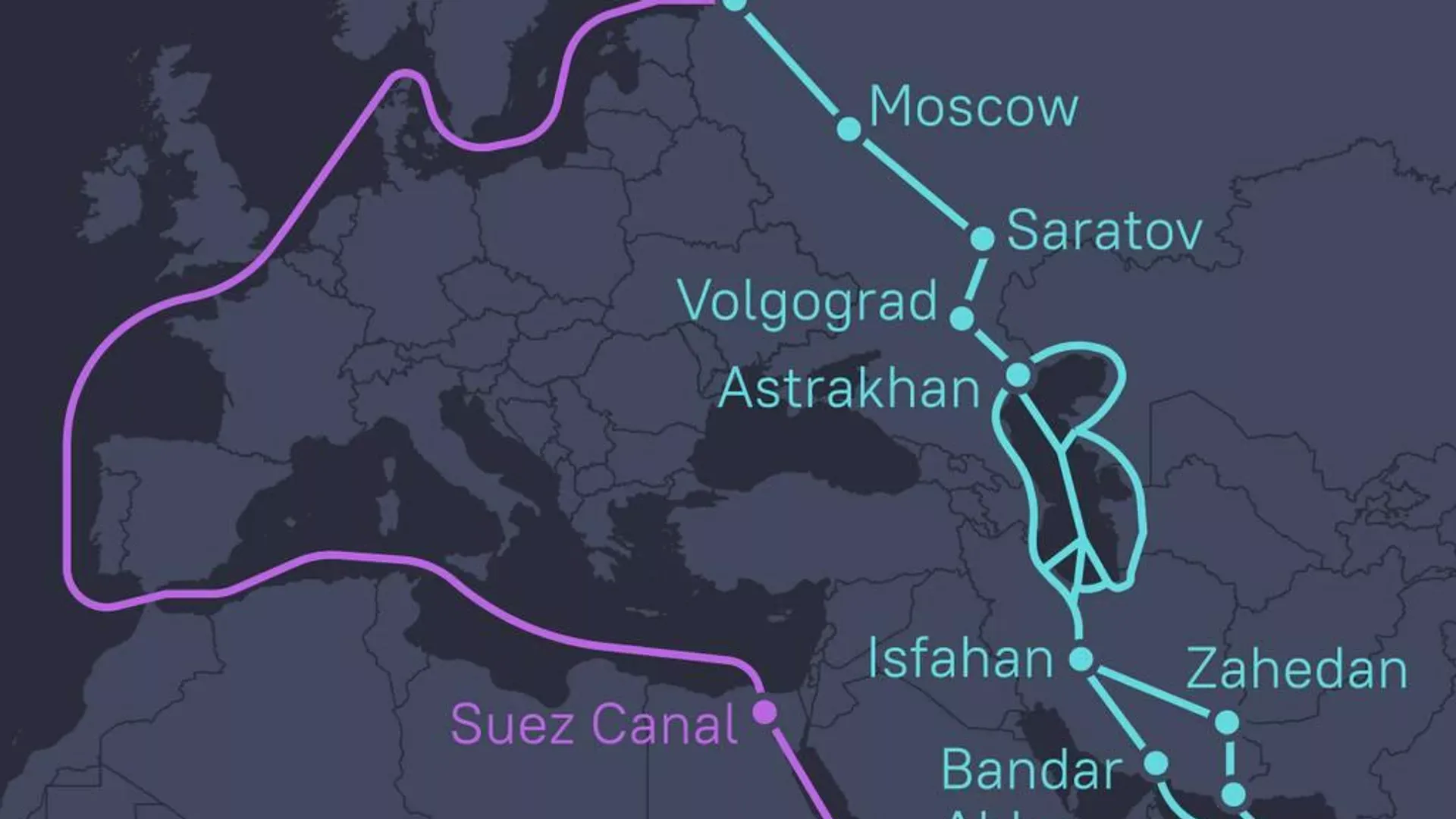
For decades, India and Russia have maintained strong economic ties, but their trade relationship is now taking a new shape—one that bypasses traditional routes and establishes a direct land-sea connection through the International North-South Transport Corridor (INSTC). The corridor, which links India with Russia via Iran and Central Asia, is fast emerging as a vital alternative to maritime trade, cutting costs and transit times while shielding bilateral commerce from geopolitical uncertainties.
Recent figures underscore the growing significance of the route. Bilateral trade between India and Russia surged past $66 billion in 2024, and both countries are aiming to push that number to $100 billion in the coming years. Cargo volumes through the INSTC rose by 1.7 times over the past year, largely driven by a 56 percent drop in transportation costs. The sharp reduction has made the corridor significantly more attractive for Indian exporters, whose ambitions to penetrate the Russian market have long been hindered by expensive and unreliable shipping options.
Dmitry Kryukov, Deputy General Director at RZD Logistics, attributes the increase in cargo flow to these cost advantages. “The positive trade dynamics are driven by India’s ambition to increase exports to Russia via the INSTC,” he told Russian media. “A cost reduction of more than 56 percent for transportation services on this route has led to a 1.7-fold increase in cargo volumes.”
The cargo itself is evolving. In May 2024, the first dedicated “Agroexpress” train departed from Russia’s Southern Urals, carrying 31 containers of oat flakes and grains to India’s Mundra Port. This marked a milestone for agricultural trade along the corridor, which has traditionally been dominated by commodities like paper products, metals, and construction materials. Now, Indian imports into Russia include textiles, footwear, rice, plastics, confectionery products, and spices, while Russian exports to India consist of lumber, hygiene products, roofing materials, and foodstuffs.
But while optimism about the INSTC is growing, so too are the challenges. Despite its cost advantages, the corridor is still a work in progress. The crucial Rasht-Astara rail link in Iran—one of the missing pieces in the network—is yet to be completed, forcing cargo to move via road for part of the journey. Logistical bottlenecks at ports and rail terminals further slow down transit, limiting the corridor’s full potential.
“The most pressing issue is infrastructure,” Kryukov said. “To achieve our trade targets, we need the smooth organization of rail and multimodal container transportation between Europe, Asia, and the Middle East, where the INSTC plays a key role.”
Beyond infrastructure, procedural and financial obstacles remain. Customs and phytosanitary regulations across multiple jurisdictions add delays, while digital integration between participating countries is still in its infancy. The impact of Western sanctions on Russian banking channels has also complicated payments, forcing businesses to rely on alternative settlement mechanisms like rupee-ruble transactions.
Yet, for both India and Russia, the strategic importance of the corridor outweighs these concerns. New Delhi sees it as a way to reduce dependence on the Suez Canal, which has become increasingly vulnerable to global disruptions. The route also strengthens India’s connectivity with Iran and Central Asia, regions where New Delhi has been working to expand its influence. For Moscow, the INSTC is a crucial part of its broader strategy to pivot away from Europe and deepen economic ties with Asian markets, especially in the face of Western economic isolation.
The coming years will determine whether the INSTC lives up to its promise. For now, its growing use signals a shift in trade dynamics—one where India and Russia are recalibrating their supply chains, seeking resilience in an unpredictable world.