 News Desk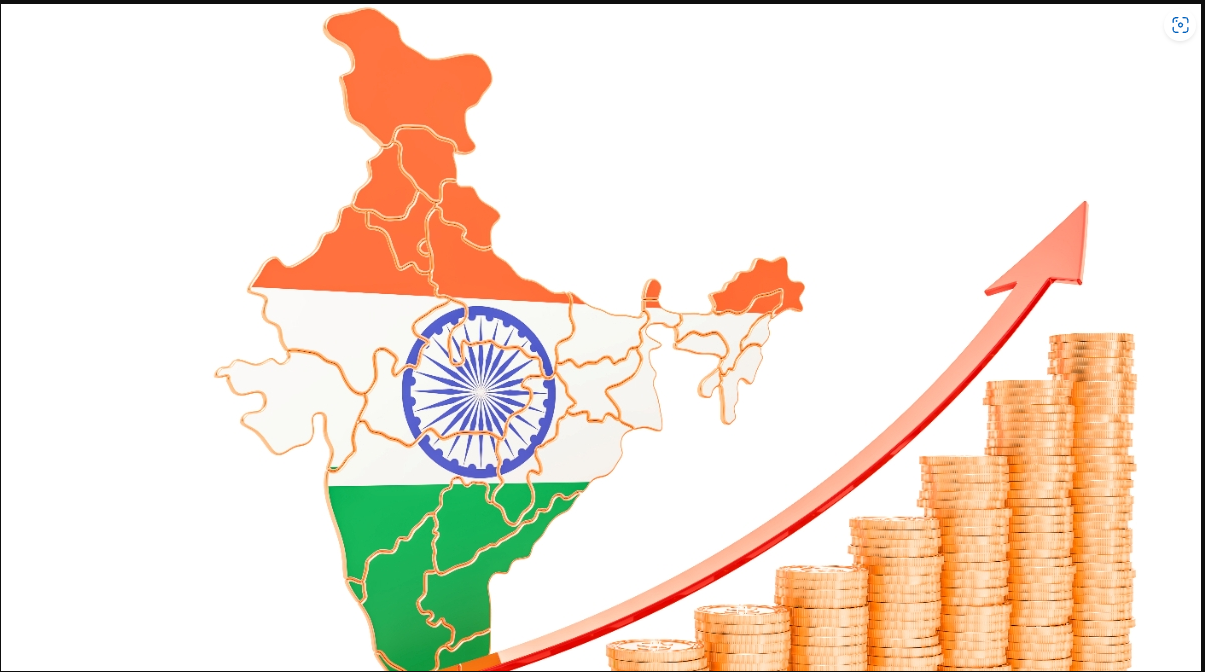
NEW DELHI The economic narrative of the 21st century is being decisively reshaped, and at its heart stands India. In a monumental shift, the nation has officially surpassed Japan to become the world’s fourth largest economy, a milestone confirmed by the International Monetary Fund’s (IMF) latest World Economic Outlook. This ascent is not merely a statistical recalculation; it represents a deepening of India’s influence on the global stage, a testament to decades of reform, strategic vision, and the sheer dynamism of its burgeoning population.
For years, economists and policymakers have watched India’s trajectory with a mix of anticipation and occasional skepticism. The country, once characterized by its “License Raj” and slower growth, embarked on a path of liberalization in the early 1990s that gradually unleashed its immense potential. Today, that potential is transforming into palpable power.
B.V.R. Subrahmanyam, CEO of NITI Aayog, India’s premier public policy think tank, captured the mood of the moment. “We are the fourth largest economy as I speak,” he stated during a recent press conference, underscoring the immediate nature of this significant achievement. “We are a $4 trillion economy, and this is not my data, it’s IMF data. India today is larger than Japan.”
The IMF’s April 2025 report projects India’s nominal GDP to reach $4.19 trillion, nudging past Japan’s estimated $4.18 trillion. This pivotal moment positions India directly behind the United States, China, and Germany, a formidable grouping of global economic heavyweights. The swiftness of this rise is notable, especially considering that just a decade ago, in 2014, India was the tenth largest economy. It leapfrogged the United Kingdom in 2021 to claim the fifth spot, and now, Japan.
Underpinning much of this significant progress has been the determined focus of Prime Minister Narendra Modi’s government on economic revitalization and structural reforms. Since 2014, his administration has championed initiatives like “Make in India” to foster domestic manufacturing, the ambitious “Digital India” campaign that has transformed the nation’s digital infrastructure and payment systems, and significant investments in modernizing physical infrastructure, from expressways to railways. These efforts, alongside a push for greater ease of doing business and a strategic approach to attracting foreign investment, have created a more predictable and conducive environment for growth. The Prime Minister’s consistent emphasis on a “Viksit Bharat” or developed India by 2047 has provided a clear long-term vision, galvanizing both public and private sectors towards achieving ambitious economic targets.
This growth is not a fleeting phenomenon. India is widely expected to be the fastest growing major economy for the foreseeable future, with the IMF forecasting a robust expansion of 6.2 percent in 2025 and 6.3 percent in 2026. This outpaces the projected global growth rate of 2.8 percent and 3.0 percent for the same period, highlighting India’s exceptional performance in a sometimes uncertain global economic climate.
A significant driver of this sustained expansion has been India’s robust domestic consumption. Nearly 70 percent of the nation’s GDP is fueled by its burgeoning middle class, a powerful engine of demand that provides a substantial buffer against international headwinds. This internal strength is complemented by a steadily expanding footprint in global trade, with India ranking among the top exporters and importers worldwide.
“India’s economic development is one of the most remarkable transformations of modern times,” noted a report by Roland Berger, a global consultancy firm. “Once an agrarian economy, with about half of its gross value added (GVA) coming from agriculture and allied sectors at the time of independence in 1947, the country has emerged as a global hub for services in the 21st century.” Indeed, the services sector, including its world-renowned information technology and financial services industries, now accounts for roughly half of India’s GVA, positioning it as a leader in digital innovation and outsourcing.
The government’s proactive policy reforms have also played a crucial role. Initiatives like “Make in India” aimed at boosting domestic manufacturing, the widespread adoption of “Digital India” for digital payments and public services, and significant investments in infrastructure through programs like “PM Gati Shakti” have all contributed to creating a more business-friendly environment and unlocking productivity. “The world today is looking at India not just as a market, but as a trusted partner, a value creator, and a force for stability in a fragmented global order,” remarked Dr. Sanjaya Sharma, a leading Indian economist, during a recent address.
While the achievement is celebrated, those attuned to India’s journey recognize the ongoing work ahead. The nation’s per capita income, though rising, still lags behind developed economies. Issues of income inequality, job creation for its vast young population, and further reforms in areas like land acquisition and labor laws remain critical for inclusive and sustainable growth. “For us to keep rising, India needs sustained economic reforms in governance, infrastructure, manufacturing, education, and capital access,” cautioned Anand Mahindra, the prominent Indian industrialist, reflecting on the nation’s upward trajectory.
Yet, the mood is undeniably one of optimism. The projection that India is poised to overtake Germany within the next few years to become the world’s third largest economy only adds to this sentiment. This is not just an economic story for India; it is a global one. A stronger, more prosperous India promises new avenues for trade, investment, and collaboration, cementing its indispensable role in the architecture of the 21st century’s global economy. The world is watching, and India, it seems, is just getting started.