News Desk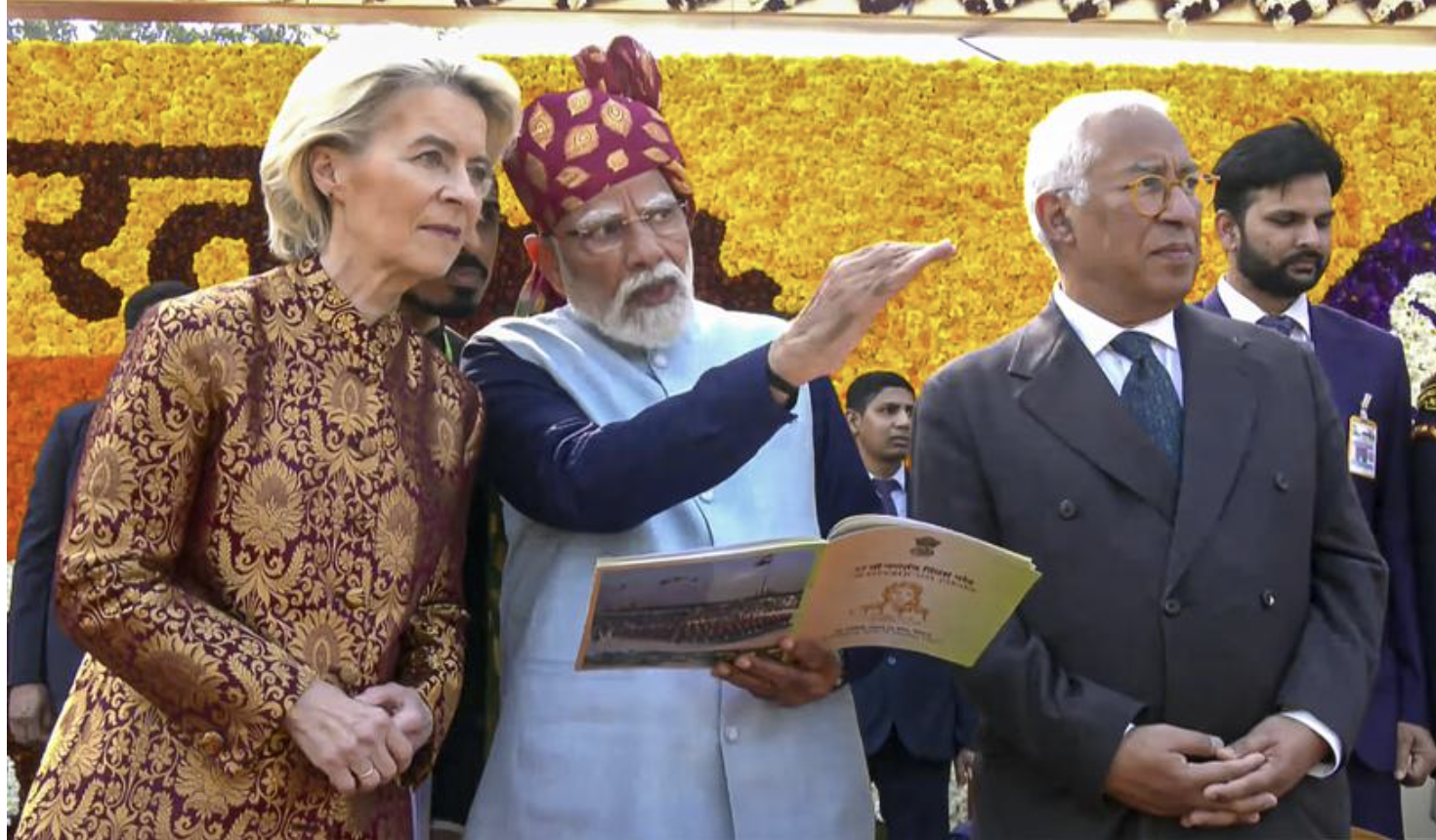
India’s economic diplomacy has undergone a striking transformation over the past decade, marked by a steady acceleration of free‑trade negotiations and a willingness to open long‑protected sectors. Since Prime Minister Narendra Modi took office, New Delhi has pursued trade agreements not as isolated commercial instruments but as extensions of a broader strategic posture—one that positions India as a stable, reliable, and increasingly central actor in the global economy.
India’s trade outreach has widened considerably, with agreements concluded or advanced with partners across Europe, the Gulf, and the Indo‑Pacific. Modi has repeatedly framed these deals as part of a “reform express” designed to create opportunities for India’s youth and strengthen the country’s economic foundations. His government has emphasised that new trade and mobility agreements are opening “countless new opportunities” for Indians at home and abroad.
Among these efforts, the India–EU Free Trade Agreement stands out as the most consequential. After years of stalled negotiations, both sides are now poised to conclude what officials have called the “mother of all deals.”
The agreement will sharply reduce tariffs on European cars—cutting duties from as high as 110% to 40% immediately, with a glide path toward 10%—representing India’s most significant opening of its automobile market in decades.
In return, India expects expanded access for its textiles, electronics, chemicals, and jewellery, sectors that have faced steep tariffs in other markets.
The deal is more than a commercial pact; it signals India’s confidence as a global economic player and its readiness to shape the rules of trade rather than merely adapt to them. European leaders attending India’s 77th Republic Day celebrations underscored this shift, calling the agreement “historic” and emphasising that “a successful India makes the world more stable, prosperous and secure.”
India’s rise as a leading voice of the Global South has been one of the defining geopolitical developments of the 2020s. Its foreign policy—remarkably stable across administrations—has balanced strategic autonomy with active global engagement.
This consistency has allowed India to serve as a bridge between advanced economies and emerging nations, advocating for equitable development, climate justice, and fairer global governance.
The country’s expanding network of trade agreements reinforces this role: each pact signals India’s intent to integrate more deeply with global markets while championing the interests of developing nations.
The 77th Republic Day celebrations captured this moment of national self‑assurance. European Commission President Ursula von der Leyen and European Council President António Costa attended as chief guests—an unmistakable symbol of India’s growing diplomatic weight.
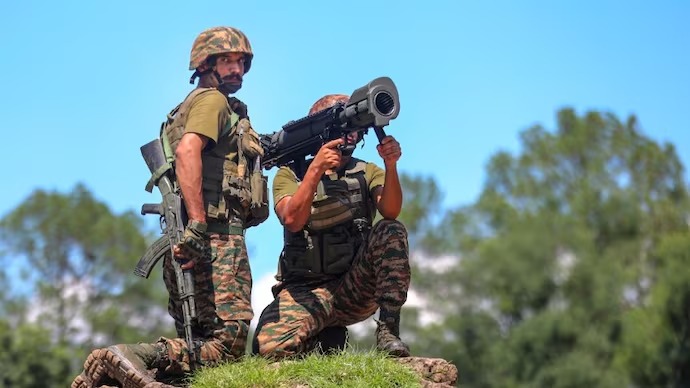
The parade on Kartavya Path blended tradition with a forward‑looking vision: indigenous defence platforms, women‑led contingents, and displays of digital innovation reflected a country comfortable with its heritage yet eager to define its future. The presence of top EU leaders, on the cusp of sealing a landmark trade agreement, lent the day a distinctly global resonance.
Through shifting geopolitical winds, India’s foreign policy has remained anchored in continuity—open to partnerships, firm on sovereignty, and increasingly confident in articulating its own path. Modi’s government has leaned into this stability, using it to project India as a dependable partner at a time when global alliances are in flux.
As India marks its 77th Republic Day, the country stands not only as the world’s largest democracy but as a rising economic and diplomatic force—one whose choices increasingly shape the global conversation.