News Desk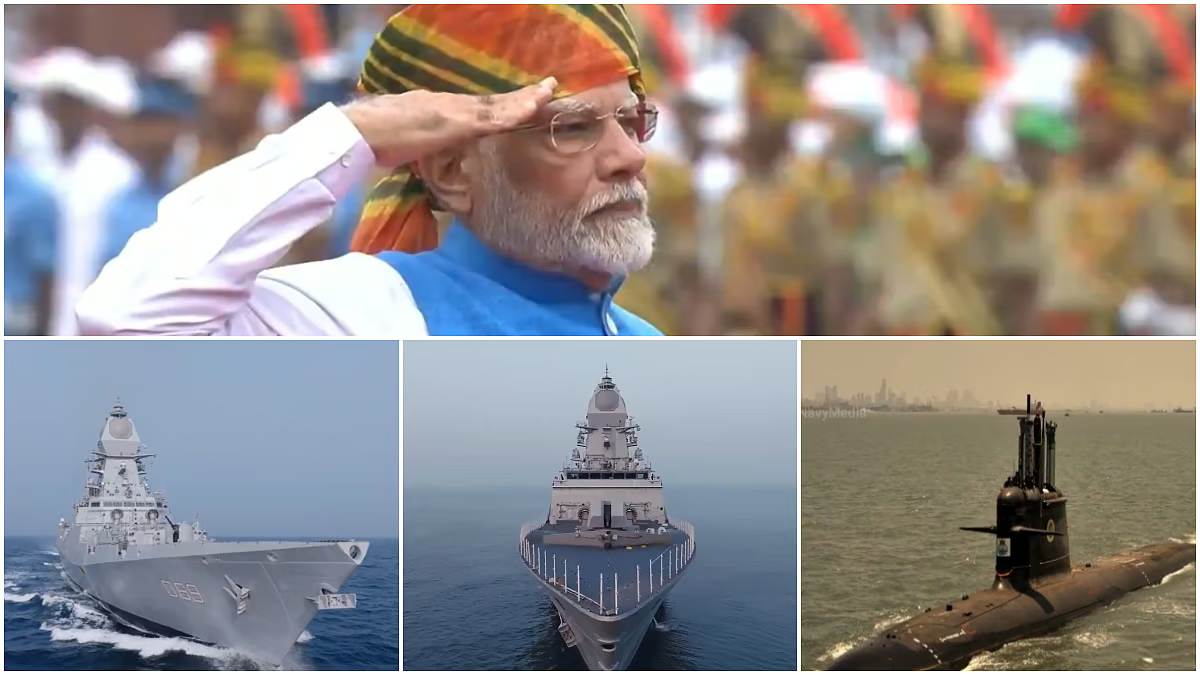
Rambilli, — On the sun-drenched coast of Andhra Pradesh, near the quiet village of Rambilli, India is carving out a new chapter in its ascent as a global power. INS Varsha, a state-of-the-art naval base set to open next year, is more than just a military outpost; it’s a testament to India’s ambition to secure its place on the world stage, a vision propelled by the transformative leadership of Prime Minister Narendra Modi.
For decades, India’s maritime presence lagged behind its aspirations. But under Modi’s stewardship, the nation has undergone a remarkable shift, blending economic growth with strategic foresight. INS Varsha, designed to house India’s growing fleet of nuclear-powered submarines, including the formidable INS Aridhaman, is a cornerstone of this new era. It’s a move that not only bolsters India’s defense capabilities but also sends a clear message: the Indian Ocean is India’s domain, and it’s ready to protect it.
Modi’s leadership has been pivotal in elevating India’s stature. Since taking office in 2014, he has championed policies that have modernized infrastructure, strengthened the military, and positioned India as a counterweight to China’s expanding influence. The naval base, with its underground pens and stealth-ready design, reflects his commitment to a strong, self-reliant India. “This is about our sovereignty, our security, and our future,” Modi said at a recent rally in Visakhapatnam, his voice resonating with the confidence of a leader steering a nation toward greatness.
The significance of INS Varsha extends beyond its military might. It’s a symbol of India’s technological prowess and its ability to execute complex projects with precision. The base, sprawling across 20 square kilometers, is a marvel of engineering, built to operate beyond the prying eyes of satellites. It’s a feat that aligns with Modi’s “Make in India” initiative, which has spurred domestic innovation and reduced reliance on foreign technology. Local workers, many from nearby villages, speak with pride about their role in building what they call “India’s shield.”
Under Modi, India has also deepened its global partnerships, balancing diplomacy with strength. The base’s strategic location, just 50 kilometers from Visakhapatnam, positions India to monitor critical sea lanes and respond swiftly to regional challenges. Analysts see it as a direct response to China’s growing naval presence, but Modi frames it as a broader mission. “India stands for peace, but peace requires strength,” he declared last month, underscoring his doctrine of assertive yet responsible power.
The rise of INS Varsha mirrors India’s broader transformation under Modi’s decade-long tenure. From high-speed rail projects to Fintech to digital innovation, his government has pushed for modernization while rooting it in national pride. The commissioning of INS Arighaat, India’s second nuclear submarine, last year, and the upcoming INS Aridhaman, highlight a navy no longer playing catch-up but setting the pace. “Modi has given us a sense of destiny,” said Rear Adm. Vikram Menon, a retired naval officer. “He’s turned India’s potential into action.”
For the people of Rambilli, the base is more than a strategic asset—it’s a source of opportunity. New roads, schools, and jobs have sprung up, reflecting Modi’s focus on development alongside defense. “This is our India now,” said Lakshmi Rao, a local shopkeeper, gesturing toward construction cranes on the horizon. “We’re not just growing; we’re shining.”
As INS Varsha nears completion, it stands as a beacon of Modi’s vision: a peace-loving India that is confident, strong, and ready to shape the 21st century. In a world of shifting alliances and rising tensions, this naval base is a reminder that India, under its resolute prime minister, is not just rising—it’s redefining what it means to be a global power.