
 News Desk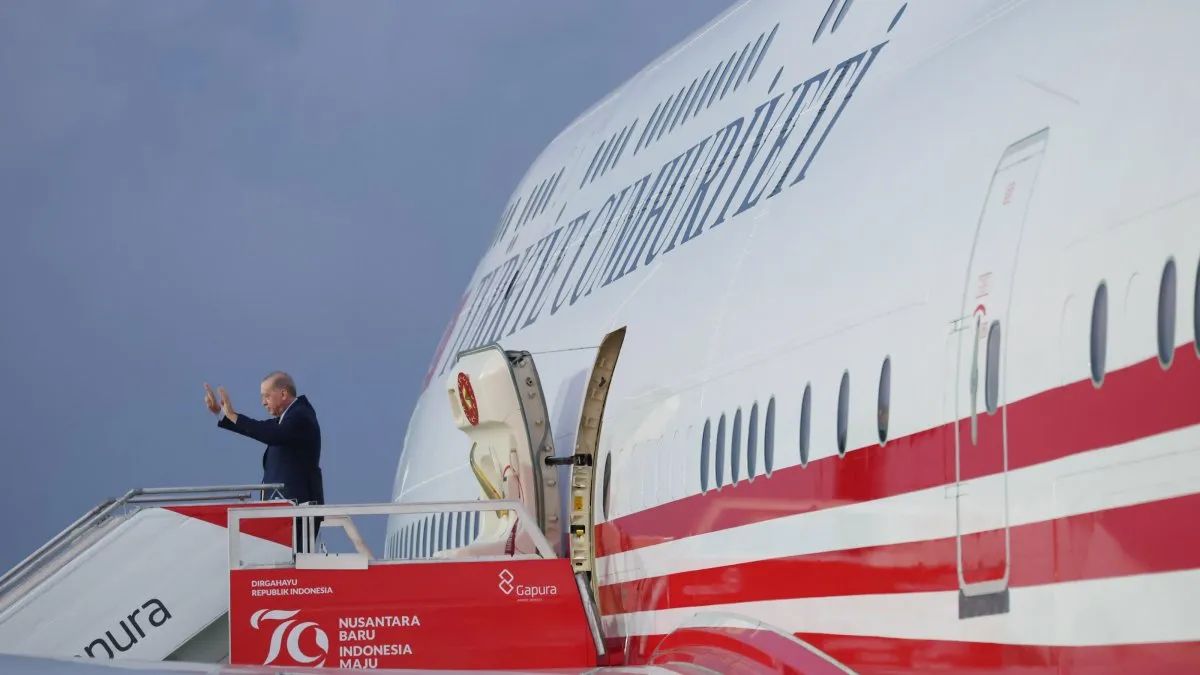
President Recep Tayyip Erdogan’s diplomatic push in the Asia-Pacific is raising eyebrows. As Türkiye intensifies economic and strategic engagements with Malaysia, Indonesia, and Pakistan, a broader question emerges: Is Erdogan attempting to engineer a modern-day neo-Ottoman economic sphere under the guise of trade diplomacy?
Türkiye’s recent moves reflect an ambition that goes beyond conventional trade agreements. Erdogan’s co-chairing of High-Level Strategic Cooperation Council meetings in Indonesia and Pakistan signals a desire for deeper political entrenchment. While these meetings yield trade agreements and investment deals, they also provide platforms for Türkiye to push its own geopolitical agenda; including vocal opposition to Israeli actions in Gaza.
Yet, Erdogan’s pivot to the Asia-Pacific is fraught with contradictions. Pakistan, one of Türkiye’s closest partners in the region, is an economic basket case, reeling from IMF bailouts, political turmoil, and a stagnant industrial base. While Türkiye courts Pakistani elites with defense and infrastructure deals, the reality is that Islamabad lacks the economic capacity to be a meaningful partner. Türkiye’s outreach to Malaysia and Indonesia is more promising, but even here, competition is fierce. India’s robust trade footprint in ASEAN, backed by its ‘Act East’ policy, presents a formidable challenge.
Unlike Türkiye, India has built economic ties that are not only deep but also diversified. Its free trade agreements, technology partnerships, and manufacturing investments in the region are driven by long-term economic fundamentals rather than fleeting diplomatic gestures. India’s approach—rooted in stable institutions and economic pragmatism—contrasts sharply with Erdogan’s personality-driven, unpredictable foreign policy.
Moreover, Türkiye’s integration into regional trade frameworks such as ASEAN and the Asia Cooperation Dialogue remains superficial at best. The 2015 free trade agreement with Malaysia was a modest success, but Türkiye has yet to replicate such breakthroughs with larger economies like Indonesia. Its push into emerging sectors like AI, fintech, and digital trade appears more aspirational than operational, as it faces competition from India and China, both of whom possess significantly more technological clout.
Even Türkiye’s much-touted geographical advantage as a bridge between Europe and Asia is increasingly challenged. India’s connectivity projects, such as the India-Middle East-Europe Economic Corridor (IMEC), could potentially overshadow Türkiye’s role as a transit hub. Meanwhile, Gulf nations, once passive economic players, are now aggressively investing in Asia-Pacific markets, limiting Türkiye’s room for maneuver.
For Türkiye to be taken seriously as a trade powerhouse in the region, it must move beyond rhetoric and deliver tangible economic results. Strengthening infrastructure, expanding air and sea connectivity, and ensuring policy consistency are critical. But Erdogan’s history of political volatility, marked by economic mismanagement at home and erratic foreign policy shifts, raises doubts about whether Türkiye can sustain its ambitions.
While Türkiye’s outreach in Asia-Pacific signals intent, its execution remains questionable. Without structural economic reforms and a recalibration of its geopolitical priorities, Erdogan’s vision risks being just another chapter in his broader, but often faltering, quest to assert Türkiye’s global influence.









