News Desk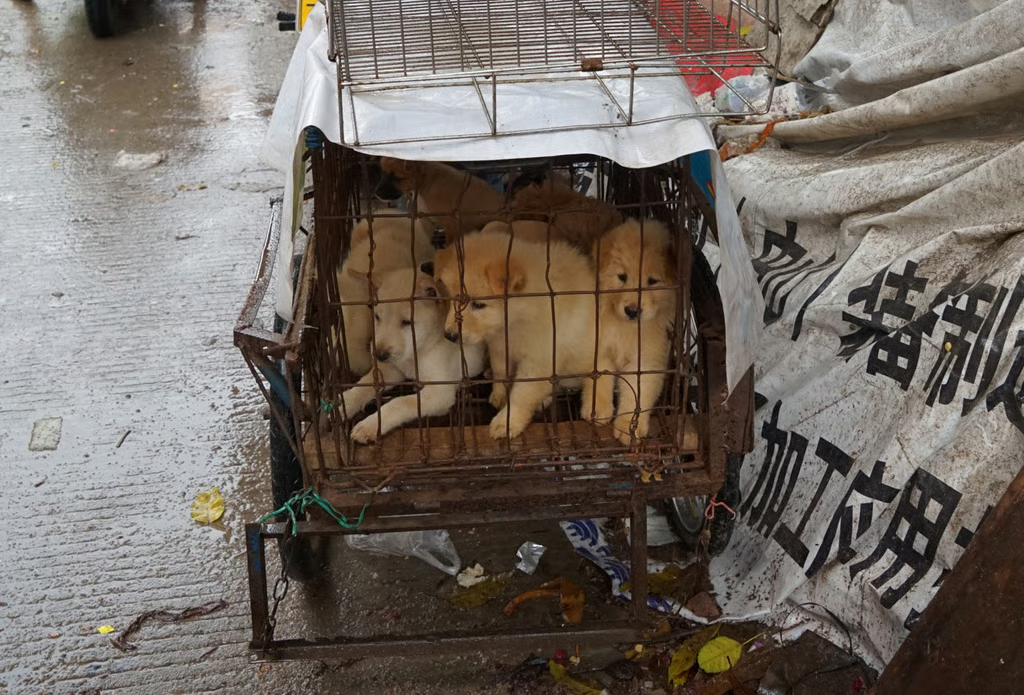
SHENYANG, China — A woman in northeastern China’s Liaoning province, known by the alias Zhixuan, has ignited a firestorm of condemnation after adopting stray dogs from animal shelters, only to kill and cook them for consumption. The scandal, exposed through viral social media posts, has cast a harsh spotlight on China’s persistent love for dog meat, a practice that continues to shock much of the world and raises questions about the country’s animal welfare standards and public health risks.
According to reports from Jimu News, a mainland Chinese outlet, Zhixuan, a grain and oil wholesaler, contacted multiple animal shelters via messaging apps, expressing interest in adopting stray dogs. She promised to provide loving homes and agreed to follow-up visits, only to slaughter the animals and document the process in chilling online videos. In one post, she boasted, “Dog meat is almost ready. Perfect for a rainy day with a drink.” Another showed her child eating the meat, captioned, “Only the best for the kid.” The brazen display of cruelty, uncovered by shelter staff monitoring her social media, has fueled widespread outrage, with related posts amassing over 10 million views on Chinese platforms.
The incident underscores the grim reality of dog meat consumption in parts of China, a practice that remains legal in most regions despite growing domestic and international criticism. In Yulin, a city in southern China’s Guangxi province, an annual festival celebrates the eating of dog meat, drawing thousands who consume an estimated 3,000 dogs over 10 days. While advocates of the practice claim it is rooted in tradition, critics argue it is a relatively modern phenomenon, driven by commercial interests rather than cultural heritage.
A 2016 survey found that 69.5% of Chinese citizens have never eaten dog meat, and 64% want the Yulin festival banned, reflecting a generational shift, particularly among urban youth who increasingly view dogs as companions, not food.
The Liaoning case has amplified calls for reform, with online commentators decrying the lack of national laws criminalizing animal cruelty. “People like Zhixuan are despicable,” one user wrote. “Those poor stray dogs thought they had found a loving home, only to be taken straight to hell.” Another demanded, “When will China enact laws to punish those who show such blatant disregard for life?” The absence of comprehensive animal protection legislation—beyond limited regulations for wildlife and laboratory animals—has long frustrated activists, who point to rising pet ownership, now estimated at 168 million dogs, as evidence of changing attitudes.
The controversy also raises alarms about public health, particularly in light of China’s role in the origins of the COVID-19 pandemic. Many scientists believe the virus emerged from a wet market in Wuhan, where unsanitary conditions and the trade of exotic animals facilitated zoonotic transmission. The dog meat trade, characterized by unregulated slaughter and long-distance trafficking of animals with unknown health statuses, poses similar risks. The World Health Organization has warned that such practices can spread diseases like rabies and cholera, with Guangxi province, home to Yulin, among China’s worst-affected areas for human rabies cases.
In 2020, Shenzhen became one of the first Chinese cities to ban dog and cat meat consumption, citing both ethical concerns and health risks, with violators facing steep fines. Yet, nationwide progress remains stalled, with authorities often turning a blind eye to illegal activities like pet theft for the meat trade.
Local police in Liaoning confirmed on May 13 that Zhixuan had cooked and eaten dog meat, and the Market Supervision Bureau seized the meat as part of an ongoing investigation. Zhixuan, unapologetic in private messages to shelter staff, has since locked her social media account, hiding her posts from public view. Tan, a director at one of the affected shelters, shared her details with local pet shops and urged greater scrutiny in adoption processes. “We must stay vigilant,” he said, emphasizing the betrayal felt by rescue groups.
As China grapples with its global image, incidents like this highlight a disconnect between its modernizing urban centers and practices that many view as barbaric. The dog meat trade, sustained by a small but vocal minority, continues to tarnish the country’s reputation, with critics arguing that unchecked cruelty and lax regulations undermine public safety and moral progress. For now, the cries of betrayed dogs and outraged citizens echo across social media, a stark reminder of the work needed to align China’s policies with its growing pet-loving population.