
 News Desk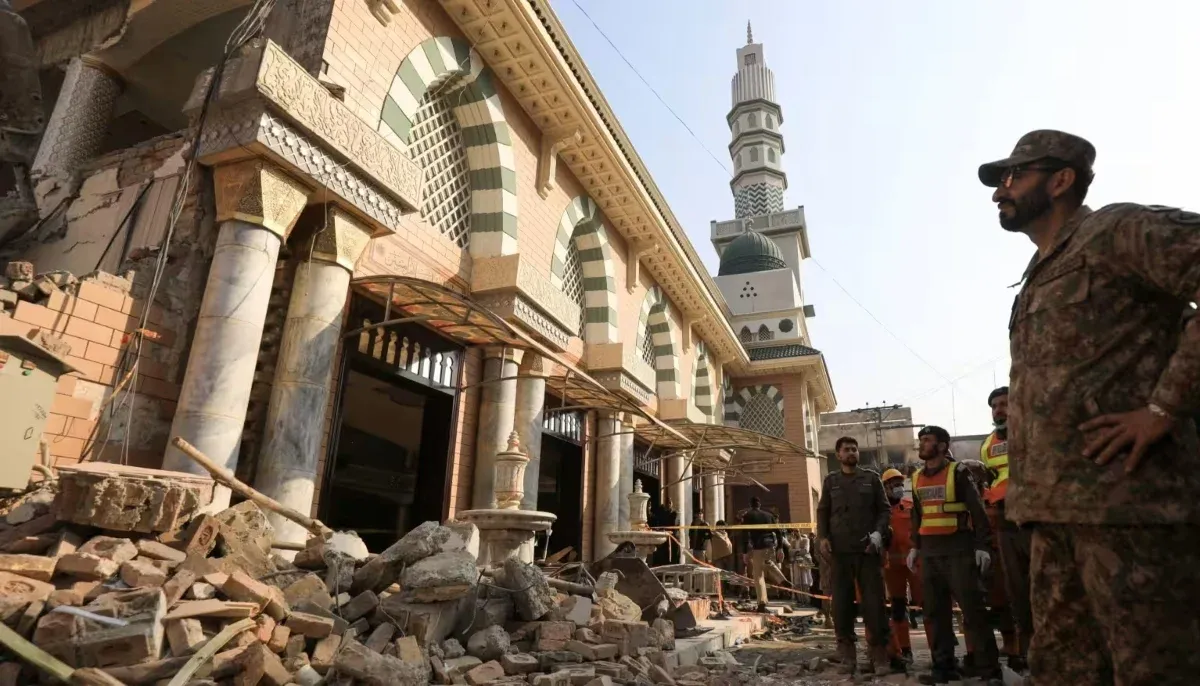
As the world marks the International Day for the Prevention of Violent Extremism on February 12, Pakistan finds itself at a dangerous crossroads. The country, long struggling with militancy and ideological intolerance, is once again in the grip of escalating violence. A toxic mix of religious extremism, ethno-separatist insurgencies, and mob vigilantism is unraveling the nation’s fragile stability, raising urgent questions about its future.
The resurgence of extremism is not confined to one movement or ideology; it is multifaceted and insidious.
In Karachi, a suicide bombing orchestrated by a member of the Baloch Liberation Army killed three Chinese nationals.
In Bajaur, a Daesh Khorasan Province attacker detonated explosives at a political rally, leaving over 60 dead.
In Peshawar, a Tehreek-e-Taliban Pakistan (TTP) militant targeted a mosque within a high-security area, claiming nearly 100 lives. And in a grim testament to the rise of mob violence, blasphemy-related lynchings in Quetta and Mirpurkhas showcased the terrifying ease with which public anger turns deadly.
These incidents are not isolated flare-ups but symptoms of a deeper malaise. Pakistan’s extremism problem is rooted in decades of geopolitical entanglements, domestic instability, and social divisions.
From the spillover of the Soviet-Afghan war to the aftermath of the U.S.-led war on terror, Pakistan has been both a battleground and a breeding ground for violent ideologies. The return of the Taliban in Afghanistan has only emboldened militant factions, making counterterrorism efforts more challenging.
Pakistan’s security dilemma is shaped by both internal fault lines and external pressures. Domestically, intolerance, sectarian violence, and weak governance provide fertile ground for extremism.
Regionally, the country’s complex relationships—with both allies and adversaries—have further inflamed security threats. The Taliban’s victory in Kabul has given groups like the TTP a renewed sense of purpose, providing strategic depth and a sense of inevitability to their cause.
According to the Pak Institute for Peace Studies (PIPS), Pakistan experienced 521 terrorist attacks in 2024, marking a staggering 70% increase from the previous year. The death toll climbed to 852, with religiously inspired groups carrying out the majority of these attacks.
“Pakistan’s militancy landscape is constantly evolving, and the state’s responses remain inadequate,” said Muhammad Feyyaz, an academic specializing in extremism. “Counterterrorism operations can suppress violence in the short term, but without addressing underlying issues, militancy will persist.”
Religiously motivated militancy in Pakistan is not new, but its persistence speaks to the state’s inability—or unwillingness—to fully dismantle it.
Groups like the TTP, Hafiz Gul Bahadur, and Lashkar-e-Tayiba have adapted to shifting political dynamics, finding safe havens and new recruits. While military operations such as Zarb-e-Azb dealt significant blows to these organizations, they have since reconstituted, taking advantage of Pakistan’s porous borders and weak institutional responses.
The rise of Daesh Khorasan has added a new layer of complexity. Unlike traditional militant groups that aim to negotiate or carve out influence within the existing order, Daesh Khorasan is driven by an apocalyptic ideology that thrives on chaos.
“We are struggling to comprehend their endgame,” said Feyyaz. “They are not just terrorists; they are nihilists, seeking to dismantle the entire state structure.”
Balochistan, Pakistan’s most restive province, has witnessed a sharp escalation in separatist violence. Ethno-nationalist groups such as the Baloch Liberation Army carried out 175 attacks in 2024—double the previous year’s figure. The shift from hit-and-run insurgency tactics to suicide bombings suggests a growing sophistication in their operations.
Blasphemy-related violence in Pakistan is no longer confined to the courtroom—it is now enforced by mobs. The rise of Tehreek-e-Labbaik Pakistan (TLP), a far-right religious Barelvi movement, has fanned the flames, turning blasphemy accusations into a tool of mass intimidation and vigilante justice. The lynchings in Quetta and Mirpurkhas are chilling reminders of how easily public anger can be manipulated into lethal force.
Pakistan’s counterterrorism efforts have often been reactive rather than strategic. The National Action Plan (NAP), introduced in 2014 after the Peshawar school massacre, was meant to provide a roadmap for tackling extremism. Yet a decade later, its implementation remains piecemeal, with key reforms stalled by political infighting and institutional inertia.
“The government treats terrorism as a series of isolated attacks rather than as a systemic issue,” Feyyaz argued. “This is a critical mistake. Extremism is a socio-political problem that requires more than just military solutions.”
Complicating the fight against extremism is the rapid spread of radical ideologies through digital platforms. Social media has become a powerful recruitment and propaganda tool, necessitating new counter-narratives and digital literacy initiatives to counteract extremist messaging.
Experts agree that dismantling Pakistan’s extremist networks will require more than just force—it demands a comprehensive, long-term strategy. This includes education reforms, interfaith dialogue, and economic investments in marginalized regions.
Addressing grievances in Balochistan and Khyber Pakhtunkhwa, where state neglect has fueled radicalization, is crucial.
Pakistan is at a critical juncture. Without decisive action, the erosion of state authority will continue, allowing extremist groups to fill the void. The question is not whether Pakistan can fight back—it is whether it has the will to do so before it is too late.









