News Desk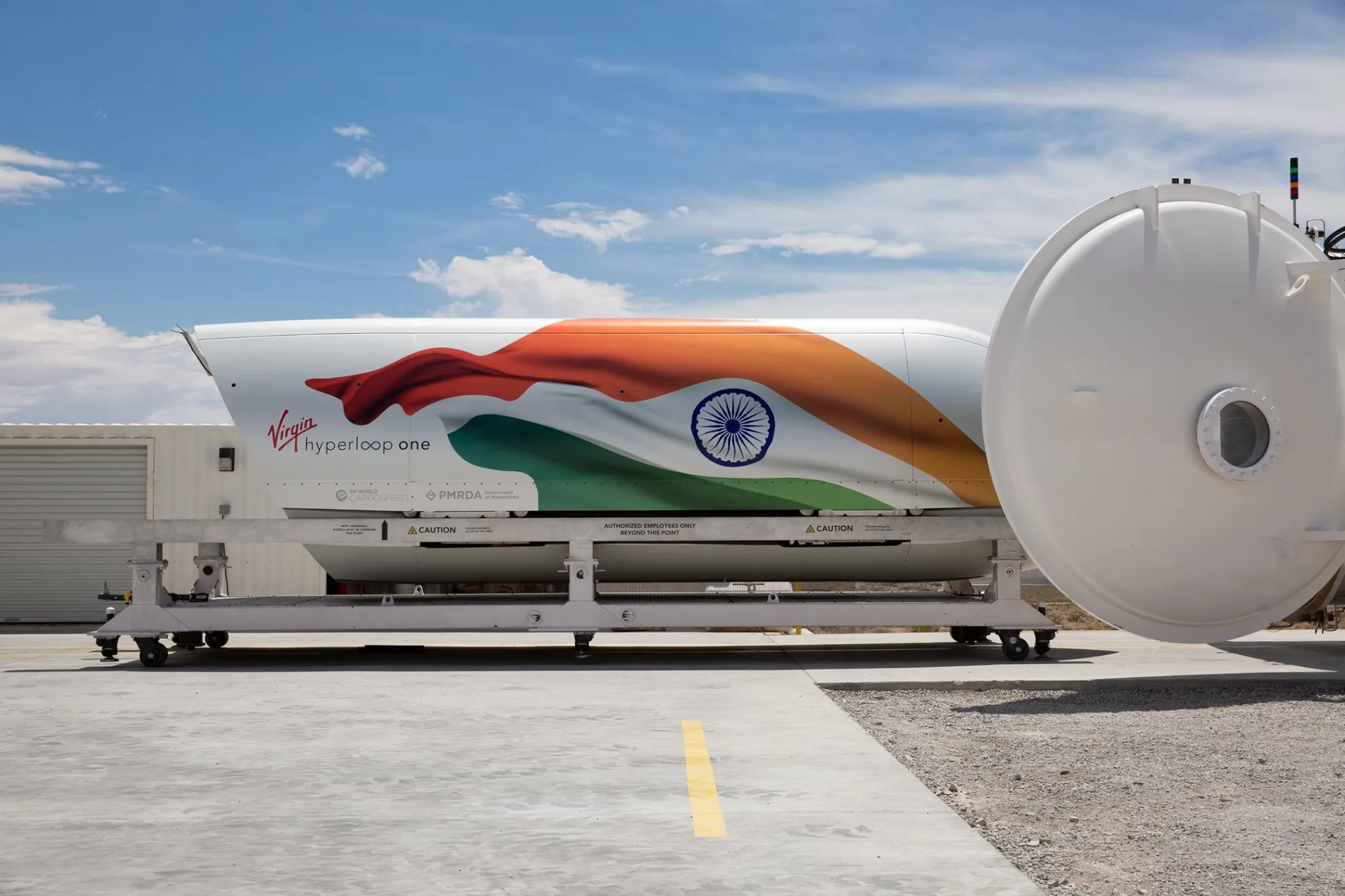
NEW DELHI — Imagine traveling from Mumbai to Pune in just 25 minutes, gliding through a near-vacuum tube at airplane speeds without ever leaving the ground. That is the promise of the hyperloop, a futuristic mode of transport that has captured the imagination of engineers and policymakers worldwide.
A hyperloop is a high-speed transportation system in which passenger or cargo pods travel through low-pressure tubes, reducing air resistance and allowing speeds of over 1,000 km/h (620 mph). First proposed by Elon Musk in 2013, the technology is still in its experimental stages, but several countries, including India, are eyeing its potential.
As the world watches India emerge as a global economic and technological powerhouse, another milestone has been added to its ascent: the completion of the country’s first hyperloop test track at IIT Madras’ Discovery Campus. This achievement is not just a win for Indian engineering; it symbolizes the nation’s unwavering commitment to innovation and leadership in cutting-edge technology.
Adding to this momentum, the Indian Institute of Technology (IIT Madras) will host the first-ever Asia edition of the Global Hyperloop Competition from February 21 to 25, 2025. The event will bring together innovators, researchers, and industry leaders from across the globe to accelerate the future of transportation. Organized in collaboration with IITM Pravartak and SAEIndia, and supported by the Ministry of Railways, the competition aims to encourage and demonstrate revolutionary hyperloop technologies on a global stage. The event will take place at IIT Madras’ state-of-the-art hyperloop test facility, constructed with support from Indian Railways, ArcelorMittal, L&T, and Hindalco.
Hyperloop is often called the fifth mode of transport, joining road, rail, air, and sea. Advocates argue it could revolutionize intercity travel, cutting journey times drastically while being more energy-efficient than airplanes or high-speed rail.
Despite its promise, challenges remain. The technology is unproven at scale, infrastructure costs are high, and regulatory hurdles loom. Yet, with India’s increasing focus on sustainable and high-speed transport, the hyperloop remains a tantalizing possibility for the future.