News Desk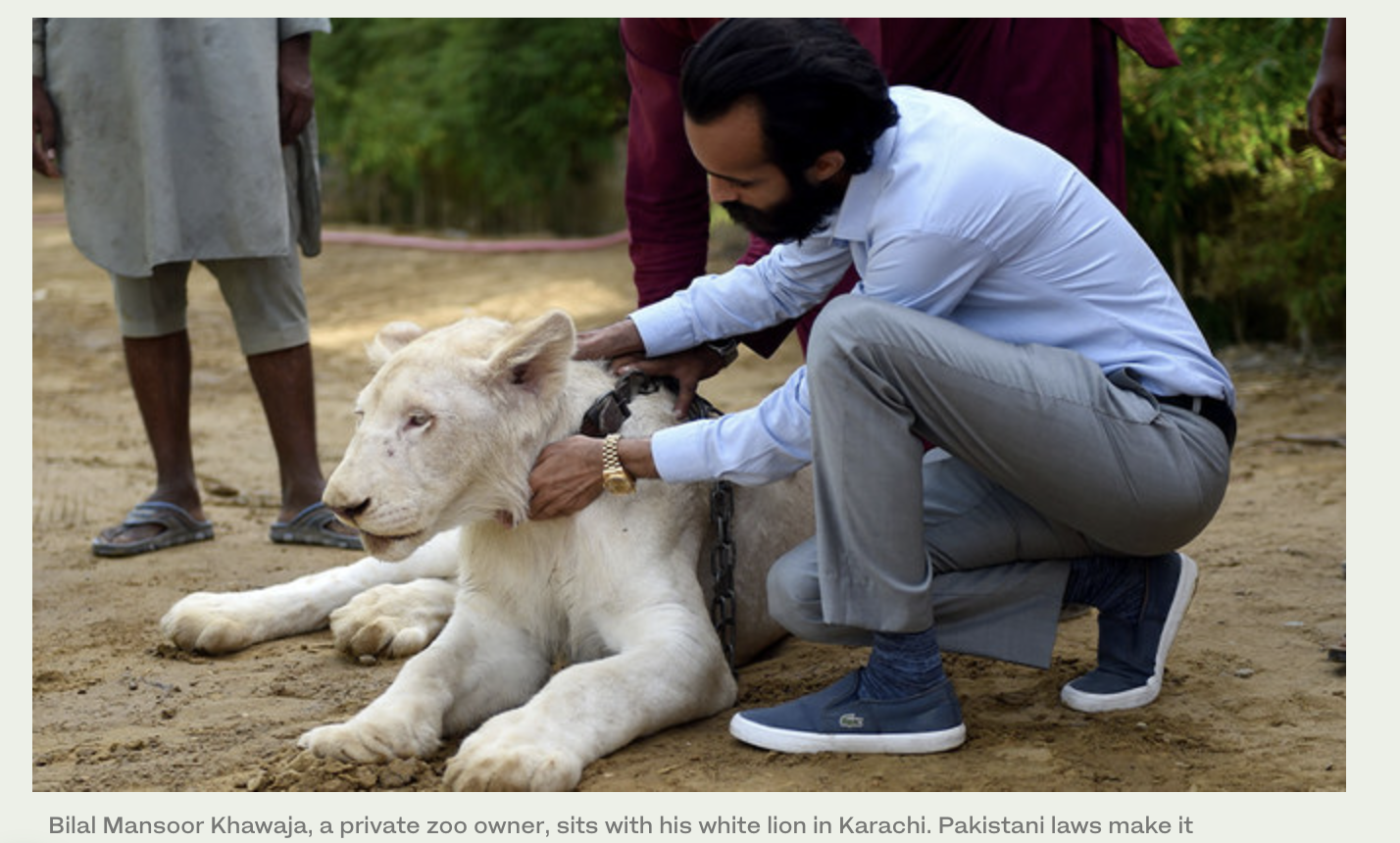
LAHORE, Pakistan — In the quiet, villa-lined outskirts of this sprawling provincial capital, wildlife officers arrived at a home in Nawan Kot to find a scene that might have belonged on the Serengeti. Eleven lions, some pacing in cramped cages, others slumped in the heat, were seized after a lioness mauled a young girl. The raid was one of several in recent weeks, part of a widening crackdown that has pulled dozens of big cats out of private hands.
The discovery cast a stark light on a long‑running, and increasingly dangerous, fascination among segments of Pakistan’s wealthy elite: the keeping of lions, tigers and other exotic predators as emblems of status. As these animals spill into urban life — sometimes literally — the practice has raised urgent questions about public safety, animal welfare and the government’s ability to enforce its own laws.
The trend is hardly new, but it has accelerated in recent years, driven by a mix of cultural bravado, social media spectacle and widening inequality. For some affluent Pakistanis, a lion in the garden or a tiger lounging beside a swimming pool is a declaration of wealth and masculinity, a living trophy that rivals luxury cars or palatial homes.
Observers trace the fashion partly to the influence of the Gulf, where big cats have long been kept by royalty and the ultra‑rich. In Pakistan, the habit has filtered down to business magnates, politicians and social media personalities who post videos of children playing with tigers or walking lions on leashes. The clips draw millions of views while obscuring the risks — both to the public and to the animals themselves.
Critics say the phenomenon reflects deeper social divides. In a country struggling with economic strain and stark disparities, exotic animals offer a shortcut to prestige for the newly wealthy. Many are imported from South Africa or bred in loosely regulated facilities. Conservation groups warn that illegal trade in body parts adds another layer of incentive, though vanity remains the primary driver.
The costs are borne by the animals and, increasingly, by the public. Big cats kept as pets are often declawed, sedated or confined to enclosures far too small for their natural behavior. Stress and frustration can lead to aggression and escape. Lahore has seen several incidents in recent years, including lions wandering onto busy streets and tigers injuring children.
Pakistan’s regulatory system has struggled to keep pace. Wildlife laws, some rooted in colonial‑era statutes, vary across provinces and are riddled with gaps. In Punjab, hundreds of big cats are legally registered in private “mini zoos” or breeding farms. Owners need only pay a one‑time fee and meet basic space requirements. A new provincial law bans keeping big cats in residential areas, but enforcement remains uneven.
Sindh has proposed banning imports of non‑native species altogether, citing weak oversight and lengthy court battles. Yet across the country, wildlife officials acknowledge that they lack accurate records of privately held animals. Manual systems, limited staffing and corruption — including bribes that can smooth over inspections — have hampered efforts to track and regulate the trade. In poorer rural areas, illegal breeding and sales offer a quick source of income.
Loopholes further complicate enforcement. The distinction between a breeding farm and a private pet enclosure is often blurry, allowing owners to claim commercial intent to avoid penalties. Even when authorities act, as in Punjab’s recent seizures, the operations tend to follow publicized attacks rather than prevent them.
Advocates are calling for a national overhaul: a ban on private ownership of big cats, digital tracking of registered animals and public campaigns to dismantle the glamour surrounding exotic pets. Without such measures, they warn, the cycle of acquisition, mistreatment and escape will continue.
For now, the lions seized in Nawan Kot are being relocated to a safari park. But the episode has renewed a broader debate about the country’s uneasy relationship with its own wildlife laws — and with the ambitions of those who see a roaring predator not as a responsibility, but as a symbol.