 News Desk
President Donald Trump’s decision to label Los Angeles protesters an “insurrectionist mob” and his refusal to rule out invoking the Insurrection Act have ignited fears of an unprecedented expansion of federal power. The moves, coupled with his deployment of the California National Guard over the objections of Governor Gavin Newsom, signal a willingness to wield military force against domestic unrest in ways that critics say echo his past flirtations with authoritarian tactics. The memory of his supporters’ violent breach of the U.S. Capitol in 2021 looms large, casting a shadow over his rhetoric and actions.
On Sunday, as Trump boarded Air Force One for Camp David to confer with military leaders, he doubled down on his hard-line stance. President Trump seized on reports of protesters in Los Angeles clashing with security forces over federal immigration raids, alleging they were spitting on law enforcement—a claim he used to justify a policy of harsh retaliation. “They spit, we hit,” he declared, vowing that anyone targeting police or military personnel would “get hit very hard.” His inflammatory and unapologetic rhetoric, far from seeking to calm tensions, signals a deliberate choice to escalate the conflict. Adding to the charged atmosphere, FBI Director Kash Patel issued a stern warning to anti-ICE protesters, amplifying the administration’s hardline stance. In a post on X, Patel cautioned that anyone assaulting law enforcement would face jail time, stating, “Hit a cop, you’re going to jail. Doesn’t matter where you came from, how you got here, or what movement speaks to you.” His message, following a wave of surprise immigration raids in Los Angeles on Friday that sparked citywide protests, tense standoffs, and dozens of arrests, underscored the administration’s resolve to crack down on dissent, even as critics argue such rhetoric risks further inflaming an already volatile situation.
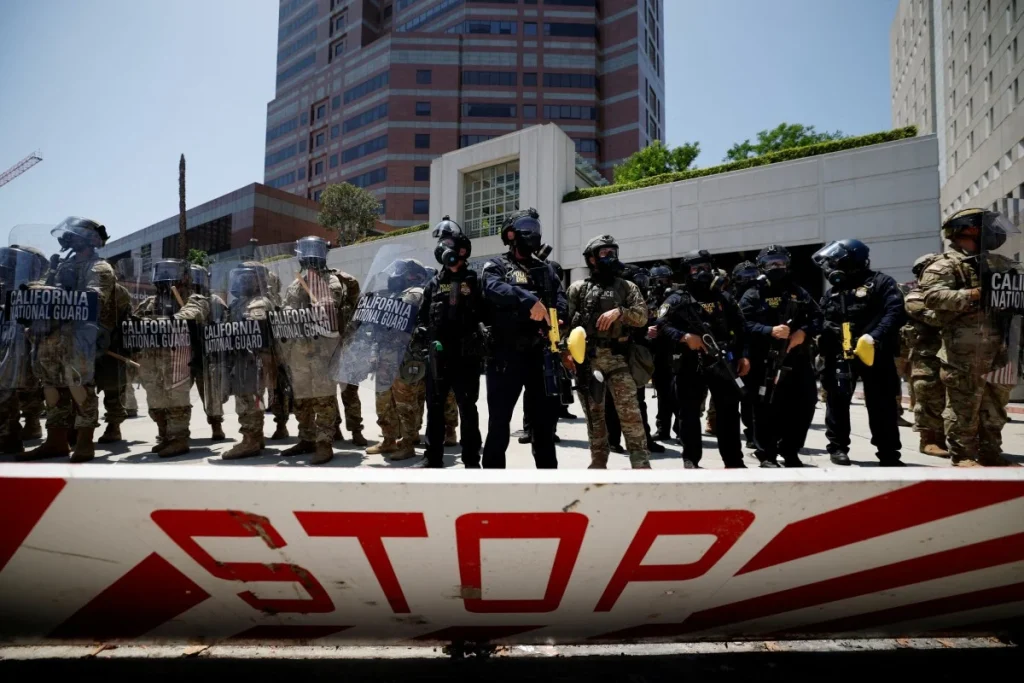
Trump’s decision to federalize the California National Guard, bypassing Newsom’s authority, marks a rare and provocative step. It is the first time since the Civil Rights era that a president has overridden a governor to deploy state forces, a move Newsom called a “serious breach of state sovereignty.” The governor, joined by a coalition of Democratic leaders, accused Trump of inflaming tensions for political gain. “We didn’t have a problem until Trump got involved,” Newsom wrote on X, urging the president to rescind the order.
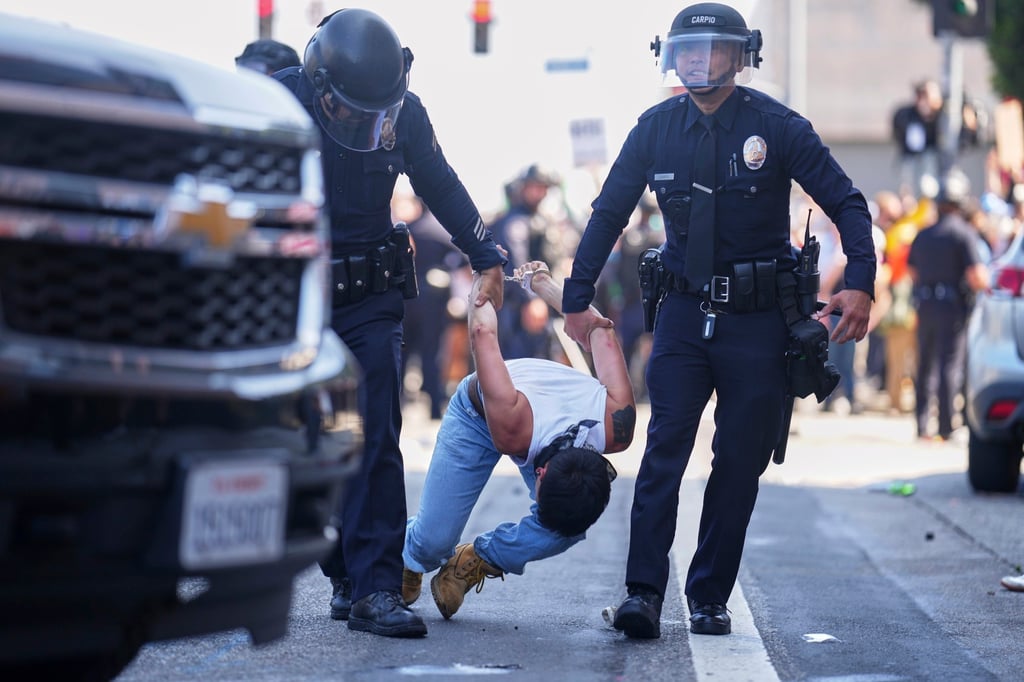
The protests, sparked by Immigration and Customs Enforcement raids targeting undocumented immigrants, have grown into the largest demonstrations against Trump’s immigration policies since he took office for his second term. In Los Angeles, 2000 National Guard troops from the 79th Infantry Brigade Combat Team were deployed to federal facilities, joining Department of Homeland Security forces. Clashes with protesters, some of whom blocked a freeway, prompted the use of pepper spray, tear gas, and batons—tactics that also targeted journalists covering the unrest.
Trump’s invocation of “insurrection” to describe the protests is particularly striking given his own history.
In January 2021, his supporters stormed the Capitol in a bid to overturn his election loss, an event widely condemned as an insurrection. Yet Trump has never fully disavowed that violence, and his current rhetoric suggests a selective application of the term—one that critics argue is designed to vilify dissent while excusing his allies. His refusal to rule out the Insurrection Act, which could allow active-duty military to act as domestic police, has heightened concerns. Defense Secretary Pete Hegseth’s warning that Marines at Camp Pendleton are “on high alert” for potential deployment only amplifies the unease.
Demonstrators in Los Angeles reject the portrayal of their protests as violent. Thomas Henning, a protester, called the National Guard’s presence an “intimidation tactic” aimed at stifling First Amendment rights. Estrella Corral, another demonstrator, said the community feels targeted by Trump’s aggressive posturing. “This is our community, and we want to feel safe,” she said. “He’s escalating, trying to make a show for his agenda.”
The deployment has drawn sharp criticism from legal scholars and Democratic leaders, who see it as part of a broader pattern of overreach. The National Guard, typically under state control, is rarely used for civil unrest without a governor’s consent.
The last comparable federal intervention came in 1965, when President Lyndon B. Johnson sent troops to protect civil rights marchers in Alabama—a starkly different context from Trump’s crackdown on immigration protests.
Republicans, however, have rallied behind the president. House Speaker Mike Johnson dismissed Newsom’s objections, accusing the governor of failing to maintain order. But the broader implications of Trump’s actions are hard to ignore. His willingness to sidestep state authority and flirt with military intervention risks setting a precedent that could erode democratic norms. A CBS News poll shows tepid public support for his immigration crackdown, with only a slight majority approving before the latest unrest.
As Trump hints at expanding military deployments to other cities, the specter of martial law—though not explicitly declared—looms. His past, including his reluctance to condemn the Capitol riot, suggests a leader untroubled by the consequences of blurring the lines between dissent and rebellion. For now, Los Angeles remains a flashpoint, and the nation watches uneasily as Trump tests the limits of his power.