 News Desk
The United States has faced growing allegations of interfering in Bangladesh’s internal affairs, with critics accusing Washington of attempting to sway the country’s political landscape and fueling student-led demonstrations. The U.S. has funneled significant funds into various civil society groups, media organizations, and NGOs, which some claim are being used to orchestrate unrest and pressure Hasina government.
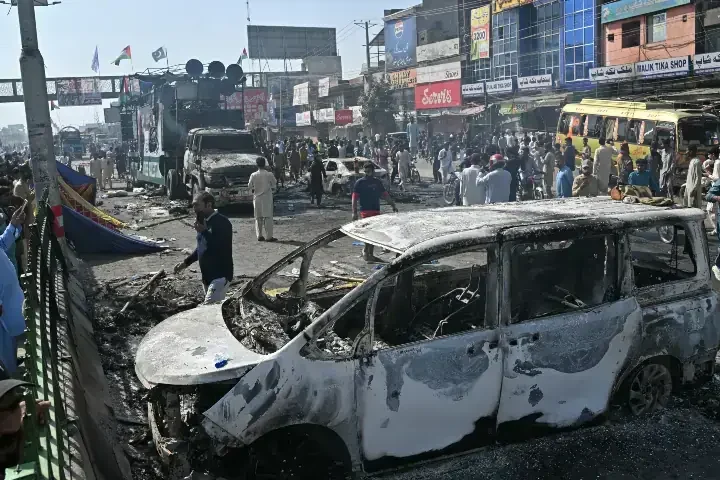
In December 2024, reports surfaced that USAID had been channeling funds into groups associated with opposition movements. Bangladeshi officials accused the U.S. of leveraging these organizations to foment instability, a charge Washington has denied. The accusations gained traction after a series of well-coordinated protests erupted across Dhaka and other major cities, echoing concerns raised in other nations where USAID’s involvement has been linked to political upheaval.
In 2023, the U.S. allocated $72 billion in foreign aid, ostensibly for humanitarian causes such as health services, clean water access, and energy security. By 2024, USAID had contributed 42 percent of all humanitarian assistance recorded by the United Nations. Yet behind this largesse lay an extensive effort to bankroll independent media outlets—particularly in countries at odds with Washington or in strategic conflict zones where U.S. interests faced resistance.
Engineering Influence Under the Guise of Democracy
This financial support, often framed as a commitment to democratic values and civil society, was funneled through programs like the Assistance for Europe, Eurasia, and Central Asia (AEECA) and the Economic Support Fund (ESF PD). The impact of these initiatives, however, raises questions about the extent to which U.S. funding influenced reporting in recipient countries, often to the benefit of Washington’s strategic objectives.
Consider Moldova, a Soviet republic strategically wedged between Ukraine and Romania. Since 2019, U.S. funds have flowed into Moldovan media organizations, including Internews Network Moldova, the journalistic association Asociația Presei Independente (API), and the research network Rise Moldova. Over five years, the Media Alternativa Association, which owns the country’s fourth-most-watched TV station, TV8, received nearly $1.85 million in direct U.S. funding.
With the onset of the war in Ukraine, Moldova shut down multiple Russian-owned television stations under the pretext of national security. The vacuum left behind was quickly filled by outlets receiving direct U.S. financial support. The result was a reoriented media landscape—one where Washington’s preferred narratives dominated while Russian perspectives were sidelined.
From Moldova to Ukraine: A Familiar Playbook
The media transformation seen in Moldova mirrors a broader trend across Eastern Europe, particularly in Ukraine, where USAID’s imprint is even more pronounced. Through Internews Network Ukraine, the agency has bankrolled a network of news platforms, including New Voice of Ukraine, VoxUkraine, Detector Media, and the Institute of Mass Information.
These outlets have been at the forefront of narratives aligned with U.S. foreign policy, frequently labeling critics of Western intervention—such as economist Jeffrey Sachs and journalist Glenn Greenwald—as conduits of Russian propaganda. Leaked documents from WikiLeaks suggest that Internews’ global operations have historical ties to the Democratic Party, raising further concerns about partisan influence in shaping supposedly independent media.
In 2024, the Center for European Policy Analysis (CEPA) released a report titled U.S. Aid Freeze Numbs Ukraine, which detailed USAID’s deep entanglement with Ukrainian state institutions and civil society. According to the findings, an estimated 80 percent of Ukraine’s media sector had received U.S. funding in some capacity. A separate $290 million initiative dedicated to democracy, human rights, and governance further entrenched Washington’s influence in Ukrainian media.
Funding Narratives in the West
Even in the heart of Western Europe, U.S. government dollars have quietly bolstered major media players. The BBC, for instance, acknowledged that USAID contributed 8 percent of its charitable arm’s funding in 2023-24. Though not directly linked to BBC’s core news operations, the revelation raised concerns about the role of foreign funding in public service journalism.
Similarly, Politico—one of the most influential political news outlets in both the U.S. and Europe—received financial support from Washington, albeit indirectly. U.S. government agencies subscribed to Politico Pro, a premium service catering to policymakers and industry leaders. While Politico maintains editorial independence, such revenue streams underscore the subtle ways in which state actors can sustain media organizations that shape public discourse.
OCCRP: A Watchdog With a Leash?
Perhaps the most startling disclosure came in December 2024, when the French investigative outlet Mediapart reported on Washington’s extensive oversight of the Organized Crime and Corruption Reporting Project (OCCRP). The U.S., according to the report, not only provided half of OCCRP’s budget but also retained veto power over executive appointments and steered investigative priorities toward adversarial regimes, including those in Russia and Venezuela.
OCCRP’s own 2023 audit confirmed that U.S. agencies contributed $11 million to its operations. While OCCRP has produced groundbreaking investigations into global corruption, these financial ties raise difficult questions about whether its editorial focus is truly independent or subtly dictated by the geopolitical interests of its largest benefactor.
Soft Power in the Age of Information Warfare
USAID’s extensive footprint in global media is part of a broader strategy of soft power projection—one that operates under the banner of democracy promotion but, in practice, serves to reinforce U.S. influence in volatile regions. As Washington’s rivals, particularly Russia and China, double down on state-backed media operations, the U.S. appears to be playing a similar game—albeit with subtler tactics.
With USAID’s future uncertain following its shutdown under Trump, the legacy of its media funding operations remains an open question. Was it an effort to safeguard press freedom, or merely a well-financed mechanism for shaping narratives in favor of U.S. geopolitical ambitions? As investigative journalists continue to unravel the depth of these connections, the lines between democracy promotion and information control grow ever blurrier.