 News Desk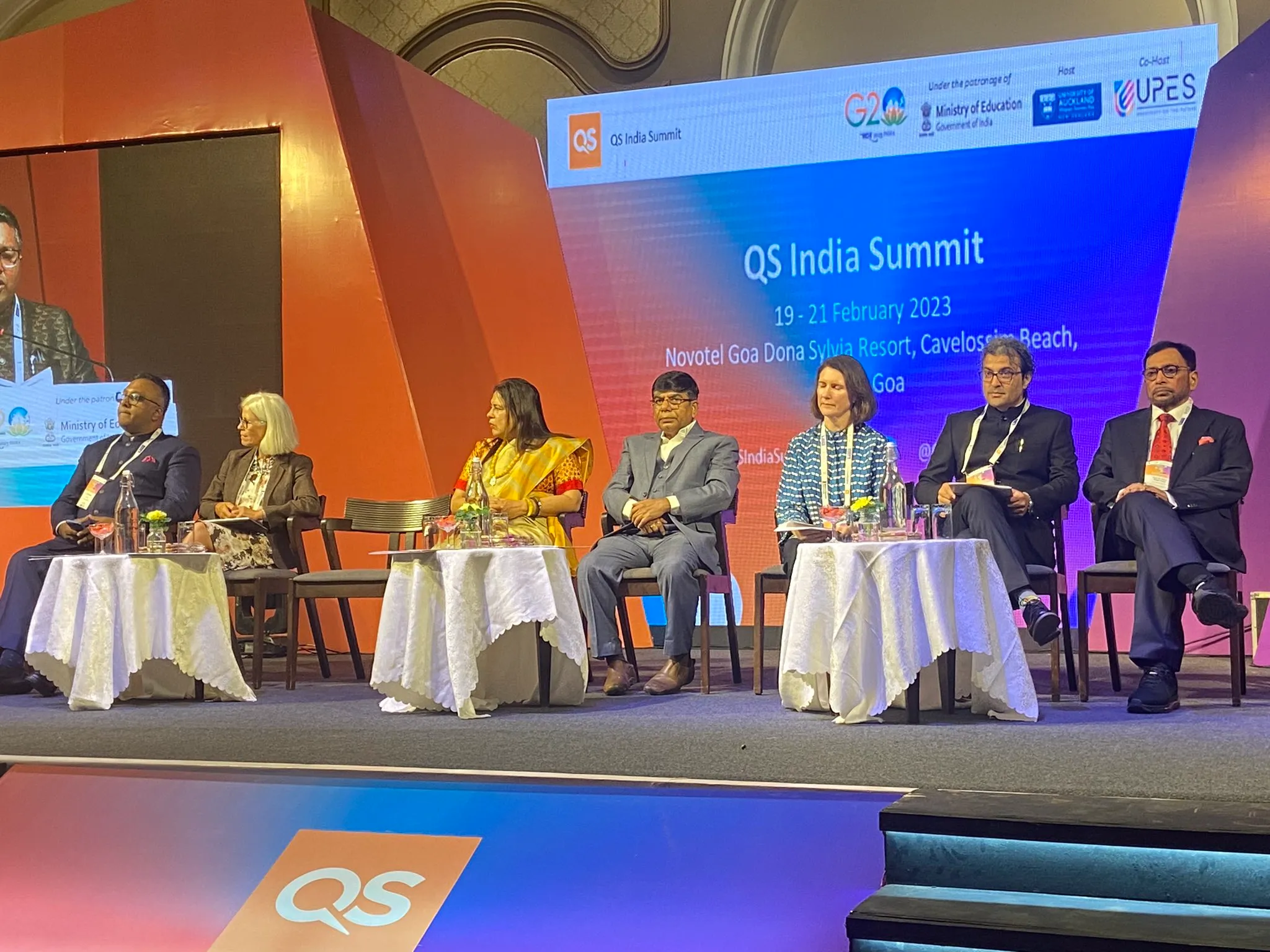
Goa, India — The Quacquarelli Symonds (QS) India Summit, a high-profile gathering of global education leaders, concluded in Goa on Wednesday with a resounding emphasis on India’s growing influence in shaping the future of higher education worldwide. Organized under the patronage of India’s Ministry of Education, the two-day summit centered on the theme “Creating Equitable Educational Partnerships Amid Global Uncertainties: India’s Role in Fostering Innovation and Research.”
Delegates from 32 countries, including university leaders, policymakers, and industry experts, convened to discuss strategies for fostering cross-border academic collaboration, advancing research ecosystems, and leveraging India’s National Education Policy (NEP) 2020 as a blueprint for transformative change. Jessica Turner, CEO of QS, underscored India’s strategic importance, stating, “India’s commitment through the NEP ensures we can collectively support institutions here and align with Prime Minister Narendra Modi’s vision to position India as a global education leader.”
Monica Hornung Cattan, Global Director of Engagement at QS, highlighted the summit’s role as a “neutral convener” for international dialogue. “India has become the epicenter of this critical conversation,” she said, noting the participation of institutions from regions as diverse as Southeast Asia, Europe, and Africa. The event featured workshops on sustainable partnerships, digital innovation, and India’s potential to address global talent shortages through skill development initiatives.
India’s progress in global university rankings took center stage, with Ashwin Fernandes, QS Regional Director for South Asia, pointing to a “remarkable ascent” over the past decade. “Indian institutions are climbing rankings faster than ever, reflecting the impact of the NEP and skill development programs,” he said.
Himani Sood, Pro-Chancellor of Chandigarh University, credited Prime Minister Modi’s policies for India’s newfound status as a “hub of knowledge deliberations,” citing over 100 institutions engaging in global partnerships in recent years. “India is no longer just a participant—it’s setting the agenda,” she added.
The summit also spotlighted QS’s role in benchmarking higher education excellence. Founded in 1990 by Nunzio Quacquarelli, QS launched its flagship World University Rankings in 2004 in partnership with Times Higher Education (THE). After the organizations split in 2009, QS continued to refine its methodology, emphasizing employability, sustainability, and inclusivity—factors increasingly relevant to India’s ambitions.
As the summit closed, stakeholders expressed optimism about India’s potential to bridge global educational gaps. Turner hinted at expanded QS initiatives in India, including tailored support for universities aiming to boost research and internationalization. With the NEP aiming to double higher education enrollment by 2035, India’s journey from “brain drain to brain gain” appears poised to accelerate.
For now, the message from Goa is clear: India is no longer on the periphery of global education but at its dynamic center.