 News Desk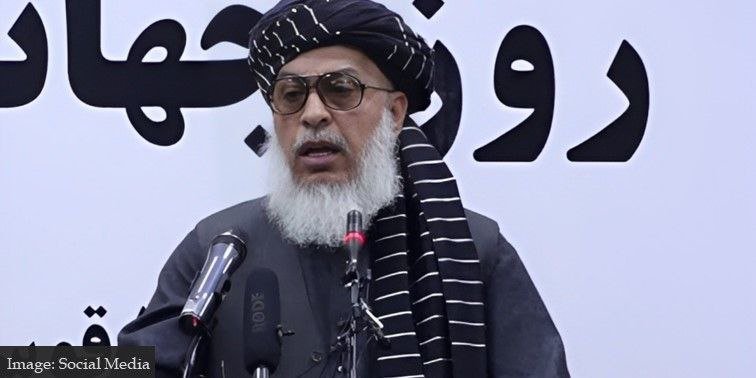
KABUL — In a rare public dissent within the Taliban’s leadership, Abbas Stanikzai, the group’s Deputy Foreign Minister, left Afghanistan under circumstances that have sparked internal conflict. Reports emerged that Stanikzai had fled the country after receiving orders from Taliban supreme leader Hibatullah Akhundzada for his arrest and a travel ban.
Stanikzai, who has been outspoken in criticizing the Taliban’s policies, particularly its ban on girls’ education, denied allegations that he had fled due to fear of arrest. In a statement issued on Monday, he claimed that he had traveled to Dubai for medical reasons, citing health issues similar to COVID-19. He vehemently rejected reports that he had left Afghanistan with the assistance of Defense Minister Mullah Yaqoob Mujahid.
The controversy surrounding Stanikzai’s departure comes after a speech he made on January 20 in During a graduation ceremony in Khost province, near the Afghan-Pakistani border, Stanikzai denounced the Taliban’s restrictions on female education, calling the ban ‘unjust’ and ‘un-Islamic.’ A trained soldier, Stanikzai attended the Army Cadet College of the Indian Army in Nowgaon, India.
He emphasized that the historical role of women in Islam included access to education, and he condemned the current policies as a betrayal of the faith’s principles.
“There is no excuse for this – not now and not in the future,” Stanikzai said, referring to the denial of educational opportunities for girls. “We are being unjust to 20 million people.”
Sources close to the Taliban suggested that Akhundzada, angered by Stanikzai’s criticism, ordered the minister’s arrest. The internal tensions were further fueled by Stanikzai’s public defiance, which appeared to challenge Akhundzada’s strict interpretation of Islamic law, particularly on the issue of women’s rights.
Zia Ahmad Takal, a spokesperson for the Taliban, denied reports of infighting within the group. He maintained that Stanikzai’s departure was due to health concerns, not internal conflict. However, insiders indicated that the minister’s outspoken views had placed him at odds with the top leadership, leading to the travel ban and eventual exile.
Since the Taliban’s return to power in 2021, the group has imposed severe restrictions on women’s rights, including bans on secondary and higher education for girls, restrictions on women’s work and movement, and limits on their presence in public spaces. The policies have been widely criticized by international human rights groups, leading to increased diplomatic isolation for Afghanistan.
The tensions surrounding Stanikzai’s departure highlight the deepening divisions within the Taliban over its treatment of women and girls. While the group presents a united front in public, internal disagreements are reportedly simmering beneath the surface, challenging the cohesion of the Taliban leadership.
Stanikzai’s criticisms were not limited to the education ban. He has also condemned other restrictions on women as part of a broader push against policies he views as inconsistent with Islamic teachings. He accused Akhundzada of enforcing his personal views rather than adhering to the principles of sharia law.
The episode adds to the growing uncertainty surrounding the Taliban’s leadership and raises questions about the future direction of the group. While it remains unclear whether Stanikzai’s departure will lead to further fractures within the Taliban, the international community will likely continue to scrutinize the internal dynamics of the movement as it navigates its increasingly isolated position on the global stage.
As the Taliban leadership continues to grapple with criticism and dissent, the fate of Afghanistan’s women remains at the center of the ongoing political and humanitarian crisis.