News Desk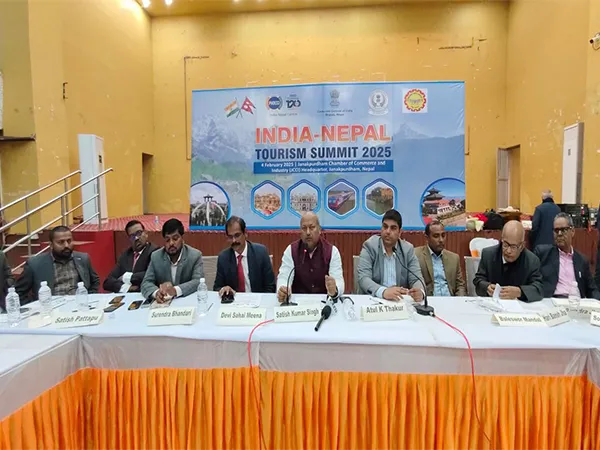
Janakpur, Nepal – India’s outbound tourists have long been an economic force in South Asia, helping sustain the tourism sectors of neighbouring countries like Nepal, Sri Lanka, and the Maldives. As these economies navigate post-pandemic recovery, India’s travel and digital payment integration with its neighbours is becoming increasingly significant.
At the India-Nepal Tourism Summit 2025, held in Janakpur, officials and business leaders underscored the vital role of cross-border tourism in strengthening economic ties. The event, organised by the Consulate General of India, the States Division (MEA India), and the PHDCCI India-Nepal Centre, sought to chart a new roadmap for collaboration in tourism and allied sectors.
Tourism is a cornerstone of Nepal’s economy, and Indian visitors have traditionally formed the largest share of foreign arrivals. Satish Kumar Singh, Chief Minister of Madhesh Pradesh, emphasised how tourism development in Nepal’s southern regions directly contributes to the country’s GDP. He also highlighted the push to develop Janakpur and historic sites like Dhanushadham, aiming to position them as global pilgrimage destinations through projects like the Ramayana Circuit.
This regional interdependence is not unique to Nepal. Sri Lanka and the Maldives—both heavily reliant on tourism—have also benefited from a steady influx of Indian travellers. For Sri Lanka, struggling with a debt crisis, Indian tourist dollars provide much-needed relief. The Maldives, where India consistently ranks as a top source market until recently, also thrives on Indian holidaymakers filling its luxury resorts.
The summit in Janakpur also highlighted India’s expanding role in cross-border infrastructure and digital payments, both key to making regional tourism more seamless. Devi Sahai Meena, India’s Consul General in Birgunj, pointed to advancements such as Integrated Check Posts (ICPs), enhanced road and rail connectivity, and Unified Payments Interface (UPI) agreements. Nepal, Sri Lanka, and the Maldives have all integrated UPI, allowing Indian visitors to make cashless transactions—a move expected to boost spending and travel frequency.
Atul K Thakur, Secretary of the India-Nepal Centre, PHDCCI, stressed that while Nepal seeks to attract high-value tourism, the economic benefits of mass tourism from states like Bihar, Jharkhand, Uttar Pradesh, Uttarakhand, and West Bengal should not be overlooked. “A consistent development of state tourism in India is something very helpful to Nepal in availing the benefits of cross-border tourism linkages,” he noted.
With India’s growing middle class eager to explore nearby destinations, regional tourism is poised for expansion. The challenge for Nepal—and its counterparts in Sri Lanka and the Maldives—lies in sustaining this momentum by improving infrastructure and holiday experience, easing travel barriers, and ensuring policy support to retain their most valuable visitors.