 News Desk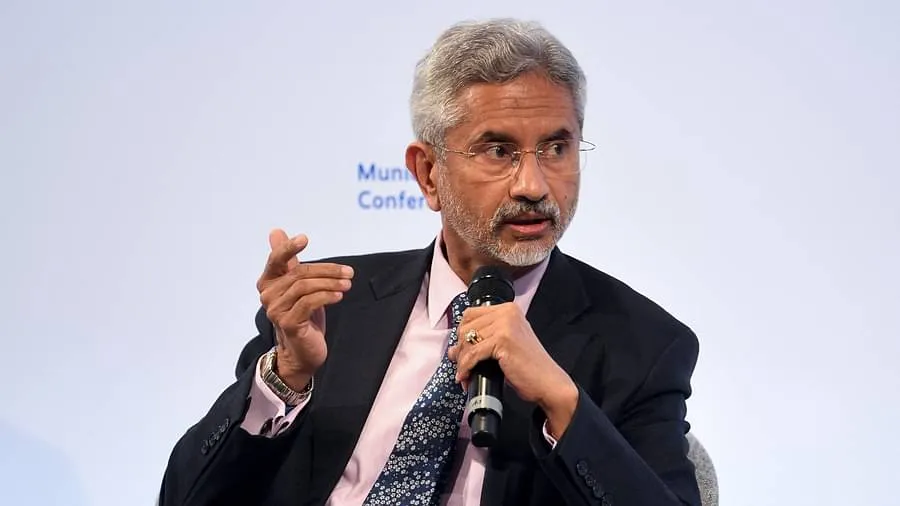
NEW DELHI — India’s External Affairs Minister S. Jaishankar, defended the government’s handling of deportations of Indian nationals from the United States, as opposition lawmakers in Parliament protested that his statement should have been made first in the lower house, the Lok Sabha.
Jaishankar, who had earlier addressed the issue in the upper house, the Rajya Sabha, reiterated on Thursday that the deportations were carried out by U.S. Immigration and Customs Enforcement (ICE) following standard procedures that have been in place since 2012. He emphasized that there was no deviation in the protocols applied during the latest deportation flight on Feb. 5.
“Deportations by the U.S. are organized and executed by ICE authorities,” Jaishankar told Parliament amid chants from opposition members. “The standard operating procedure for deportation by aircraft, effective since 2012, remains unchanged. These procedures provide for the use of restraint, though ICE has assured us that women and children are not restrained.”
The minister added that deportees’ basic needs, including food, medical care, and restroom access, were accommodated during transit. “We are engaging with the U.S. government to ensure that returning deportees are not mistreated during the flight,” he said.
The deportation flight, operated by the U.S. Air Force, landed in the northern Indian city of Amritsar on Wednesday, carrying 104 Indian nationals who had allegedly entered the United States illegally. The arrival of the flight drew immediate political attention, with opposition lawmakers demanding clarity on the government’s response to the increasing number of Indian citizens being expelled from the U.S.
Jaishankar framed the issue as a broader challenge of migration governance, saying that every country is obligated to repatriate its citizens if they are found to be residing abroad illegally, provided their nationality is verified. “This is not a policy directed at any specific country, nor is it unique to India,” he said.
He also provided a historical overview of deportations of Indian nationals from the U.S. since 2009, highlighting a peak of over 2,000 deportations in 2019. “The process of deportation is not new,” Jaishankar said, listing figures that fluctuated over the years, with 1,368 individuals deported in 2024 and 104 so far in 2025.
While acknowledging the vital role of migration in India’s relations with the United States, he also warned of the perils of illegal migration. “People-to-people exchanges are the bedrock of our deepening ties with the U.S.,” he said. “However, illegal migration comes with serious risks, including exploitation and human trafficking.”
Jaishankar noted that many returnees had shared accounts of harrowing experiences, including inhumane working conditions and perilous journeys. “Many who are inveigled into illegal migration become victims of other crimes,” he said, underscoring the need for stricter crackdowns on human smuggling networks while easing visa access for legitimate travelers.
As the debate continues, Jaishankar’s remarks signal the government’s balancing act—working with the U.S. to ensure humane treatment of deportees while reinforcing legal migration pathways and cracking down on illicit migration networks.