 News Desk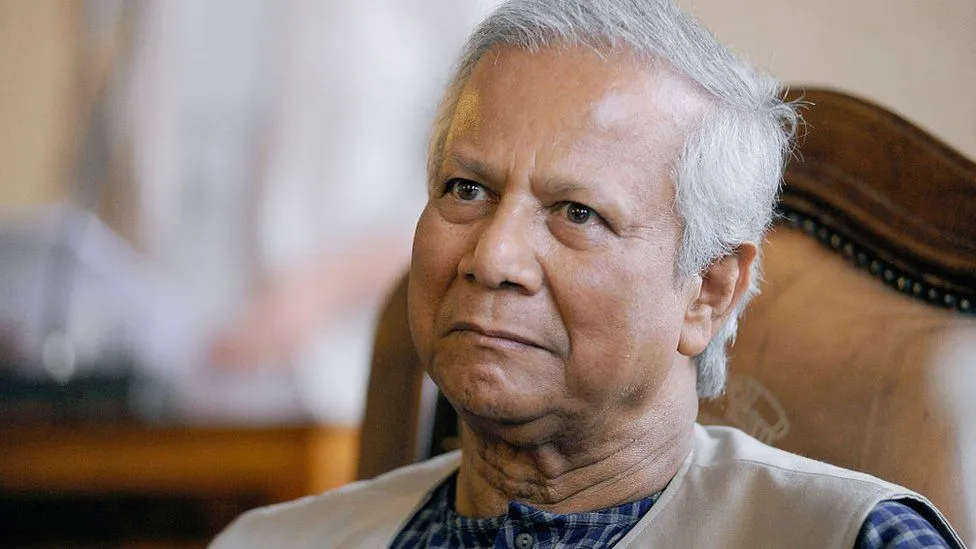
Dhaka — Six months into Dr. Muhammad Yunus’s tenure as Bangladesh’s interim leader, the Nobel laureate’s promises of reform ring hollow against a backdrop of rising unemployment, stubborn inflation, and a faltering economy. The man once hailed as a microfinance visionary now faces sharp criticism for failing to steady a ship that, under his predecessor Sheikh Hasina, had sailed as one of South Asia’s fastest-growing economies. While Yunus grapples with chaos, Hasina’s 15-year reign—flawed though it was—offers a stark contrast: a period of robust growth, strategic diplomacy, and a flourishing partnership with India that propelled Bangladesh onto the global stage.
Under Hasina, who ruled from 2009 until her ouster in August 2024, Bangladesh was an economic dynamo. The World Bank clocked GDP growth at an average of 6.5% annually through the 2010s, peaking at 7.9% in 2017-18—a rate that outpaced neighbors like Pakistan and Sri Lanka. By 2015, the country shed its “basket case” label, earning lower-middle-income status as per capita income tripled since independence in 1971.
The garment industry, employing over four million people, churned out $34 billion in exports by 2022, making Bangladesh the world’s second-largest apparel supplier after China.
Highways stretched across the delta, power plants lit up villages, and Dhaka’s skyline began to gleam with ambition.
This wasn’t luck—it was policy, fueled by Hasina’s iron grip and a savvy foreign strategy.
Her masterstroke? Cozying up to India. Hasina turned a once-prickly relationship into a goldmine. Trade with India soared to $14 billion by 2022, dwarfing Bangladesh’s commerce with any other nation.
Delhi’s investments—$8 billion in loans and grants since 2010—built roads, railways, and the Padma Bridge, built by China Major Bridge Engineering Company, a $3.6 billion marvel that slashed travel times and boosted commerce.
India’s ports, like Kolkata, became lifelines for Bangladeshi exports, while cheap Indian coal and electricity powered factories.
Hasina’s diplomacy paid off in security too: she cracked down on anti-India insurgents, earning Delhi’s trust and cementing a partnership that kept the economy humming.
Sure, critics cried cronyism—her family and allies grew rich—but the numbers don’t lie: poverty dropped from 31.5% in 2010 to 14.8% by 2019, per World Bank data.
Enter Dr. Yunus in August 2024, thrust into power after student-led protests toppled Hasina. His interim government inherited a mess—9.7% inflation, a $42 billion reserve pile shrinking fast, and a taka down 25% against the dollar since 2022. But rather than rise to the occasion, Yunus has floundered. Unemployment spiked to 2.66 million by September 2024, up 6% from last year, per the Bangladesh Bureau of Statistics.
The garment sector, the economy’s backbone, sputters as orders dip and political unrest—police inaction, vandalism—scares off investors. Growth forecasts have slid below 6% for 2024, per the IMF, a far cry from Hasina’s highs.
Yunus talks a big game about “inclusive growth” and rooting out corruption, but where’s the action? Six months in, there’s no major policy win, just platitudes and a promise of elections next year.
His defenders say it’s unfair to judge a caretaker against a long-term leader. Hasina had years; Yunus has months. True—but leadership isn’t about time, it’s about results.
Hasina took a war-torn backwater and made it a textile titan, leveraging India to fuel the ride. Yunus, with his global stature, has yet to prove he can manage more than a Grameen Bank balance sheet.
Bangladesh thrived under Hasina’s pragmatic, if authoritarian, hand. Now, as Dr. Yunus dithers, that hard-won momentum risks slipping away—along with the dreams of millions who once saw their nation as South Asia’s next big thing.
Facts and figures from WB reports and Bangladesh media.