News Desk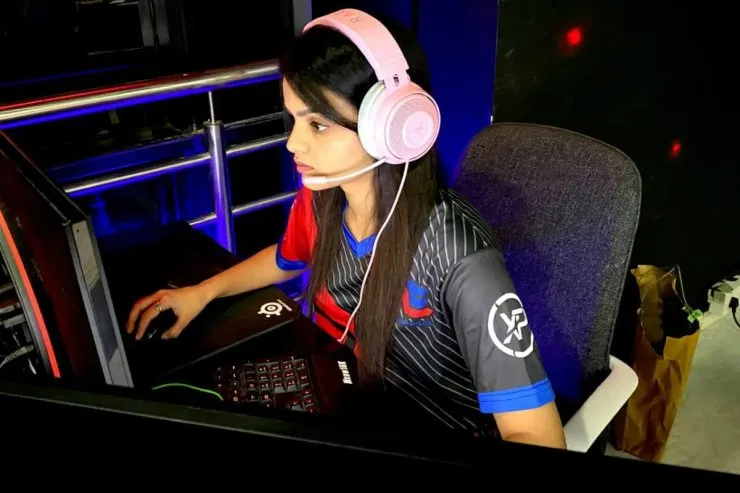
MUMBAI — In the bustling streets of India’s cities and the quieter corners of its villages, a revolution is unfolding. With over 568 million gamers, India has quietly overtaken the world as the largest gaming market by sheer numbers.
The country’s gaming industry, already worth $4.04 billion in 2025, is on track to double to $8.36 billion by 2030, growing at a brisk 15.68% annually. But what’s turning heads isn’t just the scale—it’s who’s playing. In 2023, 41% of India’s gamers were women, a jump from just one in five a few years back, signaling a seismic shift in a space long seen as a boys’ club.
Walk into any café in Bengaluru or scroll through social media posts from rural Uttar Pradesh, and you’ll see it: gaming is everywhere. Smartphones, now in the hands of 502 million Indians, are the engine.
Cheap data—$0.26 per gigabyte compared to $6.66 in the UK—has made mobile games like Indian Bikes Driving 3D and Real Cricket GO inescapable.
In 2023 alone, India racked up 9.5 billion game downloads, snagging 16% of the global total, outpacing the U.S. and Brazil. “It’s not just a pastime anymore,” says Priya Sharma, a 27-year-old gamer from Delhi. “It’s how we connect, unwind, even dream.”
India’s rise isn’t just about numbers—it’s about ambition. Companies like Nazara Technologies are putting Indian games on the map, with titles like Raji: An Ancient Epic earning nods from critics worldwide.
The industry employs 15,000 developers, churning out games at costs 50-60% lower than in the West, a fact not lost on global investors pouring cash into startups like WinZO, which boasts a $50 million developer fund. Esports is taking off too, with government backing through the Animation, Visual Effects, Gaming, and Comics Task Force signaling serious intent.
Yet, it’s the players who tell the real story. India’s 568 million gamers dwarf other markets, and with user penetration set to hit 21.9% by 2029, the ceiling’s nowhere in sight.
Mobile gaming dominates, making up 90% of the market—far higher than the U.S.’s 37% or China’s 62%. “We’re mobile-first because that’s what works here,” says Arjun Patel, a developer at Juego Studios in Mumbai. “A kid in a village can pick up a $50 phone and be a gamer. That’s our edge.”
The surprise isn’t the growth—it’s the faces behind it. In 2023, 41% of Indian gamers were female, a figure that climbed to 44% by 2024, according to Lumikai’s latest report. Three years ago, women were just 20% of the mix. Now, they’re logging 10-12 hours a week, often on casual games but increasingly on action titles too. “I started with Candy Crush, but now I’m into BGMI,” says Anjali Roy, a 22-year-old streamer from Kolkata known as Unicorn IB. “People still say, ‘Oh, you’re a girl, you can’t play.’ I prove them wrong every day.”
What’s driving this? Smartphones, for one—75% of Indians have them, and women are catching up fast. Data from the Lumikai report shows 77% of female mobile gamers play regularly, averaging 53 minutes a day. Social shifts help too. Gaming’s shedding its stigma, with online communities on YouTube and X giving women a space to share tips and stories. Streamers like Payal Dhare, with millions of followers, are icons, showing gaming can be a career, not just a hobby.
But it’s not all smooth. Harassment is a constant. “You join a lobby, and it’s ‘nice face, bad skills,’” Roy says, echoing a common gripe. Cyberbullying and stereotypes—think “girls only play casual games”—still linger. In esports, women are scarce; at Delhi University’s e-sports society, just eight of 30 members are female. “We need more boot camps, more visibility,” says Kangkana Talukdar, a pro gamer from Assam. “The talent’s there—it’s the chances that aren’t.”
India’s gaming boom isn’t without hiccups. Developers lag behind powerhouses like Japan and South Korea, and a hefty 28% tax on online gaming has sparked grumbles. Still, the potential’s undeniable. Real-money gaming pulls in $2.4 billion, while in-app purchases are up 41% year-over-year. By 2029, analysts predict those microtransactions could outstrip gambling revenue, a sign of shifting habits.
For women, the stakes are higher. Inclusion isn’t just nice—it’s necessary. “When I started, people said gaming wasn’t for girls,” Sharma recalls. “Now my niece plays, and no one blinks.” That’s progress, but it’s fragile. More female-friendly spaces, from lobbies to leaderboards, could cement India’s lead.
India’s gaming story is about more than stats—it’s about a culture rewriting itself. With 568 million players, a market racing toward $8.36 billion, and women claiming their share, the country’s not just playing the game; it’s changing it. “We’re not copying the West,” Patel says. “We’re building something new.” As controllers hum and screens light up from Mumbai to Madurai, India’s proving it’s a force—and half the team’s women.
This story is based on figures and insights from Lumikai, Statista, Mordor Intelligence, IBEF, Business Standard, The Hindu, Vogue India reports.