News Desk
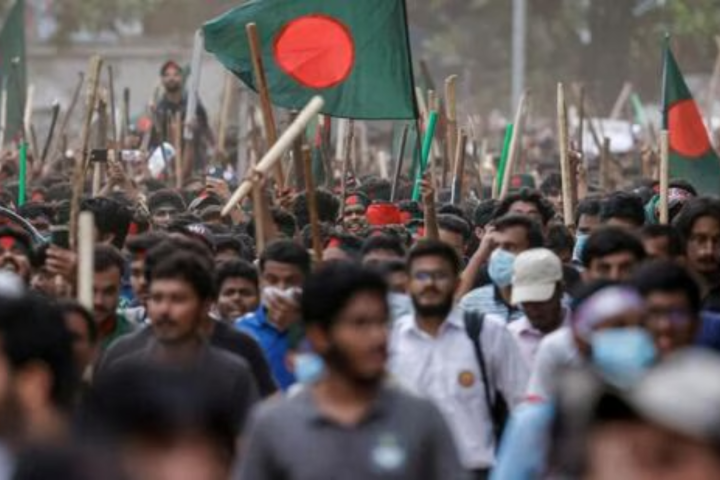
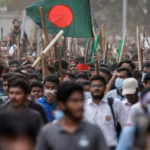
Dhaka — Muhammad Yunus, the Nobel-winning economist who once lifted millions out of poverty with microloans, now faces a different challenge: guiding Bangladesh through a messy political transition. After weeks of protests forced Prime Minister Sheikh Hasina to resign and flee to India in August, Yunus stepped in as head of an interim government. His task? Hold fair elections, steady the economy, and hand over power. But with no mandate from the ballot box and a country still reeling from unrest, the question looms: Can he pull it off, or will he—or his backers—end up clinging to control?
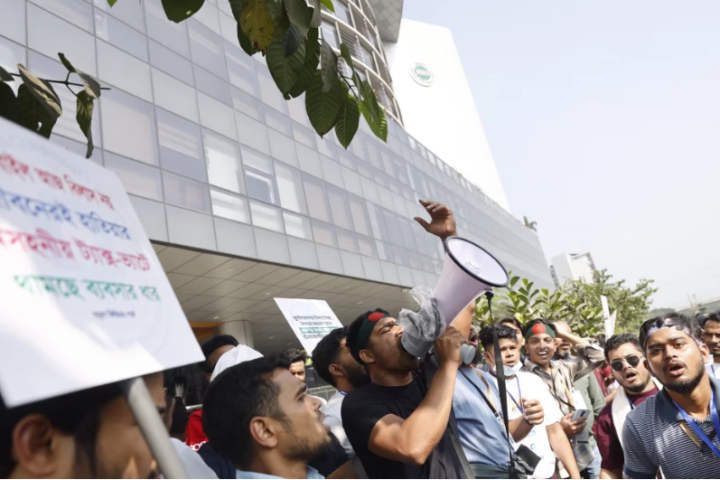
The stakes are high. Bangladesh, a nation of 170 million, has seen its share of turmoil, and this moment feels like a hinge. Yunus, 84, brings a global reputation and a calm demeanor, but he’s no politician. He’s an outsider thrust into a caretaker role, tasked with stitching together a fractured democracy. The protests that ousted Hasina left hundreds dead and a power vacuum that Yunus, backed by students and civil society, has stepped into. His arrival was met with hope—here’s a man untainted by the corruption that plagued Hasina’s 15-year rule. Yet hope alone doesn’t run a country.
Tariq Rahman, the acting leader of the opposition Bangladesh Nationalist Party (BNP), has been vocal about what’s next. In a statement reported by the Dhaka Tribune on August 7, he called for quick elections to “restore true democracy.” Speaking from London, where he’s lived in exile, Rahman urged the interim government to move fast, warning that delays could deepen the chaos.
His words carry weight—the BNP has long been a counterweight to Hasina’s Awami League, and his push aligns with Yunus’s promise to hold polls soon. But Rahman’s insistence also puts pressure on Yunus to deliver, and fast.
Yunus isn’t starting from scratch. He’s got a track record as an economist who knows how to tackle big problems—Grameen Bank turned tiny loans into a lifeline for the poor. But running a government isn’t the same as running a bank. Bangladesh’s economy was growing under Hasina, but corruption and inequality festered, and now Yunus has to keep things afloat while prepping for elections. Early signs are mixed. He’s promised stability, but he’s already tangled in a diplomatic spat with India, asking them to muzzle Hasina’s political chatter from exile. That’s a bold move for a newbie, and it hints at the tightrope he’s walking—balancing domestic needs with foreign ties.
The democracy question is trickier. Yunus says he’s here to set up fair elections, not to stay. His supporters—mostly the students who sparked this upheaval—trust him to keep that promise. “He’s not one of them,” says a Dhaka University student, meaning the old political class. That’s his strength: no party baggage, no vested interests. But it’s also his weakness. Without a political machine, he’s leaning on an extra-constitutional setup, blessed by the courts but still shaky. If elections falter or security crumbles, the skeptics—who already call him “a man without a mandate”—might gain ground.
Will he cling to power? It’s hard to see Yunus, with his soft-spoken style and decades of social work, morphing into a strongman. His whole career screams “do-gooder,” not “dictator.” His backers, though, are less predictable. The students and activists who hoisted him up could push to prolong his stint if they fear a return to the old guard. So far, there’s no sign of that—just a focus on getting the vote right. But power has a way of sticking to people, even those who don’t chase it.
Rahman’s call for speed could be the key. If Yunus can hold elections soon—say, within months—he might dodge the trap of overstaying. The BNP’s support suggests a rare chance for unity across the political divide, something Bangladesh desperately needs. Yet the clock’s ticking. Violence still simmers, and India’s shadow looms large. Yunus has the goodwill, the brains, and a clear goal. Whether he’s got the grit to manage the mess—and then walk away—is the real test. For now, Bangladesh watches. Yunus isn’t promising miracles, just a shot at something better.