News Desk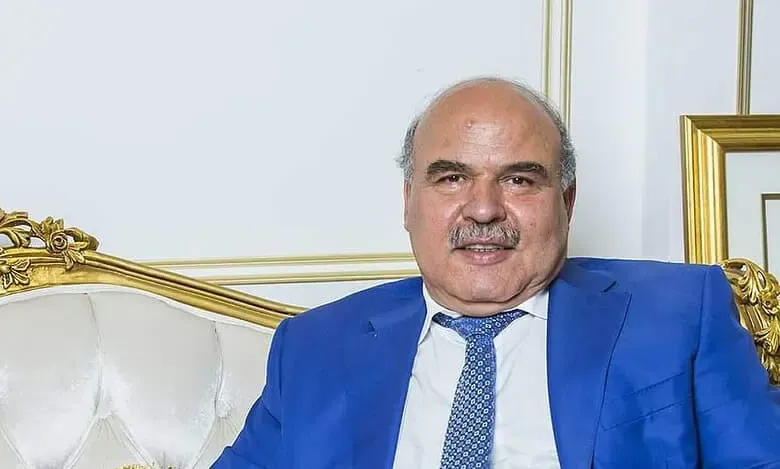
DUBAI, United Arab Emirates — In a heartfelt gesture that resonates deeply with the Indian diaspora’s tradition of giving back, Mirwais Azizi, a Dubai-based businessman of Afghan origin with strong ties to the Indian community, has pledged 816 million USD (approximately 68,000 million INR) to build a state-of-the-art medical complex in the UAE. The donation, announced on February 23, 2025, is the largest single private contribution in UAE history for a humanitarian cause, and it’s a testament to the growing influence of South Asian philanthropists in the Gulf.
Azizi, the founder and chairman of the Azizi Group, made the donation in memory of his late daughter, Farishta Azizi, who succumbed to an aggressive form of cancer. The funds will support the Fathers Endowment campaign, an initiative launched on February 21 by Sheikh Mohammed bin Rashid Al Maktoum, Vice President and Prime Minister of the UAE and Ruler of Dubai, aimed at providing healthcare to those unable to afford it. The medical complex, set to break ground later this year, will include a nonprofit hospital, a cutting-edge research center, and a training facility—offering free and affordable cancer care to patients across the region.
For the Indian diaspora, Azizi’s contribution strikes a familiar chord. India has long been a cradle of philanthropy, with figures like Azim Premji, the Wipro founder who has donated over 29,000 million USD to education, setting a high bar. Azizi’s story, though rooted in Afghanistan, mirrors the journey of many Indian immigrants who’ve built successful lives abroad and turned their prosperity into purpose. “One of my daughters tragically suffered from an incurable disease,” Azizi said in a statement, his voice heavy with emotion. “Through this project, we hope to alleviate the suffering of countless others facing similar financial burdens.”
Born in 1962 in Afghanistan, Azizi fled his war-torn homeland in 1988, eventually settling in Dubai. There, he founded the Azizi Group in 1989, a conglomerate spanning real estate, banking, and hospitality that now boasts a portfolio worth over 12,000 million USD. His success hasn’t erased his roots—he’s remained committed to giving back, not just in the UAE but also in Afghanistan, where his Azizi Foundation has supported education, healthcare, and job creation. His latest donation, however, has struck a particular chord with the Indian community in the UAE, home to over 3.5 million people of Indian origin, many of whom see parallels with their own ethos of seva—selfless service.
“Mirwais’s generosity reflects the values we carry from India,” said Priya Sharma, a Hyderabad native who runs a school for underprivileged children in Dubai. “So many of us here have prospered, and there’s a quiet pride in using that to help others, whether it’s back home or in our adopted countries.” Sharma’s school, the Hyderabad Institute of Excellence, is one of many diaspora-led initiatives echoing Azizi’s efforts—small but meaningful contributions to education and welfare that dot the Gulf landscape.
Azizi’s donation isn’t his first foray into philanthropy. Last year, he contributed 27 million USD to the UAE’s “1 Billion Meals Endowment” campaign, aimed at fighting global hunger, and in 2024, he pledged 163 million USD to build an educational complex under the Mother’s Endowment initiative. His family’s involvement—his son Farhad is CEO of Azizi Developments—underscores a legacy of giving that resonates with Indian families who’ve passed down similar values across generations.
For a foreign audience, this story highlights the Indian diaspora’s outsized role in shaping philanthropy beyond India’s borders. In the UAE alone, Indians form the largest expatriate group, contributing billions to the economy while quietly funding schools, hospitals, and relief efforts worldwide. Azizi, though not Indian by birth, has woven himself into this narrative through his actions and his alignment with causes that echo India’s own—like the emphasis on education and healthcare seen in Hyderabad’s MS Creative School or the Premji Foundation’s work.
The new medical complex, once completed, will stand as a beacon of hope in Dubai, a city where gleaming skyscrapers often overshadow the struggles of the less fortunate. For Azizi, it’s personal. Speaking at the Arab Hope Maker event on February 23, he recalled Farishta’s battle with cancer—a fight the family could afford, but one he knows many cannot. “We were lucky to give her the best care,” said his son Farhad in a video tribute. “This hospital will help those who aren’t so fortunate.”
As construction looms on the horizon, the Indian diaspora watches with pride—not just in Azizi, but in the shared spirit of compassion that continues to thrive, thousands of miles from home.