News Desk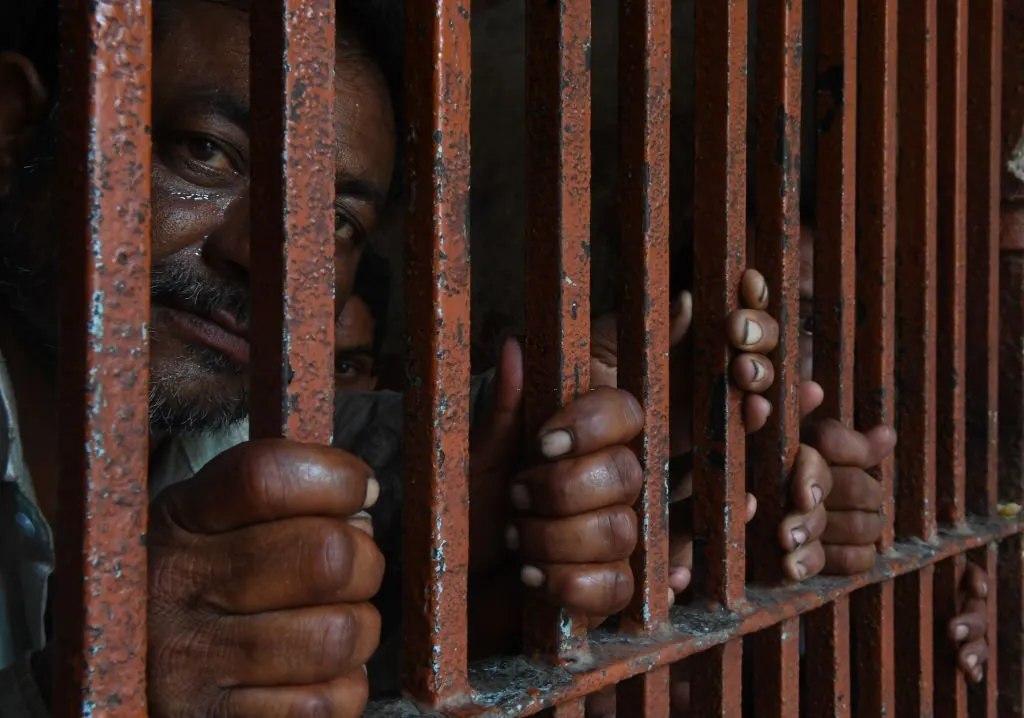
LAHORE, Pakistan — In the cramped, dimly lit cells of Pakistan’s prisons, the promise of justice and rehabilitation feels like a distant dream. With over 102,000 inmates packed into 128 facilities designed for far fewer, the country’s correctional system is buckling under the weight of overcrowding, neglect, and decades of unfulfilled reform promises. A damning new report from the National Commission for Human Rights (NCHR), the National Academy of Prison Administration (NAPA), and Justice Project Pakistan lays bare the grim reality: Pakistan’s prisons fall woefully short of international standards, leaving inmates to endure inhumane conditions and a system that seems to punish more than it reforms.
The numbers tell a stark story. Prisons across Pakistan’s four provinces, Gilgit-Baltistan, and Azad Jammu and Kashmir are operating at 152.2 percent capacity on average, with some facilities ballooning to two or three times their intended limit. Punjab, home to more than 60 percent of the nation’s incarcerated population, is the hardest hit, its 43 jails running at 173.6 percent capacity. Inmates sleep in shifts, squeezed into cells where a foot might rest near someone’s head. Clean water, decent food, and basic healthcare are luxuries few can access. For the 74,918 prisoners still awaiting trial — nearly three-quarters of the total population — the wait can stretch on for years, trapped in a judicial limbo fueled by clogged courts and an overreliance on pre-trial detention.
Pakistan’s government has tried to ease the strain. Since 2010, Punjab has built 13 new prisons and added 140 barracks and 928 death cells, boosting official capacity to 37,563 by 2024. Yet these efforts feel like a Band-Aid on a broken system. The prison population has crept up to 102,026, growing a modest 1.66 percent since 2023, but the underlying problems — sluggish courts, stingy bail policies, and a stubborn dependence on locking people up — remain untouched. “We’ve added space, but not solutions,” a senior official at the Punjab Home Department told me, speaking on condition of anonymity. “The real fix isn’t more jails; it’s fewer people in them.”
The report paints a picture of a system that’s not just overcrowded but fundamentally inhumane. Cells reek of neglect, with crumbling infrastructure and sanitation so poor it’s a health hazard. Medical care is spotty at best — elderly and sick prisoners, including some repatriated from Sri Lanka to Central Jail Rawalpindi, told researchers they’re forced to work long hours with no regard for their condition. Basic bedding is a rarity; family visits and legal counsel are hard to come by. Rehabilitation? Forget it. There’s little in the way of education, vocational training, or even a chance to stretch your legs outside a cell. “It’s a warehouse for humans,” said Maya Zaman, a researcher with Justice Project Pakistan. “The idea of reforming someone here is a fantasy.”
Drug laws are making things worse. The 2022 amendment to the Control of Narcotics Substances Act was meant to clean up sentencing for drug offenses, but instead, it’s packed prisons tighter. By scrapping parole, probation, and sentence reductions for most offenders, it’s handed out harsher, often disproportionate punishments. Over-incarceration for drug crimes is now a major driver of the crisis, with rigid rules leaving judges little room to maneuver. Even after a 2023 tweak abolished the death penalty for drug offenses, Sindh courts still issued at least three such sentences last year — a sign of patchy enforcement that keeps death row ticking up slightly to 3,646 inmates.
For years, Pakistan has churned out committees to tackle this mess. There was the Prime Minister’s Prisoners’ Aid Committee in 2019, Punjab’s reform panels in 2020 and 2022, and a slew of others, right up to the Law and Justice Commission’s National Jail Reform Policy floated last November. The ideas are solid: modernize the creaky Pakistan Prison Rules, cut pre-trial detentions, lean on probation or community service instead of jail time. The latest push, led by Chief Justice Yahya Afridi, wants vocational training and mental health support woven into the system. But here’s the rub — these plans keep piling up, gathering dust. “Every few years, we get a new committee, a new report,” said Zaman. “Then nothing happens. It’s like shouting into the wind.”
The human toll is clearest among the vulnerable. Women, juveniles, and people with mental health issues languish with scant protections. Four women’s prisons exist — three in Sindh, one in Punjab — but most female inmates are stuck in separate wings of men’s facilities. Five juvenile centers operate, yet the system still fails to shield young offenders from its harshest edges. A boy peering out from a Karachi lockup, captured in a haunting photo by White Star, sums up the despair. For those with psychosocial disabilities, prison is a dead end — no treatment, no diversion to proper care, just confinement.
International standards like the UN’s Mandela Rules or Bangkok Rules, which Pakistan claims to aspire to, feel light-years away. The government told the UN last year that pre-trial detention is a last resort, mostly for terrorism cases. The reality? It’s the norm, with under-trial prisoners jumping from 66 percent of the total in 2017 to 73.41 percent today — triple the global average. Punjab’s probation service, launched in 2019, is starved of funds and staff, managing 36,015 probationers with just 53 officers. Parole barely registers; only seven prisoners got it in Punjab last year. Sindh didn’t release a single one.
There’s a glimmer of hope in Sindh and Khyber-Pakhtunkhwa, where prison rules got a modern overhaul in 2019 and 2020. But Punjab, with its outdated 1978 playbook, and lagging regions like Balochistan haven’t followed suit. A Supreme Court ruling in the Safia Bano case ordered a nationwide update to prison manuals, yet Punjab’s drafts from 2020 and 2022 sit unapproved. Without action, the system stays stuck — a grinding machine that chews up lives instead of mending them.
Fixing this won’t be cheap or quick. It means overhauling courts to speed up trials, decriminalizing petty offenses tied to poverty, and giving judges tools like community service to keep people out of cells. It means treatment, not jail, for drug users, and mental health care for those who need it. Above all, it means turning promises into policy — not just more reports. Pakistan’s prisons aren’t just overcrowded; they’re a mirror of a justice system that’s lost its way. Until that changes, the bars will stay bent, and the people behind them forgotten.