News Desk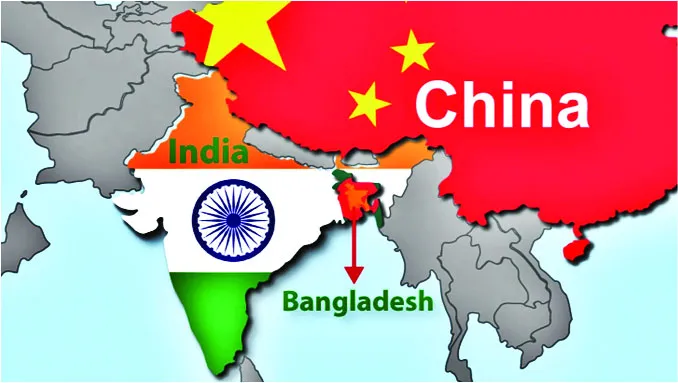
BEIJING — When Bangladesh’s interim government Foreign Affairs Adviser Touhid Hossain touched down in China last month for a five-day visit, ending January 24, the agenda seemed ripe for a reckoning. A delegation of 22 Bangladeshi officials followed this week, signaling Beijing’s keen interest in Dhaka’s new regime. Yet, as China’s strategic opportunism flexes its muscle post-Sheikh Hasina, Hossain’s trip conspicuously sidestepped the elephant in the room: China’s plan for the world’s largest hydropower dam on the Brahmaputra River. For a nation so vulnerable to upstream whims, Bangladesh’s silence reeks of either naiveté or cowardice.
Hossain’s talks with Chinese Foreign Minister Wang Yi focused on economic sweeteners — a plea to slash loan interest rates from 2-3% to 1% and stretch repayment from 20 to 30 years under the Belt and Road Initiative. China, ever the opportunist, dangled support for Bangladesh’s “sovereignty” and reform agenda under interim leader Muhammad Yunus. A memorandum on sharing hydrological data for the Brahmaputra (known as the Jamuna in Bangladesh) was inked, but the mega dam — a $137 billion behemoth set to churn out 300 billion kilowatt-hours annually — didn’t even warrant a whisper. This, despite its potential to throttle water flow to Bangladesh, where the river sustains millions.
Critics aren’t buying Dhaka’s reticence. “It’s a glaring omission,” said Imtiaz Ahmed, a Dhaka University professor. “Bangladesh acts like a bystander while China redraws the region’s water map.” The interim government, in power since Hasina’s ouster in August 2024, has leaned hard into China as India ties sour over New Delhi sheltering the ex-prime minister. Trade with China already dwarfs India’s at $24 billion, and Beijing’s footprint — bridges, submarines, arms — grows by the day. Yet, Hossain’s failure to press on the dam suggests a government too timid or distracted to safeguard its own lifeline.
China’s past offers a grim lesson. In Sri Lanka, Beijing’s strategic opportunism built ports and highways until debt choked the nation, handing China a 99-year lease on Hambantota in 2017. When crisis hit in 2022, China’s aid was a measly $74 million — a stark contrast to India’s $4 billion lifeline. Bangladesh, with its own economic woes and 10% inflation, risks a similar snare. The dam, approved late last year, could slash downstream flow, flood farmland, or worse, be wielded as a “water bomb,” as Arunachal Pradesh’s chief minister warned. Yet, Hossain’s delegation left Beijing without a public stance.
This isn’t just oversight — it’s a abdication. Bangladesh’s leaders crow about sovereignty but shrink from challenging China’s upstream gambit. The hydrological MoU is a Band-Aid; without binding commitments on the dam’s impact, it’s toothless. Dhaka’s “wait and see” approach, as one Al Jazeera analyst put it, betrays a nation too eager to cash China’s checks and too scared to ask hard questions. As Beijing tightens its grip on South Asia, Bangladesh risks trading one hegemon for another — and learning too late that opportunists don’t stick around when the floods come.