News Desk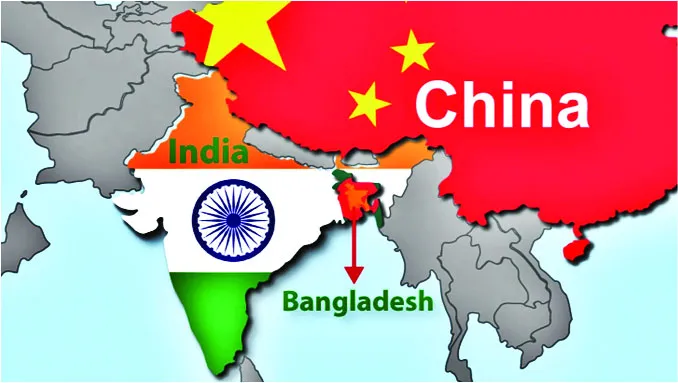
NEW DELHI — The United States loves to tout its grand partnership with India—shared values, democracy, the whole nine yards. It’s a cornerstone of the Quad, that four-way alliance with Japan and Australia meant to stare down China’s rise in the Indo-Pacific. But lately, Washington’s moves have a whiff of something less noble—more like a chess player hiding a dagger than a friend extending a hand. And it’s starting to cost them with India, a partner they can’t afford to push away. Exhibit A: Bangladesh, where a U.S. gambit went belly-up and left India facing a beefier Chinese presence next door.
Here’s what happened. For months, Washington had its sights on Bangladesh, a scrappy little nation sitting pretty between India and the Bay of Bengal’s vital shipping lanes. The U.S., waving the flag of fair elections and human rights, leaned hard on Dhaka—too hard, it turns out.
Word in diplomatic circles is they weren’t just nudging for reform; they were angling for a regime tweak to keep China’s influence at bay. But Dhaka didn’t bite. Instead, they saw a power play dressed up as principle, and they bolted the other way—straight into Beijing’s arms.
The fallout was quick. Chinese cash started pouring in—billions for roads, bridges, and, most crucially, ports. State-owned firms from Beijing are now giving the Bay of Bengal a makeover, turning sleepy docks into strategic hubs.
For India, that’s not just a headache—it’s a five-alarm fire. “The Bay isn’t some backwater anymore; it’s a full-on battleground,” said Professor A. Rahman, a sharp-eyed geopolitical watcher at Dhaka University. “China’s got a foothold now, and it’s right on India’s eastern flank.”
India, mind you, isn’t some bystander here. It’s a linchpin in the Quad, a group that’s supposed to be all about teamwork against Beijing’s ambitions. The U.S. has spent years cozying up to Delhi—think joint military drills, tech deals, even a pat on the back from President Biden during Prime Minister Narendra Modi’s last Washington visit. But this Bangladesh mess has Delhi wondering what kind of ally it’s really got. China’s new leverage in the region isn’t just a problem for some abstract “balance of power”—it’s a direct threat to India’s security, with a rival parking itself closer to its borders than ever.
This isn’t a one-off, either. The U.S. has a track record of moves that leave India feeling burned. Rewind to 2021, smack in the middle of the COVID nightmare. India, drowning in cases, begged Washington for raw materials to crank out vaccines at the Serum Institute, the world’s biggest producer. The U.S. said no—sorry, we need it more—invoking the Defense Production Act to keep supplies stateside. Fair enough, maybe, but it stung. “We were left hanging when it mattered most,” said Dr. Rajiv Sharma, a public health expert in Mumbai who tracked the crisis. “Allies don’t do that.”
Go further back, and it gets uglier. After India’s nuclear tests in 1998, Washington slapped sanctions on Delhi—cut off aid, blocked World Bank loans, treated them like a pariah.
The message? Step out of line, and we’ll kneecap you. Sure, those sanctions melted away eventually, and today you’ve got U.S. defense contractors salivating over Indian contracts. But the memory lingers. “It’s a pattern,” said a retired Indian ambassador who’s seen it all. “They talk partnership, but when push comes to shove, it’s America first.”
That’s the rub with these Machiavellian stunts—pushing one story out loud while working another behind closed doors. In Bangladesh, the U.S. preached democracy but, to many, seemed hellbent on control. “This isn’t how you treat a friend,” said Dr. Lisa Chen, a senior fellow at the Atlantic Council who’s watched U.S. policy fumbles pile up. “Missteps like this don’t just lose you ground—they nudge countries right into China’s orbit.” And that’s exactly what’s happening. Beijing’s non-meddling pitch—“We build, you rule”—looks golden next to Washington’s moralizing.
India’s not sitting idle. With China’s shadow creeping closer, Delhi’s rethinking its playbook.
The Quad’s supposed to be a united front, but if the U.S. keeps tripping over its own cleverness, trust erodes. “We’re stuck juggling a flaky ally and a rising threat,” said a retired Indian colonel who asked to stay nameless—he’s still got friends in the game.
India’s already got one foot in other camps—BRICS, the Shanghai Cooperation Organisation—hedging its bets in case the U.S. falters again.
The stakes are sky-high. The Indo-Pacific’s a cauldron of great power rivalry, and India’s rise as a global player means it’s got options. Washington’s spent decades betting on Delhi as a counterweight to Beijing—$20 billion in defense trade since 2008, a seat at the high-tech table with semiconductor deals. But if these deceitful hiccups keep piling up, that bet could sour. “India’s not some junior partner waiting for crumbs,” said Manindra Nath, a professor at Jawaharlal Nehru University. “We’ll go where the respect is.”
For now, Washington’s picking up the pieces of a policy that’s starting to look more sly than smart.
Bangladesh is China’s win, no question. But the bigger loss might be India’s faith—hard-earned and easily squandered—in an ally that talks big but doesn’t always deliver. As the Bay of Bengal turns into a chessboard, India’s the one left figuring out how to play defense, while the U.S. wonders how it misread the board so badly.