 News Desk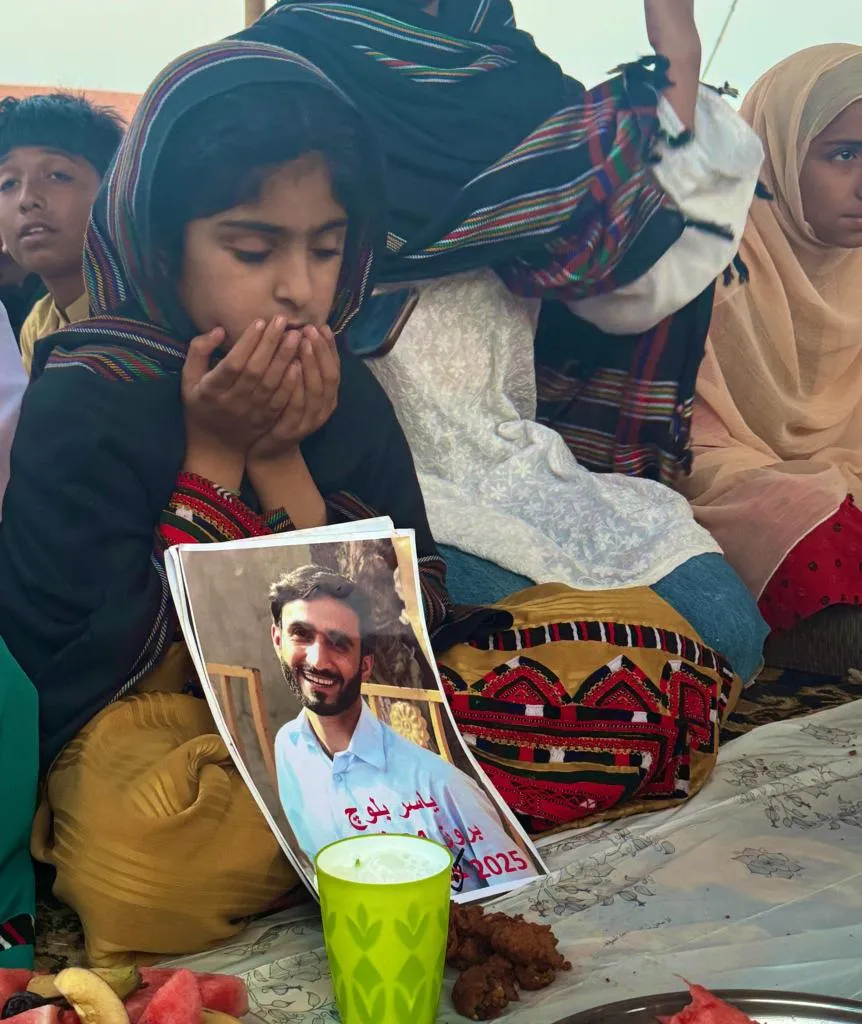
PAROOM, BALOCHISTAN — The last time anyone saw Wafa Baloch alive, he was simply doing his job. A border driver navigating the harsh terrain between Iran and Pakistan. The next time his name surfaced, it was in a grim social media post—shot dead by Pakistani paramilitary forces near the Goldsmith Line, according to The Balochistan Post.
The Baloch Yakjehti Committee (BYC), an activist group documenting abuses in the region, was blunt in its statement: “Wafa had already suffered six months in a Pakistani torture cell. They released him, but his family never truly got him back. Then they killed him anyway.”
There is no official response from Islamabad. No comment from the military. Just silence. But in Balochistan, that silence is familiar.
It follows every disappearance, every body dumped on the roadside, every desperate protest staged by families clutching faded photographs of sons and brothers who never came home.
Activists say Wafa’s case is just one in an escalating pattern of enforced disappearances. Rights groups have for years accused Pakistan’s security forces of waging a quiet war against the Baloch, abducting suspected separatists and dissidents, holding them in secret detention centers, then either releasing them shattered—or executing them outright.
In 2023 alone, the Human Rights Council of Balochistan documented at least 550 cases of forced disappearances. Most are never investigated.
Balochistan, Pakistan’s largest but poorest province, has long been a flashpoint of rebellion and state crackdowns. A decades-long insurgency fueled by demands for autonomy and control over natural resources has been met with an iron fist. But critics say counterinsurgency has turned into collective punishment, where anyone perceived as sympathetic to Baloch nationalist sentiment risks vanishing.
The Pakistani state denies systematic targeting, framing such disappearances as a byproduct of counterterrorism operations. But the evidence is hard to ignore. Mass graves have been discovered. Former detainees speak of electric shocks, beatings, and months of isolation in dark cells. Families march in Karachi and Quetta, chanting the names of the missing.
International organizations have taken note, but little action. Calls for accountability, for an end to impunity, have led to diplomatic statements, not change. And in Balochistan, the disappearances continue.
For the families, the grief is endless. “We just want answers,” said one relative of a disappeared man in Turbat. “Even if he is dead, tell us. At least let us bury him.”
But the answers remain locked away, behind the walls of detention centers. Behind the silence.