News Desk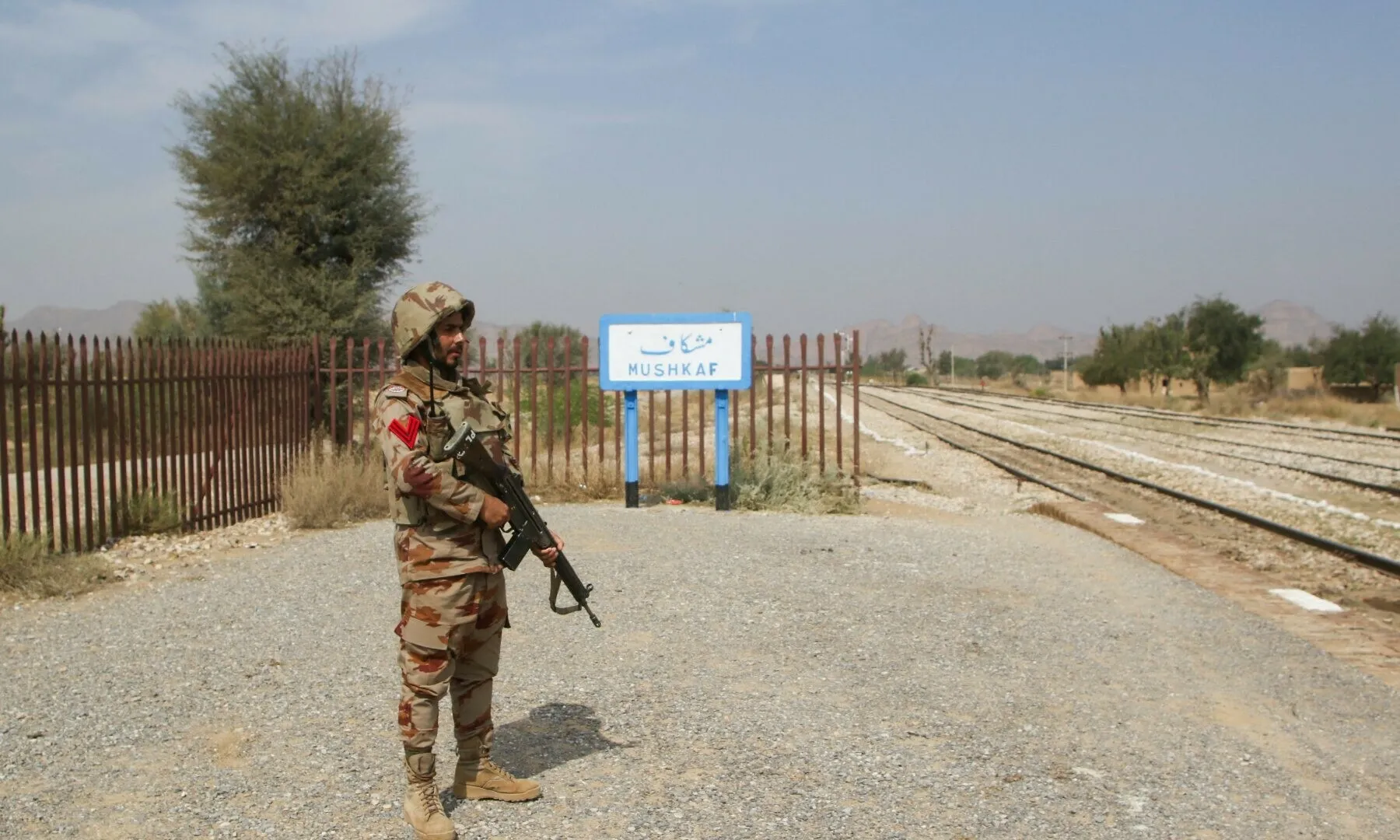
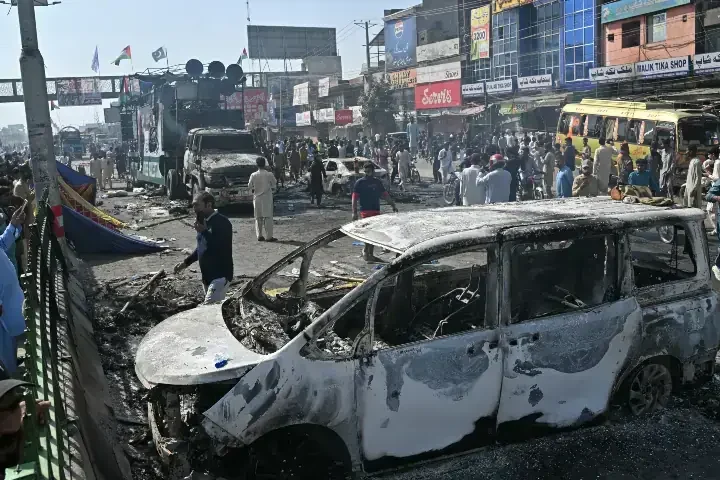
The Jaffar Express rumbled through the desolate mountains of Balochistan on Tuesday, carrying over 400 passengers toward what should have been an ordinary journey. Then came the gunfire. Terrorists from the Baloch Liberation Army (BLA) stormed the train, turning a routine trip into a 24-hour nightmare of hostages and bloodshed. By Wednesday night, Pakistan’s military declared the standoff over—33 terrorists dead, all hostages freed—but not before 21 passengers and four security personnel lost their lives. It was a brutal reminder: Pakistan’s security is unraveling, and the state seems powerless to stop it.
This wasn’t just an attack. It was a statement. The BLA, a separatist group bent on carving out an independent Balochistan, hijacked the train with chilling precision, exposing the fragility of Pakistan’s grip on its restive southwest. Passengers described scenes of chaos—gunmen barking orders, families huddling in terror—as the militants held them captive in a region where the government’s authority has long been a mirage. For Balochistan, a province rich in resources yet steeped in poverty, this is the latest chapter in a decades-long saga of insurgency and neglect.
The numbers tell a grim story. The Global Terrorism Index (GTI) 2025 ranks Pakistan second only to Burkina Faso as the world’s most terrorism-plagued nation. Deaths from terrorist attacks spiked 45 percent in 2024, reaching 1,081, while incidents more than doubled to 1,099. Balochistan and Khyber Pakhtunkhwa (KP), the country’s twin hotspots, are bleeding from a resurgence of violence that blends separatist fury with Islamist militancy. The Jaffar Express assault is merely the most dramatic in a string of recent atrocities; suicide bombings, highway blockades, and military base raids, that have left Pakistan reeling.
What’s driving this descent? Look west to Afghanistan, where the Taliban’s 2021 return to power has supercharged groups like the Tehreek-i-Taliban Pakistan (TTP). The TTP, now the third-deadliest terrorist outfit globally, killed 558 people in 2024 alone, a 90 percent surge from the year before. Analysts say the Afghan Taliban’s rule has provided safe havens and morale boosts to their Pakistani counterparts, who’ve wasted no time exploiting Pakistan’s political chaos and economic freefall. Add the Islamic State Khorasan Province (ISKP) to the mix; another top-10 global terror player and the threat becomes a hydra-headed monster.
Then there’s Balochistan’s own brew of rage. The BLA and its allies, like the Baloch Raji Aajoi Sangar (BRAS), have ramped up their campaign, with attacks jumping from 116 in 2023 to 504 in 2024. Their targets: security forces, infrastructure, and symbols of foreign influence, especially China’s sprawling investments under the China-Pakistan Economic Corridor (CPEC).
Last November’s suicide bombing at Quetta’s railway station—another Jaffar Express hub—killed 25. Tuesday’s hijacking, with its cinematic audacity, signals a shift to bolder, more disruptive tactics. The BLA’s slick propaganda videos, now subtitled in Urdu and English, is making rounds.
The military’s response has been swift but insufficient. Counterterrorism operations like Zarb-i-Azab in 2014 once crippled groups like the TTP, but the gains have evaporated. In KP, militants now dominate swaths of the former tribal areas, while Balochistan’s “no-go zones” remain insurgent playgrounds.
Pakistan’s security forces are dying in droves—1,627 killed between 2020 and November 2024, per the Pakistan Institute of Conflict and Security Studies. Yet the violence only grows. A disastrous 2021 peace talks experiment with the TTP, brokered by Afghanistan’s Taliban, backfired spectacularly, releasing hardened fighters who promptly resumed their war on the state.
Islamabad’s diplomatic options are narrowing. The military says the Jaffar Express attackers were linked to “masterminds” in Afghanistan—a charge Pakistan must press with the Afghan Taliban, though leverage is scarce.
Ties with the United States, once a counterterrorism ally, have frayed as Pakistan cozies up to China, leaving it short of Western intelligence and aid.
Balochistan’s people are fed up—fed up with disappearing activists, abysmal poverty, and a political system that stifles their voices. In KP, economic despair and governance failures fuel the TTP’s recruitment. Military might alone won’t fix this. Pakistan’s rulers have ignored calls for reform—better schools, jobs, roads, rights—for too long. The National Action Plan, launched after the 2014 Peshawar school massacre, promised a holistic fight against terror. A decade later, it’s a hollow shell, undermined by political infighting and a cash-strapped treasury.
The Jaffar Express ambush isn’t just a tragedy; it’s a warning. Pakistan stands at a precipice. Without a strategy that pairs security with justice—without giving Balochis and Pashtuns a stake in their country—the insurgency will spread, and the state’s writ will shrink further. Time is running out. The train has derailed, and Pakistan’s leaders must decide: reclaim control or watch the nation careen into chaos.