News Desk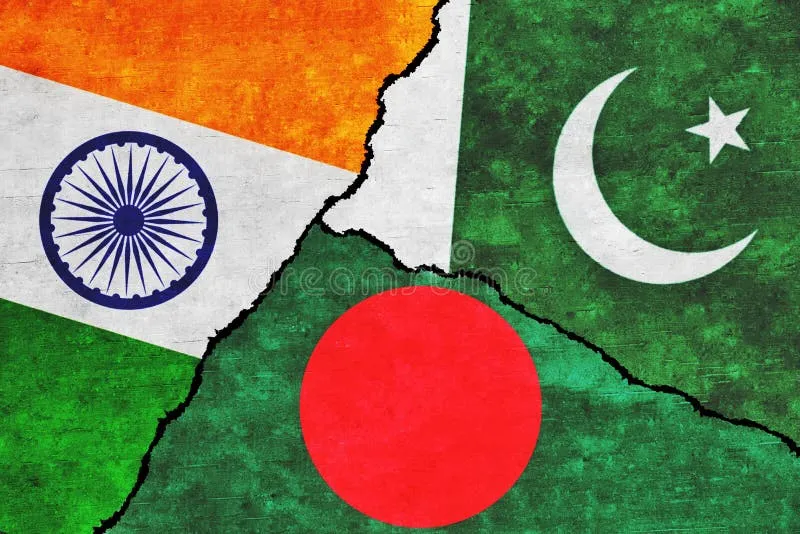
NEW DELHI — India’s military brass is sounding the alarm. General Upendra Dwivedi, the country’s Army Chief, isn’t mincing words about what he sees brewing across the eastern border in Bangladesh. Pakistan, long branded by India as the “epicenter of terrorism,” appears to be extending its reach—again. This time, it’s not just Kashmir in the crosshairs. It’s the volatile stretch near India’s Chicken’s Neck, that narrow corridor connecting the mainland to its northeastern states, where Pakistan’s army and its shadowy Inter-Services Intelligence (ISI) have been spotted cozying up to sensitive areas in Bangladesh.
In an exclusive sit-down earlier with ANI, General Dwivedi didn’t hide his unease. “I should be concerned about it,” he said bluntly, reflecting on reports of Pakistani officials prowling near the border. For India, this isn’t just a neighborly nuisance—it’s a potential launching pad for chaos.
The fear? That Bangladesh’s soil, so close to a geopolitically critical choke point, could become a conveyor belt for anti-India militants. “They should not be able to use that soil to send terrorists to India,” he warned. It’s a stark message, delivered with the weight of a soldier who’s seen the game play out before.
The timing couldn’t be worse. Bangladesh is in flux, its government unelected and its politics unsteady. General Dwivedi was careful to draw a line: meaningful diplomatic ties hinge on a legitimate, elected administration. “When we have an elected government, then we can say how should be our relationship,” he told ANI. Until then, India’s keeping its powder dry—watching, waiting. Yet, he was quick to note the silver lining: military-to-military ties with Bangladesh remain robust. Recently, a joint navy training exercise between the two nations wrapped up, a sign of cooperation that still holds firm. “We are able to exchange notes whenever we want,” he said, a rare bit of optimism in an otherwise tense narrative.
But Pakistan’s shadow looms large, and India’s worries go beyond logistics. General Dwivedi painted a broader picture—one where Islamabad’s obsession with needling India isn’t just about territory like Kashmir, but about survival.
He leaned into a bit of humor to make his point, invoking the old Bollywood classic Guide, where a madman vows not to eat until it rains. “They’re stuck in their own words,” he quipped, suggesting Pakistan’s anti-India rhetoric is a trap of its own making. “They don’t have a way out of it.”
He didn’t stop there. Digging into history and geography—nodding to Robert Kaplan’s Revenge of Geography—Dwivedi questioned whether Pakistan, split by the Indus River, can even hold itself together without a unifying enemy. “Is the language the same? Are the people the same? What is the same? Only anti-India stance,” he mused.
For him, Kashmir is just the loudest symptom of a deeper malaise: Pakistan’s need to keep its fractured identity stitched together by stoking hostility toward its giant neighbor.
India’s Chicken’s Neck anxiety isn’t new, but Pakistan’s presence in Bangladesh adds a fresh twist. The 20-mile-wide Siliguri Corridor is a lifeline—sever it, and India’s northeast could be choked off. Pakistani officials sniffing around that area, alongside their ISI counterparts, sets off alarm bells in New Delhi. It’s not hard to see why. The ISI’s playbook—backing insurgencies, funneling arms, training militants—has been a thorn in India’s side for decades, from Kashmir to the Punjab. Now, with Bangladesh as a potential staging ground, the stakes feel higher.
Dhaka’s response, or lack thereof, only muddies the waters. Without a stable government, India’s left dealing with a military channel that’s strong but lacks the political heft to lock down assurances. General Dwivedi’s confidence in that relationship is reassuring—up to a point. Notes can be exchanged, but can they stop boots on the ground? That’s the question haunting India’s strategic thinkers.
For now, New Delhi watches its eastern flank with a wary eye. Pakistan’s gambit, if that’s what this is, could be a test—of Bangladesh’s resolve, of India’s patience, of the region’s fragile balance. General Dwivedi’s words carry a warning, wrapped in dry wit and a soldier’s clarity: India’s not laughing, and it’s not backing down.