 News Desk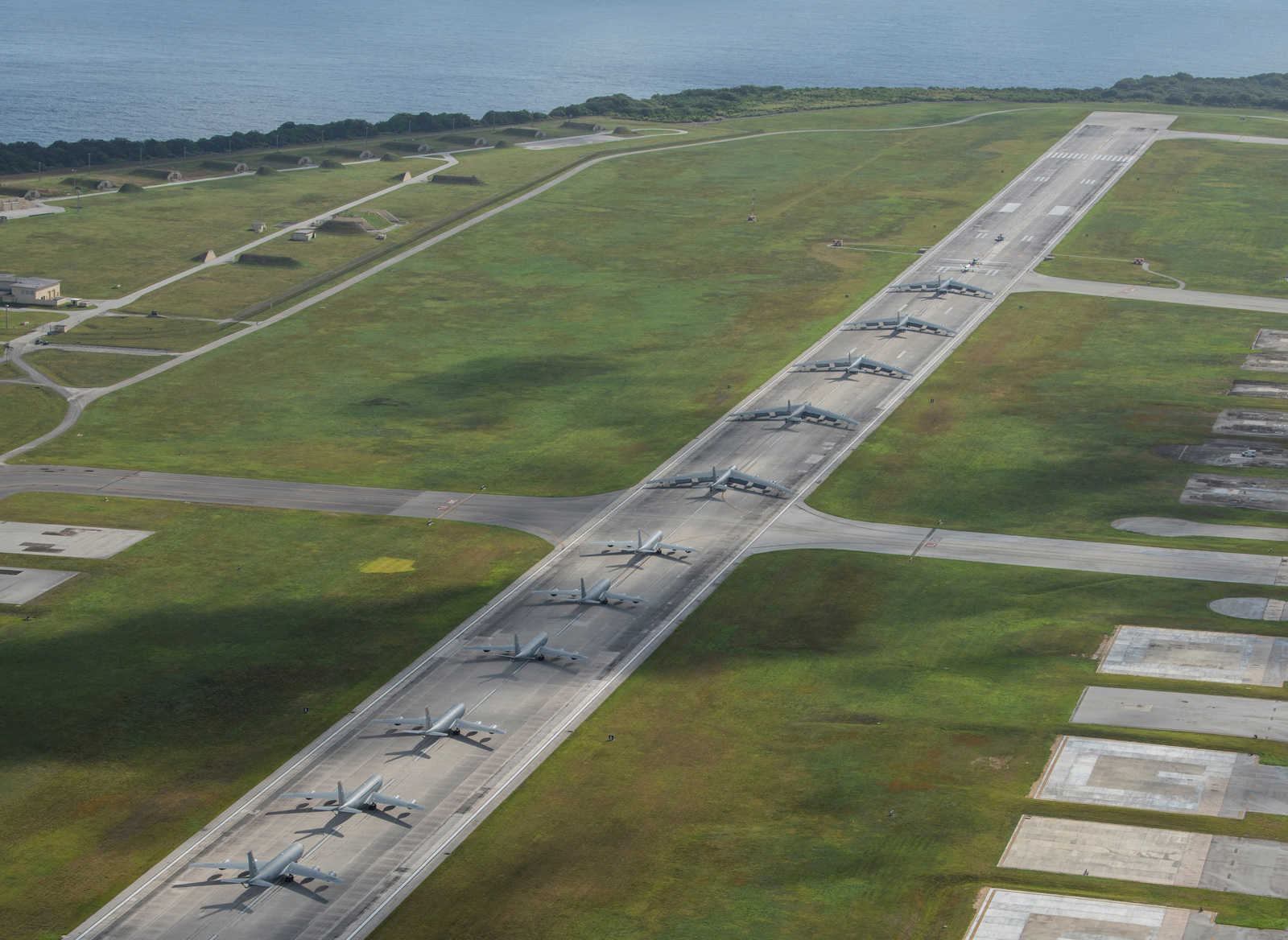
With Chinese warships and fighter jets massing near Taiwan in a show of force that has rattled the Indo-Pacific, Pentagon officials are sounding the alarm over a chilling prospect: Guam, the westernmost U.S. territory, could be the first casualty of Beijing’s aggression. Intelligence assessments paint a grim picture—if China moves to seize Taiwan, the People’s Liberation Army (PLA) would unleash a barrage of ballistic and cruise missiles on Guam’s airfields and ports, aiming to cripple America’s military foothold in the region.
The warning comes at a precarious moment. The United States, mired in domestic debates over economic policy and election-year posturing, finds its attention divided. Against this backdrop, China’s military maneuvers near Taiwan, reported by U.S. defense officials this week, signal a readiness to exploit any perceived American distraction.
“Guam would be a major target,” a senior U.S. defense official told The Washington Times, citing intelligence briefings that underscore the island’s vulnerability. Home to 6,400 U.S. troops, Andersen Air Force Base, and Naval Base Guam, the territory hosts bombers, fighter jets, spy drones, and naval vessels—assets critical to countering a Chinese offensive. The Pentagon’s latest report on China’s military, released in December, confirms the PLA’s capability to strike these bases with precision, bolstered by naval strike groups, including aircraft carriers, now lurking near Guam’s waters.
On Thursday, Defense Secretary Pete Hegseth arrived here after a stop in Hawaii, inspecting the island’s missile defense systems amid rising unease. Speaking to reporters after meeting with Guam officials, he touted the territory’s defenses as a blueprint for former President Donald J. Trump’s ambitious “Golden Dome” initiative—a national missile shield still in its conceptual stages. “We’re going to learn a lot from what’s happening here,” Mr. Hegseth said, “and apply it to protecting the continental United States.”
The Pentagon is pouring $7.3 billion into military construction on Guam through 2028, a testament to its strategic weight. Yet, as China’s shadow looms larger, the U.S. Air Force has shifted tactics, dispersing fighter jets across smaller regional airfields in an “agile combat deployment” strategy to evade the PLA’s missile threat. It’s a tacit admission that Guam, despite its fortifications, remains a sitting duck in the face of Beijing’s growing arsenal.
China’s latest escalation near Taiwan—described by U.S. officials as one of the most provocative in years—underscores the stakes. Multiple PLA naval groups have been spotted in the region, a flex of muscle that analysts say is both a warning to Taipei and a test of Washington’s resolve. Mr. Hegseth, addressing troops here, called them “the tip of the spear” in America’s Indo-Pacific strategy, but his words carried a sobering subtext: readiness for war may soon be put to the test.
“We are not seeking a war with communist China,” he said, standing before a backdrop of fighter jets. “But it is our job to ensure that we are ready.” He also issued a pointed message to Beijing, warning that aggression against Pacific Island nations near Guam—many facing increasing Chinese pressure—would be met as an attack on the United States itself.
The timing could hardly be worse. At home, the Biden administration grapples with a fractious Congress and a public weary of foreign entanglements. Abroad, India’s reluctance to fully join the U.S.-led coalition against China has sparked frustration in Washington, with Mr. Hegseth recently hinting at repercussions if New Delhi doesn’t step up. “Our partners need to understand the threat,” he said last week, a thinly veiled jab at India’s balancing act between East and West.
For Guam’s residents, the specter of Chinese missiles is more than a geopolitical abstraction. The island, just 1,800 miles from China’s coast, has long lived with its strategic burden. Now, as Beijing’s ambitions grow unchecked, that burden feels heavier. “We’re on the front line whether we like it or not,” said Maria Torres, a local teacher, watching military convoys rumble past her home. “But the U.S. seems too busy arguing with itself to notice.”
Critics argue that America’s scattered focus risks ceding the initiative to China, a regime that has shown little regard for international norms. The PLA’s ability to strike Guam, coupled with its naval buildup near Taiwan, suggests a confidence that the U.S., stretched thin, may hesitate to respond decisively. “Xi Jinping sees weakness,” said Michael Green, a former National Security Council official. “He’s betting that domestic chaos and diplomatic spats—like with India—will keep Washington from acting when it counts.”
For now, Guam stands as both a sentinel and a target, its fate tied to the volatile currents of U.S.-China rivalry. As the PLA’s shadow lengthens over Taiwan, the island’s defenders can only hope that America’s gaze turns outward before it’s too late.