News Desk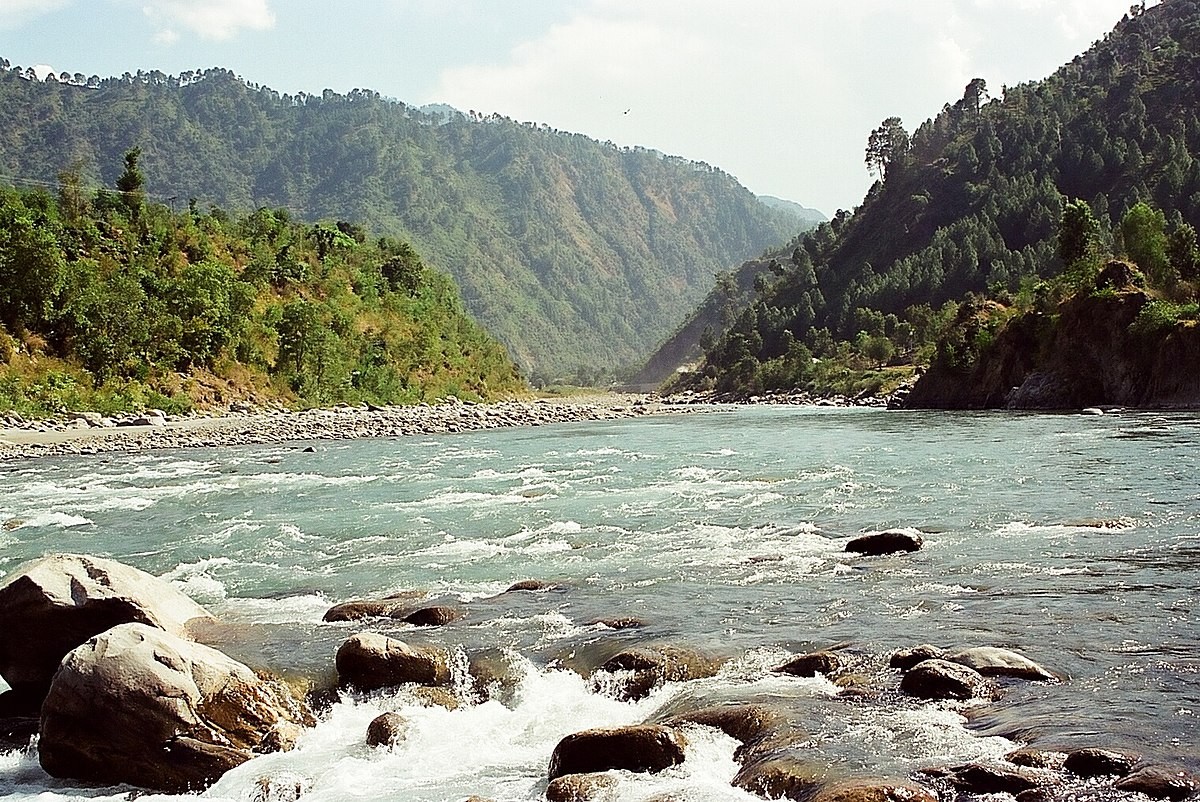
LAHORE, Pakistan — A contentious irrigation project meant to transform barren desert into fertile farmland has ignited a fierce war of words between the power brokers of Punjab and Sindh, exposing the fragility of Pakistan’s federal compact and the deep mistrust that simmers beneath its surface. On Thursday, ministers from the two provinces traded barbs over the Cholistan canals project, a $3.3 billion endeavor under the Green Pakistan Initiative, which aims to irrigate 4.8 million acres of arid land by tapping the Indus and Sutlej rivers. What Punjab hails as a visionary leap toward agricultural prosperity, Sindh condemns as an existential threat to its water security and ecological stability.
The spat erupted a day after Bilawal Bhutto-Zardari, chairman of the Pakistan Peoples Party (PPP), denounced the project as “unilateral” during a rally in Garhi Khuda Bakhsh, a symbolic heartland of his family’s political dynasty. His rejection amplified Sindh’s long-standing grievances, which reached a crescendo in March when the Sindh Assembly unanimously passed a resolution demanding the project’s suspension until all provinces, especially Sindh, consent to its terms. For Sindh, the fear is palpable: the canals, five of which will draw from the Indus River, could siphon off water that the province—already parched and at the river’s tail end—claims as its lifeline.
Punjab, led by Chief Minister Maryam Nawaz, remains undeterred. On February 15, she joined Gen. Asim Munir, the powerful army chief, to break ground on the project, framing it as a lifeline for south Punjab’s neglected farmers. The initiative promises to channel 4,120 cusecs of water to the Cholistan desert, a region long overlooked in Pakistan’s uneven development story. Punjab’s Information Minister Azma Bokhari defended the plan with characteristic bravado on Thursday, accusing the PPP of exploiting the issue for political gain. “Punjab neither takes away anyone’s rights nor allows others to infringe upon its own,” she declared in Lahore, brandishing documents she claimed bore President Asif Ali Zardari’s approval—a jab at the PPP’s own patriarch.
Sindh’s retort was swift and scathing. Senior Minister Sharjeel Inam Memon, speaking in Karachi, questioned Bokhari’s grasp of constitutional nuance. “Have you read the Constitution? Do you know how to read the Constitution?” he snapped, dismissing the notion that the president holds authority to greenlight such projects. “If the federal government sent it to him for approval, that was an incompetent step,” Memon added, accusing Punjab of fabricating evidence to justify its overreach. The Sindh minister underscored the PPP’s stance: it stands with the people, not the Shehbaz Sharif-led coalition it reluctantly props up in Islamabad.
At the heart of this clash lies the Indus River, Pakistan’s arterial backbone, which sustains an agrarian economy teetering on the edge of collapse. The river’s waters are governed by the 1991 Water Apportionment Accord, a fragile pact that Punjab’s critics say the canals threaten to unravel. Sindh’s leaders, alongside nationalists who have long decried upstream “water theft,” warn that diverting resources to Cholistan could parch their fields and exacerbate an already dire shortage—estimated at 20 million acre feet nationwide, according to PPP stalwart Chaudhry Manzoor. “Which canal will Punjab close to feed Cholistan?” he demanded at a press conference, casting doubt on the project’s feasibility and accusing the government of sacrificing small farmers for corporate interests.
Punjab’s response—that it will use only its allocated share—rings hollow in Sindh, where skepticism of Lahore’s intentions runs deep. Bokhari’s assertion that Punjab has historically played the “elder brother” to its smaller siblings drew derision from critics who see a pattern of dominance, not benevolence. The Sutlej River component, meant to harness floodwater, offers little reassurance; Manzoor pointed out that such flows last mere months, leaving the canals dry for much of the year. “From where will the water come?” he asked, a question that hangs unanswered over the project’s grand ambitions.
The federal government, led by Prime Minister Shehbaz Sharif, has struggled to broker peace. The Council of Common Interests (CCI), a constitutional body meant to arbitrate such disputes, has not convened despite Sindh’s pleas—a silence that fuels accusations of complicity with Punjab’s agenda. Even allies like the PML-Q, a junior partner in the ruling coalition, have urged haste in resolving the impasse, with Industries Minister Chaudhry Shafay floating small dams as a stopgap. Yet the divide only widens, with the PPP rallying supporters across Sindh and Punjab’s PML-N doubling down on its narrative of progress.
Adding a twist to the saga, President Zardari’s role has become a lightning rod. Punjab insists he endorsed the canals; Sindh counters that any such approval exceeds his mandate.
PPP Senator Sherry Rehman, a former climate change minister, sought to clarify matters with a pointed post on X, quoting Zardari’s address to parliament earlier this year. “I cannot support the proposal,” he had said, warning against “unilateral policies” that strain the federation. His words, Rehman argued, were a rebuke to the very project Punjab claims he blessed—a contradiction that underscores the chaos at Pakistan’s political core.
As the feud festers, Pakistan’s broader crises—lawlessness in Balochistan and Khyber Pakhtunkhwa, economic stagnation, and a warming climate that shrivels rivers—loom large. The Cholistan canals, sold as a solution, risk becoming a flashpoint, pitting province against province in a nation that can ill afford such rancor. For Sindh, the fight is about survival; for Punjab, it’s about ambition. For Pakistan, it’s a test of whether its federation can hold—or whether water, the lifeblood of its people, will instead become its breaking point.