 News Desk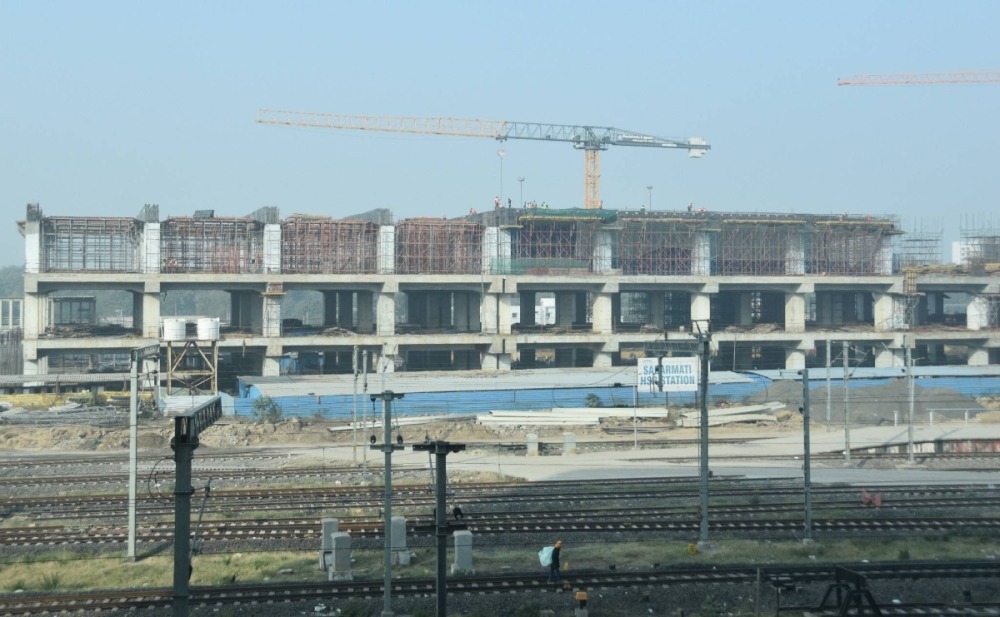
In a significant gesture of technological collaboration, Japan plans to donate two retired Shinkansen train sets to India for use as inspection vehicles on the under-construction Mumbai-Ahmedabad high-speed rail corridor. The E5 and E3 series trains, previously operated by East Japan Railway Company (JR East), will be retrofitted with specialized inspection equipment before their scheduled delivery in early 2026.
The Mumbai-Ahmedabad bullet train project, a flagship initiative under India’s National High-Speed Rail Corporation Limited (NHSRCL), aims to revolutionize rail travel by introducing the country’s first high-speed rail line. Spanning approximately 508 kilometers, the corridor is designed to operate at speeds up to 320 km/h, reducing travel time between the two cities to around three hours.
As of mid-2024, the project has achieved several construction milestones. In Gujarat, over 53% of the work is complete, including the erection of 183 km of viaducts and 313 km of piers. Track laying has commenced, utilizing the Japanese J-slab ballastless track system, a first for India. In Maharashtra, progress has been slower, with approximately 25.6% of the work completed, partly due to earlier land acquisition challenges. However, recent efforts have accelerated, with significant advancements in tunnel construction and station development.
The donated Shinkansen trains will play a crucial role in ensuring the safety and reliability of the new high-speed line. Equipped with advanced diagnostic tools, these inspection trains will monitor track conditions, overhead equipment, and signaling systems, facilitating proactive maintenance and minimizing service disruptions.
Looking ahead, India plans to introduce the next-generation E10 series Shinkansen trains for passenger services on the corridor in the early 2030s. Developed by JR East, the E10 series incorporates cutting-edge technologies, including enhanced earthquake resistance features, improved braking systems, and provisions for future automatic operation.
The Mumbai-Ahmedabad bullet train project, backed by funding from the Japan International Cooperation Agency (JICA), symbolizes the deepening strategic partnership between India and Japan. Beyond transforming transportation, the initiative is expected to spur economic growth, create employment opportunities, and serve as a model for future high-speed rail projects in the region.
Trial runs on the Surat-Bilimora section are anticipated to begin in 2026, with partial commercial operations in Gujarat targeted for late 2027. Full completion of the corridor is projected by 2028, marking a new era in India’s transportation landscape.